Education Commissioner Pushed for Plan He Now Says Superintendents Favor
WILLIAMSTOWN, Mass. — The commonwealth's commissioner of education may be overselling the grassroots desire to return to in-person instruction in comments he made earlier this week.
On Tuesday, Commissioner Jeffrey Riley told the Greater Boston Chamber of Commerce that a "vast majority" of Massachusetts school superintendents favor hybrid or in-person models of instruction.
The remark was reported by the State House News Service consortium and Commonwealth Magazine, a Boston-based non-profit.
Riley appeared to be basing that comment on the initial plans districts were required to submit to the Department of Elementary and Secondary Education.
But while Riley now trumpets what he characterizes as the preferences of superintendents, last month he was the one signaling to superintendents that they emphasize in-person instruction in their return plans.
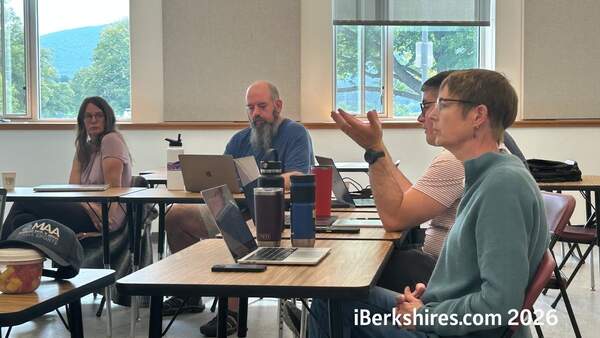
"Commissioner Riley is committed to having schools open," Mount Greylock Regional Schools interim Superintendent Robert Putnam told a subcommittee of the district's School Committee on July 14. "Although we've got to come up with three plans by the 31st, he's made it clear he wants in-person instruction with all those attending school or a hybrid model.
"He's actually said, he's going to require detailed explanations or perhaps send a team to review our work if we are unable to make this happen."
Putnam on Thursday confirmed his impressions of oral instructions that local school officials were given last month.
"My comments were based on oral communications during a conference with the Commissioner," Putnam wrote in an email replying to a request for comment. "The directions given by the Governor and the Commissioner prioritized the goal of bringing students into schools in the 2020 school year."
Superintendents were required to submit their initial reopening plans for remote, in-person and hybrid learning models to DESE on July 31. The second and final round of plans were due in Boston on Monday but the deadline was extended to Aug. 14 along with further requests for modeling for transportation, how social distancing will be implemented inside schools, communications with parents and tracking students' participation and grading.
At least two school districts — North Adams and Clarksburg — are taking advantage of the extra time to hear from parents and delay votes on their preferred options until this coming week.
The Pittsfield Public Schools and Hoosac Valley Regional School District have removed considerations for full in-school learning from their planning; instead, they are focusing on hybrid models and remote learning, with Pittsfield voting for a hybrid model.
Riley on Tuesday talked about the importance of returning to in-person instruction for the development of children.
"The doctors are very clear that all the negative effects of kids not being in school are much worse at this time, particularly given the data we have that (virus) transmission is low,” Riley said, as quoted by Commonwealth Magazine.
“It’s nearly impossible to teach reading over Zoom to kindergarten and first graders."
Riley's remarks came five days after the commonwealth's largest teachers union, the Massachusetts Teachers Association, passed a resolution passed a motion calling on the state and local school districts to prioritize health above opening schoolhouse doors.
"Therefore, the districts and the state must demonstrate that health and safety conditions and negotiated public health benchmarks are met before buildings reopen," read the resolution passed on July 29 by the 160,000-member union.
Tags: COVID-19, school reopening,
More Coronavirus Updates