Pittsfield Parks Redirect Springside Park Donations
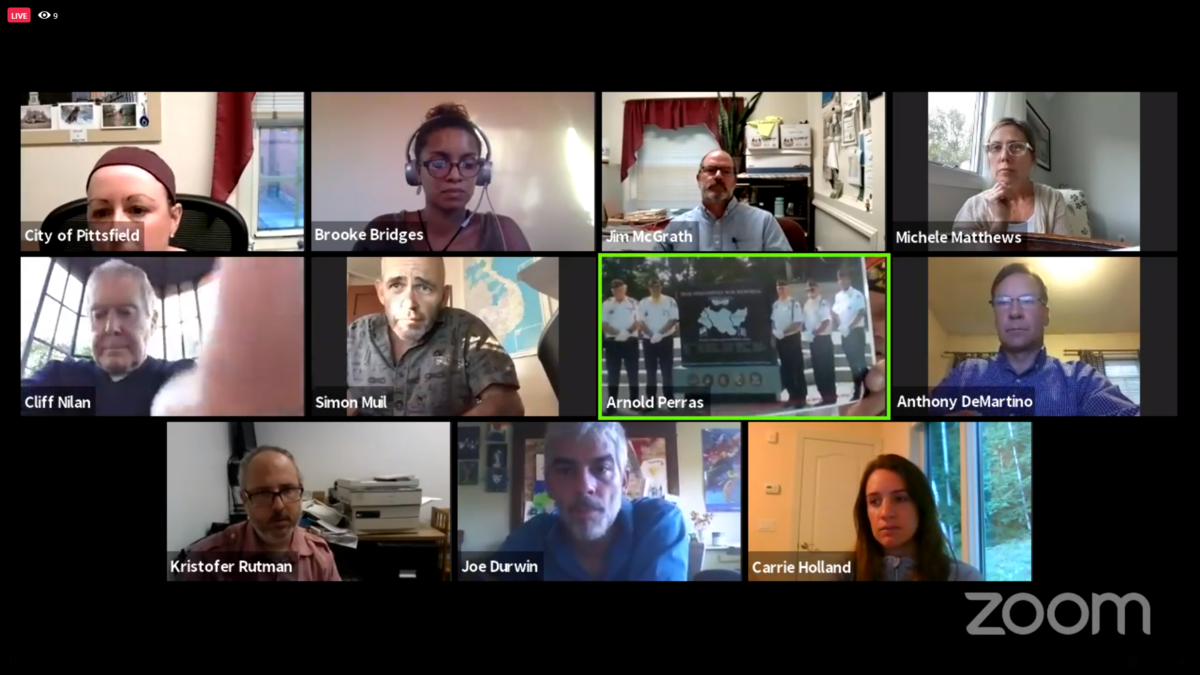
PITTSFIELD, Mass. — The Parks Commission approved a draft statement on Tuesday that would redirect donations for the homeless in Springside Park toward service providers.
The commission voted to eliminate onsite donations at the Springside Avenue pavilion effective Aug. 24.
"I will be the first to admit that this community has been so gracious, so kind, and has really mobilized around this issue," Parks and Open Space Manager James McGrath said. "... To the point of almost too many donations, and there are issues around this goodwill gesture."
With the closing of the temporary homeless shelter at the former St. Joseph's High School, an influx of homeless residents have made Springside Park their home this summer.
McGrath brought forth a draft statement based on conversations with the commission, service providers, and the city mostly outlining the Parks Department’s position on the matter.
He had said previously that the department will follow the city's lead in taking a hands-off approach and allow the homeless to utilize the parks.
Although the homeless will be allowed continued use of the park, McGrath asked Tuesday to limit the use of the Springside Avenue pavilion that has become a makeshift donation drop-off area.
"That part of the park is really not designed to be used that way, and it is really becoming problematic," he said. "Through this statement, we have advocated in how to respond to what we are seeing there."
Commissioner Joe Durwin said the lack of organization has caused somewhat of a disaster at the park. While he acknowledged that these individual donations have perhaps saved lives, the site has become oversaturated with donations. Many of these donations do not go to those in the most need.
McGrath agreed and said donations come in the form of supplies, gift cards, and food. They are dropped off on picnic tables under the pavilion, and anyone and everyone is able to sort through the selection.
The city and service providers would prefer to direct donations through ServiceNet, which can distribute properly. Also, McGrath saw an opportunity to inform the homeless population of opportunities throughout the city such as food sites and other resources.
He thought this could be accomplished with a bulletin board.
Durwin said he was hesitant to completely eliminate food deliveries on site.
"I don't know if it's always going to be beneficial to expect that a population with a diverse range of issues, living in a destabilizing situation will always be equipped to huff it around town two to three miles a day to meal sites," he said.
Durwin also advocated a more coordinated approach in terms of services and felt like those working to help the homeless were not always working together.
Furthermore, people not affiliated with an agency are stepping up to help. He said while this is considerate, it may not be the best approach and that many of the homeless are dealing with trauma.
"We are dealing with a traumatized population with a range of different issues," he said. "So it has to be a trauma-informed response. People wandering in off the street will not always be prepared for that."
McGrath agreed and said city officials are not an expert in the matter and are in constant contact with the various service agencies.
"We are not equipped to deal with the real needs that the homeless population requires, but our office for years has been a partner," he said. "We have the experience, but we do not have all of the answers."
The commissioners agreed that allowing the pavilion to be used until Aug. 31 was too long and set a new sunset date of Aug. 24. They also agreed to strike language that would limit gathering at the pavilion.
"While I don't advocate that the park be used for a campground this is obviously an unusual year," Commissioner Simon Muil said. "My thought is that I don't like the use of the pavilion for people to provide donations. I think it would be more efficient to move them through an agency."
The vote was 3-1 with Durwin in opposition.
McGrath said the department will formalize this statement but indicated donations would still be able to be made at the Barton's Crossing homeless shelter.
Chairman Anthony DeMartino spoke to the encampments in general and noted although the homeless typically do take up residence in Springside Park in the summer, it has never been at this level.
McGrath added that there are about a dozen people living in the park, mostly north of the pond, but it was at one point around 50. He said he expects the number to continue to drop as summer moves into fall.
DeMartino said the city's accommodations have not been without challenges and cited reports of increased drug and alcohol use in the parks and also indicated that there may have been firearms present.
"We have always been compassionately tolerant," he said. "This summer and the circumstances surrounding it have shed new light on this."
The commissioners all agreed that the park is not a permanent solution for the homeless.
Tags: homeless, parks commission,