Williamstown Releases Town's Response to Discrimination Complaint
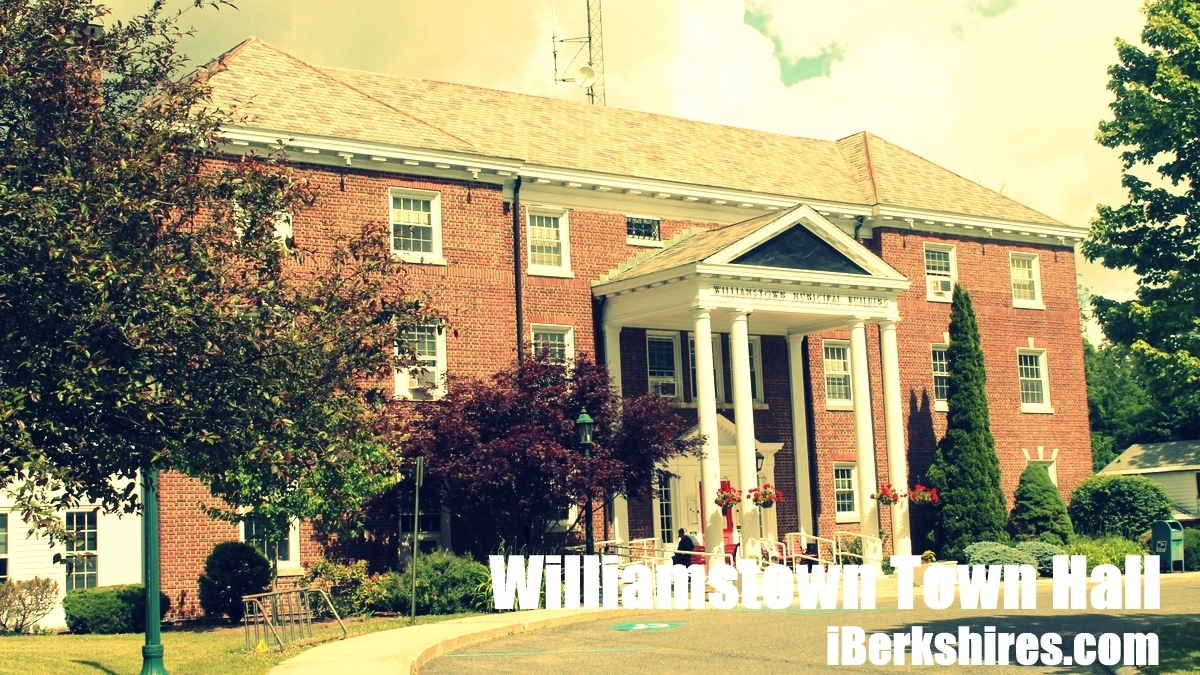
WILLIAMSTOWN, Mass. — The Williamstown Select Board on Thursday released a redacted version of the town's response to a complaint filed with the Massachusetts Commission Against Discrimination.
That complaint that was referenced heavily in a federal discrimination lawsuit filed this month by Sgt. Scott McGowan.
In a two-page statement from the board, it notes that the MCAD complaint by McGowan contained most, but not all, of the allegations eventually included in the lawsuit he filed last week.
"Although we had hoped to release more information from the MCAD proceedings, Sgt. McGowan's counsel has objected to the release of any ‘negative information, allegations, or implications about Mr. McGowan as further evidence of unlawful retaliation,' " the Select Board's statement reads.
The 48-page town response, prepared by attorney Patricia Rapinchuk of Springfield's Robinson Donovan, P.C., and attested to under penalty of perjury by Town Manager Jason Hoch and Police Chief Kyle Johnson, offers a point-by-point refutation of most of the allegations of racial discrimination, disability discrimination and sexual misconduct levied by McGowan.
The town's response also paints in a very different light the events leading to the promotion of Michael Ziemba to the post of lieutenant in the department and not his fellow sergeant, McGowan. McGowan's lawsuit claims that promotion represented retaliation against McGowan as a whistle-blower in the department.
The town's response outlines an objective process for the promotion that relied on a third-party testing service. It also portrays McGowan as non-communicative with his fellow officers and alleges McGowan "attempted to negotiate Union membership support for leaving Civil Service in exchange for appointing him Lieutenant.”
Thursday morning's Select Board statement, made in response to calls for public comment from the town's Diversity, Inclusion, Race and Equity Committee, stressed that the allegations in McGowan's complaint are unproven but says, "they nonetheless depict the Police Department and Town Administration in a way that raises genuine questions or doubts about the Town's commitment to diversity, inclusion, and racial equity.”
To that point, the Select Board statement specifies four concrete steps the board is taking.
The board pledged to: require an audit of human resources practices in the town; engage an independent consultant to review the Williamstown Police Department's policies and procedures to ensure compliance with state and federal law; ensure workplace harassment and discrimination training for all town employees and the Select Board members themselves; and work with the town's counsel in the McGowan case to make sure the board has access to "accurate and updated information developed in connection with that litigation.”
Thursday's statement also addressed an issue left out of the Select Board's first public statement on the McGowan case: the calls by the DIRE Committee and others in the community for an immediate investigation by a third party into the allegations in the complaint.
"The pending lawsuit also means, for the time being, we are restricted in our ability to conduct the third party investigation that some have called for,” the statement reads.
The Select Board's statement goes on to ask the town to trust its elected officials to do their job at a time when mistrust of town government and institutions is running high.
"We fully recognize that the constraints on our ability to undertake that type of investigation now,
and to release all of that information publicly, puts our community in a difficult position of us asking you to trust that we are taking this seriously, without being able to witness our ongoing discussions or having the benefit of the same information,” the statement reads. "Simply stated, the Williamstown Select Board is working hard to ask the tough questions, both of ourselves and Town government as a whole, that are raised as a result of these allegations.”
McGowan's lawsuit claims handicap discrimination and violation of the Americans with Disabilities Act stemming from a January 2019 incident in which he says he was placed on paid administrative leave when it was "not justified by any legitimate concern that McGowan was unfit for duty."
The leave was ordered by Johnson after McGowan emailed the chief to say "he was suffering from 'physical, emotional and medical setbacks I have experienced and still cope with on a daily basis as a result of the enormous stress I live through as a result of my biased treatment. This has caused me to previously and currently use sick leave along with seeking professional medical assistance and other professional services in an effort to contend with these challenging conditions,' " the town's response reads.
The town's response says McGowan's email raised concerns for Johnson about McGowan's fitness to carry a firearm in the line of duty.
"[Johnson] was fully aware that failing to do so could result in significant negative consequences, including danger to [McGowan] and the public and liability to the Town," the town's response reads. "[Johnson] was also concerned about the baseless and accusatory language in the email, and did not want to take any action without consulting with others."
After consulting with the town manager (Johnson's supervisor), the counsel for the Massachusetts Chiefs of Police Association and the town's labor counsel, Johnson placed McGowan on administrative leave and ordered "physical and psychological fitness-for-duty exams," the town's response reads.
"The intent was not to be punitive to the Complainant, but to take prudent steps to protect the Complaint, the Town and the public," the town's response reads.
McGowan's lawsuit also claims the town, Hoch and Johnson retaliated against McGowan because he engaged in the protected activities of "reporting and opposing sexual harassment and other sex discrimination, race discrimination, and racial harassment" throughout his time with the Williamstown Police Department, which began in 2002 and continues to this day.
The town's January 2020 response to the MCAD complaint in numerous places refutes McGowan's contention that he was a whistle-blower.
"The Respondents are unaware of any advocacy that the Complainant has conducted on behalf of victims of sexual harassment apart from his role as an investigator," the response reads on Page 7.
On Page 13, the town's response addresses a 2014 incident in which a Black student from Williams College was present in the police station when a white dispatcher shouted a racial slur (the N-word). The town admitted "an incident similar to that alleged in paragraph 9 [of McGowan's complaint] took place." But the town disputed McGowan's allegation about how the incident was handled.
"When the incident was brought to Chief Johnson's attention, the dispatcher who made the offensive remark was appropriately disciplined," the town's response reads. "The respondents have no recollection of [McGowan] recommending the dispatcher be terminated, or that [McGowan] had any involvement in any discussions about how the incident should be handled other than reporting it to Chief Johnson."
Another whistle-blower activity cited by McGowan in his complaint involved the events leading to the departure of an unnamed WPD officer, called Smith in the complaint, who was described as having "African-American ancestry."
In addition to denying many of the specifics in McGowan's description of Smith's treatment at the WPD, the town's response denies McGowan's self-described role of whistle-blower in Smith's case.
"[A]t some point, after Chief Johnson learned that a swap of officers with [an unnamed department] would not be feasible, [McGowan] approached him and said he was giving [Johnson] a heads up and doing him a favor by coming to him," the town's response reads on Page 15. "[McGowan] told Chief Johnson that if 'Smith' was not able to transfer … he, 'Smith' planned to tell the media that Chief Johnson was a racist. Chief Johnson was stunned by this information, and asked the Complainant why 'Smith' believed he was racist. The Complainant was unable to provide a single example."
Later, the town's response references a photo of Hitler in a Williamstown Police officer's locker, an image of which McGowan's attorney sent to the media this month.
"The Respondents deny that [McGowan] ever said anything about the alleged Hitler photo. The first time Chief Johnson had any knowledge of this allegation is when he read this Charge," the town's response reads.
Another whistle-blowing action claimed by McGowan dates back to 2011, when a WPD officer (identified in the lawsuit as "Officer B") was accused of visiting the home of a town resident uninvited, repeatedly asking her for sex, exposing himself to her and trying to put her hand on his penis. McGowan's MCAD complaint -- and later federal lawsuit -- alleged that Officer B "admitted this behavior to State Police investigators" and claimed McGowan advocated for Officer B's termination.
The town's response did not address whether Officer B made any admissions but notes, "Ultimately, the State Police determined that no criminal charges would be brought against [Officer B]." The town further asserted, "The Respondents deny that [McGowan], who was the union president representing the Department's police officers, ever advocated for [Officer B's] termination or engaged in any communication with Chief Johnson about his opinion on how the matter should be handled internally. [Officer B] was appropriately disciplined for the incident."
The federal complaint filed by McGowan appears to take a significant statement from Johnson in the town's response out of context when it comes to an allegation of sexual assault lodged against the chief.
Although McGowan's lawsuit does not make a claim of sexual harassment (the grounds for the suit are handicap discrimination and retaliation against a whistle-blower), it does allege that Johnson sexually harassed WPD employees, including McGowan.
On Page 2 of McGowan's lawsuit, his attorney, Boston's David A. Russcol, writes: "Johnson, in his capacity as Chief, personally sexually assaulted male and female members of the WPD staff by deliberately rubbing his clothed penis up against them, over their explicit objections (Johnson now characterizes his actions as 'unprofessional and juvenile locker room behavior.') "
The wording of that paragraph, the fourth in a 22-page complaint, clearly implies that Johnson was admitting to the assault and characterizing it as "locker room behavior," but the sworn testimony from the town reads quite differently.
The full sworn-statement to the MCAD reads: "Chief Johnson denies that he sexually assaulted the Complainant. For a period of time early in his tenure as Chief, however, Johnson and others in the Department, including the Complainant, engaged in what Chief Johnson now recognizes was unprofessional and juvenile locker room behavior."
The town's response to McGowan's MCAD casts the sergeant in a negative light regarding the events leading up to the decision not to name McGowan the department's lieutenant, a key element of the retaliation charge in McGowan's lawsuit.
"As background, and on information and belief, members of the [WPD] Union had learned that [McGowan] had attempted to negotiate Union membership support for leaving Civil Service in exchange for appointing him Lieutenant, and also in exchange for a list of items that he implied had been authorized by Union members," the town's response reads on Page 26. "As a result, in early 2018, the Complainant was removed as Union President by unanimous vote of the Union members. Since that time, the Complainant has rarely spoken with many of his fellow officers, essentially giving them the cold shoulder and creating tension and drama within the department.
"During their conversation about the Lieutenant position, Chief Johnson told the Complainant that he didn't even talk to his co-workers, and this was not acceptable behavior for a leader in the Department. Chief Johnson admits that he told the Complainant that if he was faced with the decision at that moment, he would promote Officer Ziemba to the position over him."
Still, according to the town's response, the decision to promote Ziemba to lieutenant was made not by Johnson but by Hoch and was based on the results of tests administered to Sgts. McGowan and Ziemba, the lone applicants for the position, by Integrity Testing LLC.
"The assessment of the two candidates was completed by a panel of three police professionals from Integrity Testing," the response reads. "Neither Chief Johnson nor anyone else in the management of Williamstown ever communicated with anyone from the testing organization about either of the two candidates, or about any preference for either candidate."
On Aug. 12, 2019, Johnson reported to Hoch the results of the Integrity Testing screening, which gave Ziemba a final score of 82.072 and McGowan a final score of 80.942.
"Both candidates should be commended for a job well done, as they both scored Above Average in the Assessment Center Testing," Johnson wrote in his email reporting the scores. "Both also have impressive resumes and letters of support from prominent members of the community and groups with whom we work on a regular basis."
Ziemba was promoted to lieutenant on Aug. 15, 2019. On Aug. 12, 2020, McGowan filed his lawsuit.
Updated with more information at 3:22 p.m.
Williamstown Select Board's Statement on McGowan Complaint by iBerkshires.com on Scribd
Tags: police chief, rights complaint,