Chilling Snow Storm Draws Apprehensive Avian Migrants
.JPG)
Cylindrical mesh thistle feeder will serve six finches here served at one time.
Forewarned by the aggressive weather watchers to inform us of the approaching tempest, one may wonder how our birds reacted to atmospheric signs that animals first perceive. Flocking birds of assorted genera appeared stunned by the daunting freeze that enveloped both the world of people and the spring migrating birds eager to resume nesting and procreation of their progeny.
All night the swirling snow fell in the valleys and foothills, and I felt concern for our cheerful charmers that must outlast the shivering cold swept upon them as they would take shelter and conserve their frail body heat. During the stark morning, like a banshee from hell, the storm stoked up still more threatening snow whirling with surging winds, driving hungry finches to my porch feeders, eager to find replenishing seeds as plentiful as a turning cornucopia at Tor's Avian Diner.
Spurred by an intuitive voice, I drove to Ocean State to buy more striped sunflower seeds and the general mix for sparrows as well. Home again, I spread seeds across the porch railing, here two stories up, and set the table complete with hanging baskets and cylinders ready for the avian nomads about to appear. There was some sweet singing with a low urgency coming from the adjacent tall elm tree, its delicate chartreuse blossoms taking a beating from remnant winter's freezing fangs.
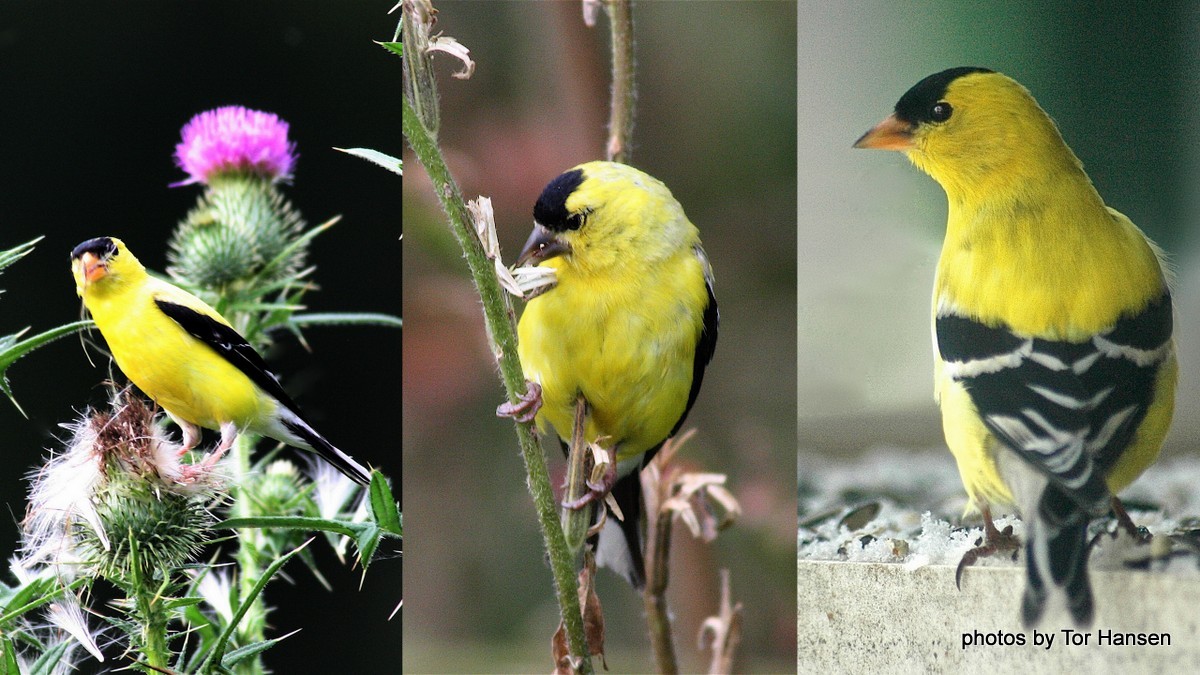
Much to my surprise, not long after I retreated indoors, did a virtual flock of goldfinches find the seeds. This feeding flock was comprised of pale gray-green females and showy bold yellow males that flit and hopped about in the shelter under the porch above. Eagerly they explored the unfamiliar feeders of different design. As the day wore on, the overall flock beginning with six to seven birds became astonishing 17-18 goldfinches. With no idea that I would host so many finches at once, I was in a state of reverie.
The cylindrical thistle feeder hangs free to swing in a breeze, that seemed as busy as bees building a honeycomb, as five to six birds at once vied for stable footholds. After brief squabbles with flashing wings and feisty beaks tussling they settle down for prying the thin seeds from the galvanized screen. I began a photo shoot with a telephoto lens to get some documentary images that later would be enhanced by the editing capability of my iMac and iPhoto library, some credible quality for greeting cards.
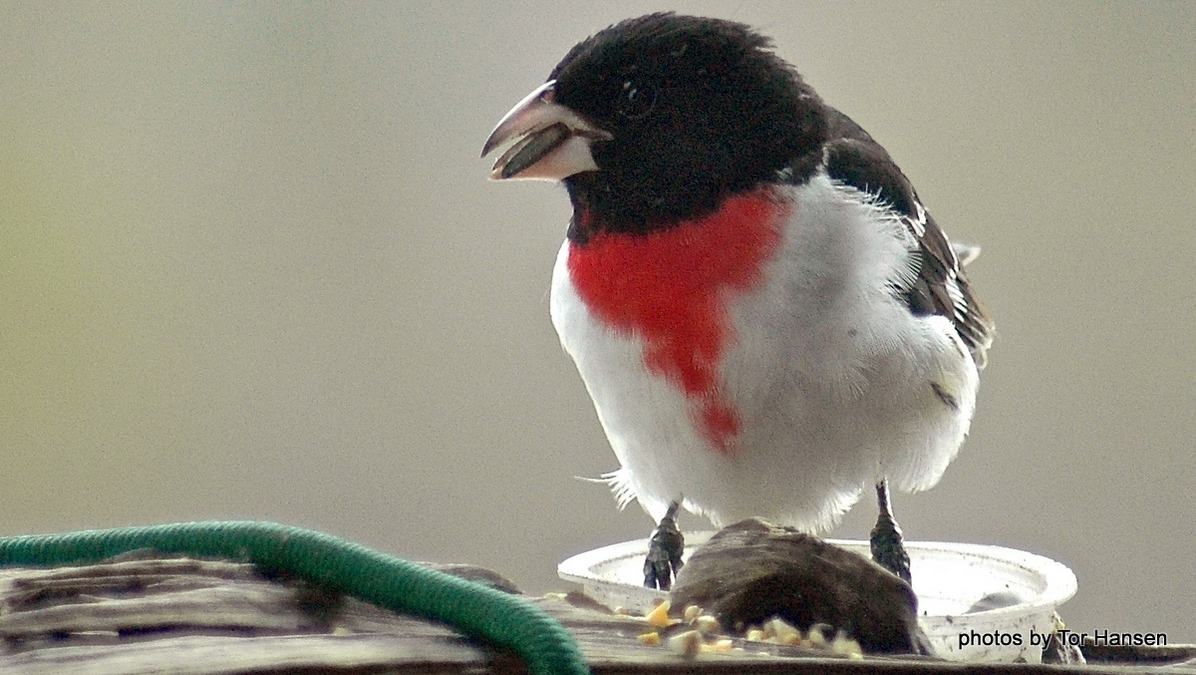
But heretofore unexpected to my diner during a snowstorm, a bold colorful bird burst upon the railing causing me to experience elation, an answer to a prayer. Rose-breasted grosbeak! My heartbeat lep for joy! All birders revere this spring herald as among the chief birds to wish for.
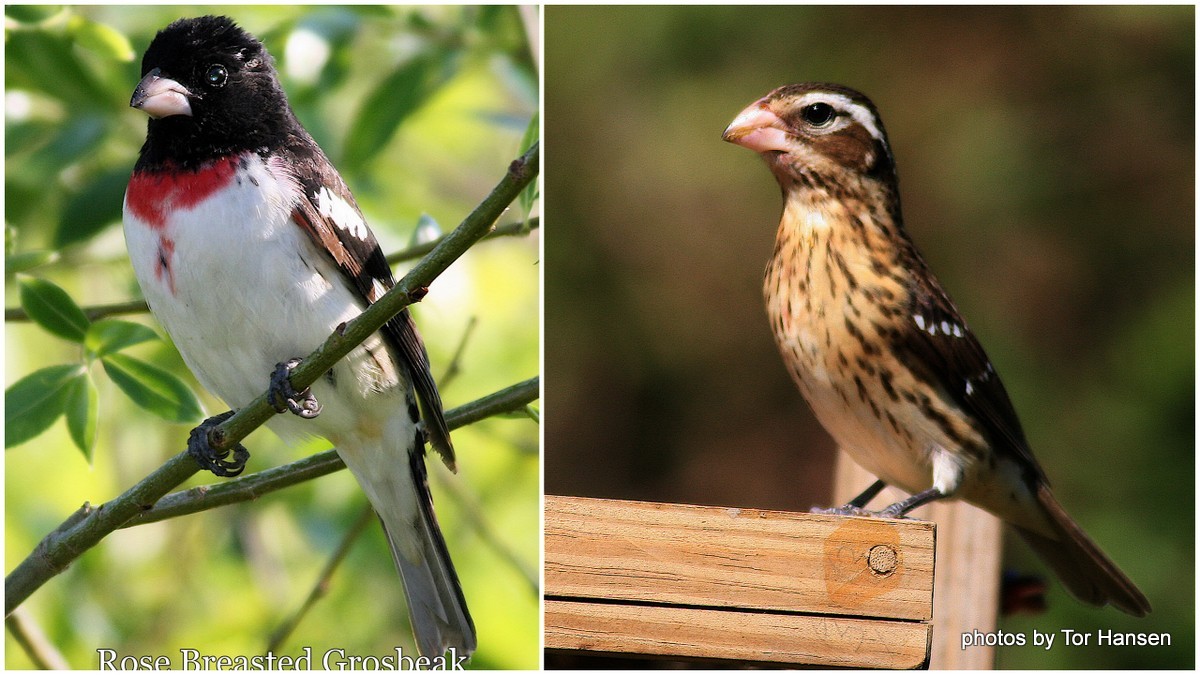
Wearing a rosy red kerchief about neck and breast, the male bird shows a black hood above and a surrounding white below, black wings and white wing bars, and black and white tail.
Unmistakable. No other bird is similar here in the Northeast.
My elation was like a child peering into his taffy box bought at the corner candy store called "happy surprise." To attract its attention, one may twist the toy Audubon bird call. Apply the resin to make bird music. Within 10 minutes, a second male grosbeak arrived, and I wondered about family status, namely was the first bird an alpha male, the dominant bird when in a group? On day two, the alpha male did chase away Bird 2, so this may be the enclosed peck order implicit in their social profile, or Bird 2 may be its offspring.
Other birds seen to frequent my avian diner are boisterous Carolina wren, with strong white eyebrow and bobtail wagging, its syrupy chatter announcing its sterling presence. Downy woodpeckers also prefer suet cakes. See the smaller chipping sparrow with black on white eyebrow, auburn crown, grey cheek and underfeathers, known for its persistent "chip" call.
Grackles have yellow eyes and shimmering bronzy contour feathers. Only a few starlings arrive with light spots on sparkling hues on deep sable; house finches are a mainstay streaked underneath, and front shading to a reddish head, they often chirp a twizzy song and nest on man-made porches and inside lanterns. If a glass panel is missing from its polygon, house finches will nest under a night light regardless.
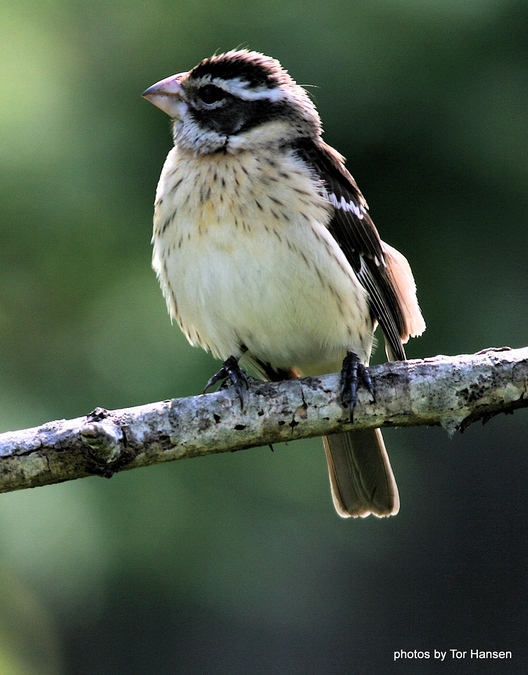
And just today, Sunday, a catbird is here, preferring bread crumbs. And can you believe it? Picture this — for the third day now at 2:36 p.m. — a male rose-breasted grosbeak! And on Day 4, a female grosbeak at last tries to feed beside her mate in a basket feeder but is rebuffed and flies off. Looking like a large plump sparrow streaked brown on white, she will return despite the rain, equip with a stout conical beak adept at cracking sunflower seeds. Total grosbeaks seen is three males and two females, day after day thereafter. After Day 7 all grosbeaks were gone.
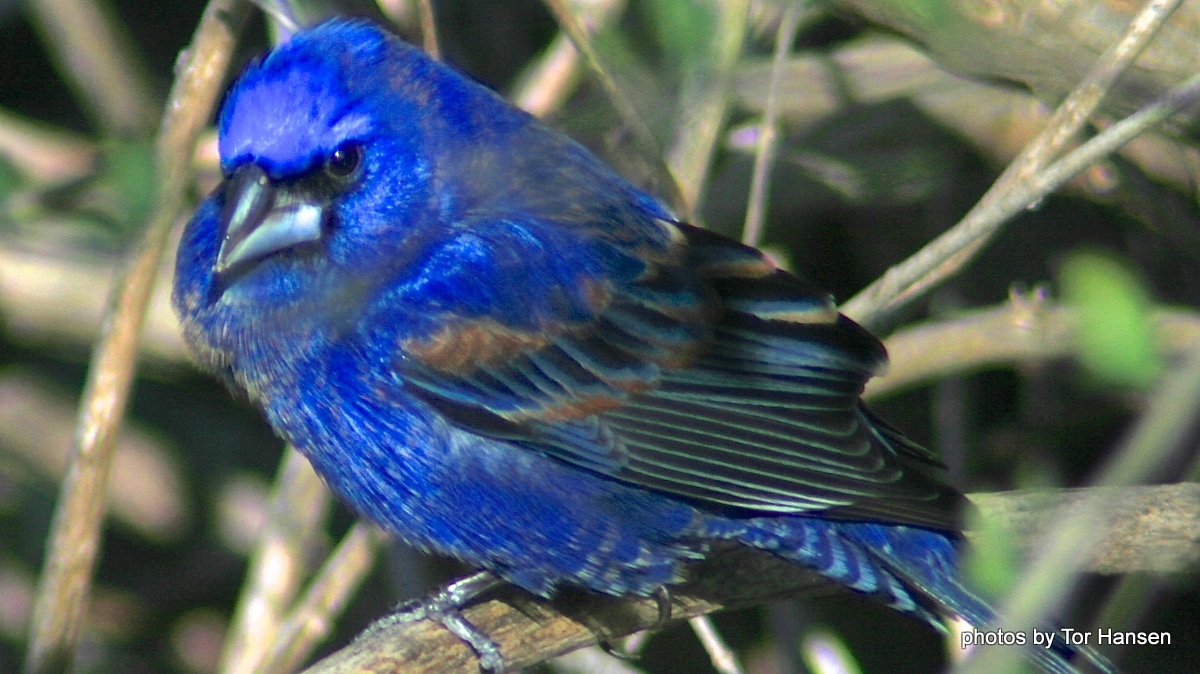
Other grosbeaks include the stunning blue grosbeak, its contour feathers more tropical with a waxy luster, and sparkling neon green primary wing-feather edges. When I lived in North Truro on Cape Cod, at last my prayer was answered when one appeared on deck, the feeder made from an old BX cable spool. Grosbeaks are large finches so named for their thick sturdy bills. Small flocks migrate south to overwinter in South America, migrating north in spring to nest in coniferous forests.
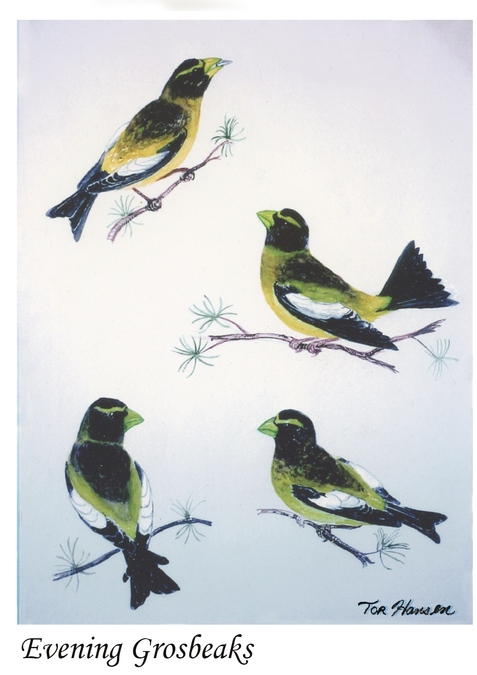
Blues appear more solitary, male and female flying together. Evening grosbeaks however are still in serious decline, as much as 90 percent down of total expected population, their loss attributed to habitat altercation in their northern boreal forest and bitumen displacement. Very impressive on profile and contrasting colors yellow, brown, black and white, evenings do suggest colors of evening skies, and are a treat to behold. None were here this last winter. Prayers are a great start, but safeguarding their habitats is essential.
However, during this ghastly pandemic, the least I could do was to wash and scrub with antiseptic cleaners the whole landscape of Tor's Avian Diner, so that all surfaces are clean again to prevent incubation of the deadly virus. This I did, with hope it is enough.
Now in the last days of May, squawking starlings vie for relishing suet cakes in the wire mesh crate, including three adults and five persistent young siblings. One feisty brown young starling chased away an adult starling, and soon insisted to be fed by its parents, and the adult snatched a chunk and fed the squawking fledgling bill to bill. Oh yes, pigeons too, and add bread crumbs as well. We owe them all their species continuity. Open an avian diner ... and they will come!