Clarksburg Developing Game Plan for Reopening Municipal Buildings
CLARKSBURG, Mass. — Clarksburg was the first town in Berkshire County to shut down municipal buildings because of COVID-19. Seven months later, town officials are hoping to begin the process of reopening the library, Senior Center and Town Hall.
"I'm always constantly asked the question is when are we going to get back to some type of normalcy?" said Select Board Chairman Ronald Boucher on Wednesday. "I think a sense of a little bit of getting back to normalcy is good. I think if people practice proper, you know, mask, distance yourself. I look at the Senior Center, I don't see where there's so much going on there that it'll be a big deal."
The Senior Center in particular provides an outlet for the town's seniors and chance to visit and have a coffee and snack with friends, he said.
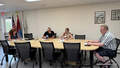
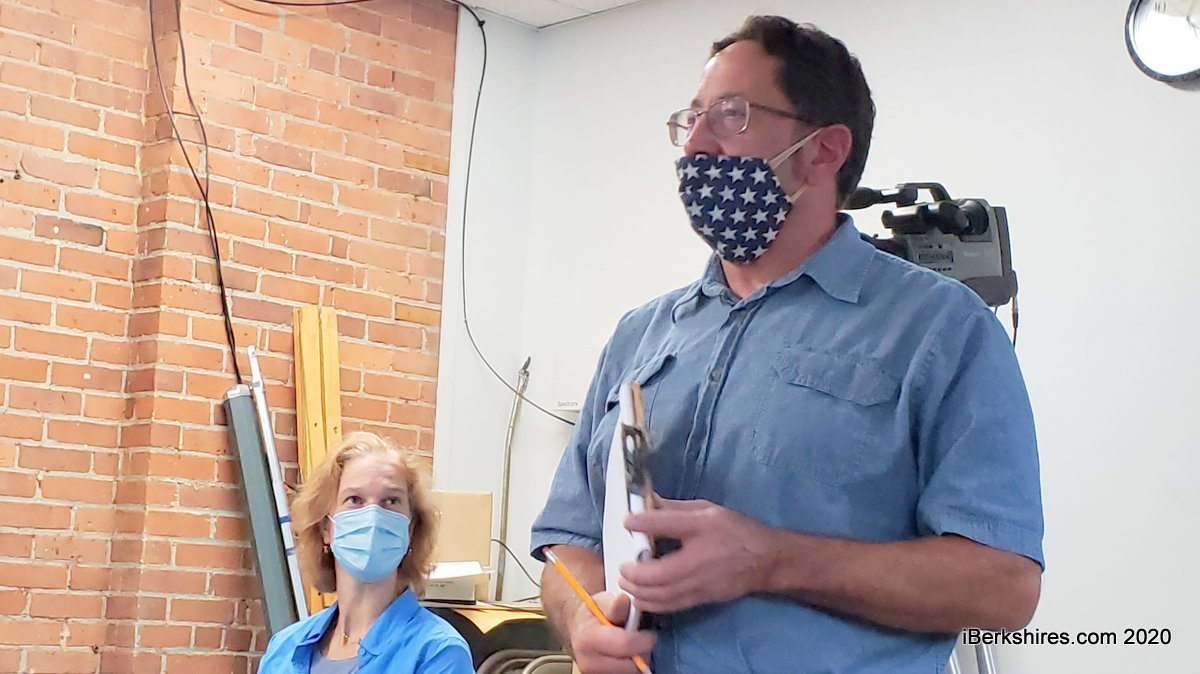
The board held a joint meeting with the Board of Health to determine if it was time to begin easing restrictions on the use of municipal buildings, especially since the Clarksburg School has opened for hybrid learning.
Board of Health Chairman Norman Rolnick said the town is doing "super good" with no new positive cases of the novel coronavirus.
"The school is doing really good now that they opened," he said. "Everybody — the administration, the teachers, the nurse — I mean, they're all doing spectacular jobs keeping the kids safe in there. I stopped up there two or three times, did some inspections, everything's going great."
Clarksburg School opened in a hybrid format Sept. 14, with students switching between morning and afternoons to be in the school building and to learning remote four days a week.
Surrounding communities, however, are not doing quite as well, according to his most recent figures. Adams has several cases and Williamstown was recently back at the yellow level for having an incidence rate of more than five cases per 100,000.
"All other area towns I've seen are seeing increases except for Clarksburg, which we're really going above and beyond what it takes to keep people safe," Rolnick said.
Some towns are opening their buildings, at least partially, to the public although Adams, North Adams and Williamstown remain closed. Pittsfield recently reopened for two days a week, Tuesdays and Thursdays from 8:30 to 12:30.
"Some of them are doing it with a call, and you call in first and then you can enter the building," he said. "There's a lot of different situations that are going on out there."
Rolnick said any reopening of buildings would depend on how well the town continues to do and if it can reopen with pandemic guidelines as outlined by the state.
Boucher said he wanted the Board of Health to take point on how the buildings would reopen and what sanitation and social distancing protocols would be required.
"You guys have been outstanding from Day 1 back in March, you were right there with everything," Boucher said. "I'd love to see things open. But I want you guys, as a board, to set set the terms of reopening."
Select Board member Danielle Luchi, participating by phone, agreed that the town needed start opening up.
"I would just like to see some protocols in place. And I want to make sure that we have people designated to do the cleaning aspect of things," she said. "I think for Norm and [Cynthia Schock] to have a chance to get together and talk about things and then get back to us, how would the board feel if we set Oct. 14 for date for the the Health Department to get back to us?"
Boucher and Select Board member Allen Arnold agreed.
Schock was returned to the Board of Health in the May election after being off for a couple years. She also attended the meeting and was welcomed by the Select Board members, who said they appreciated her return, noting how hard it has been to get people to serve.
Rolnick thought he and Schock would be able to meet to hash out guidance and have a plan ready for the board.
"I think that's a good timing actually," said Schock. "I think it's reasonable because by then the school will have integrated, hopefully, all the students so we can see any impact that that may have on the community. That's probably our largest body of public gathering. So I think that gives us a good margin."
Boucher asked that they also consider Halloween in their planning. The U.S. Centers for Disease Controls recently released guidance recommending low-risk activities such as very small outdoor gatherings and at-home event. Door-to-door trick or treating is being discouraged.
Rolnick said they would look at the Senior Center, Town Hall, the library and Halloween and return with a game plan at the next meeting on Oct. 14.
In other business, the board voted to approve a 20-year, payment-in-lieu-of-taxes agreement with APE Clarksburg LLC, which owns the solar array at 641 River Road. The board last year voted to bill the array for personal propety taxes at $23,917. The company applied for an abatement (the state has exempted arrays from personal property tax) to the Board of Assessors. The abatement equal to the FY20 payment less the project value, times the tax rate.
Town Administrator Rebecca Stone said this came to $5,939. The company agreed to this amount — the difference between annual tax and decrease in value — as the PILOT. Stone said this will change each year based on the tax rate and the value of the property, which is currently $331,000.
"The lowest amount we'll get is around $2,000 a year. So at least that's something between [$6,000] and $2,000 over the next 20 years, she said.
Boucher gave kudos to Stone and Assessor Ross Vivori for getting the deal done. The town has been trying to reach PILOT agreements with this solar array and another one on Gravel Bank Road. A third array on River Road had agreed at the start to a PILOT. Stone said this was also a huge effort on the part of the solar developer.
• The board also acknowledged the appointment of a temporary town clerk assistant, Jessica Sweeney, who is a city councilor in North Adams. The town is currently without a permanent town clerk and has appointed Rowe Town Clerk Paul McLatchy III as an interim. A special town meeting recently voted to make the elected town clerk an appointed position; this will still have to go to a ballot vote.
• The board set a meeting for Oct. 28 to begin reviewing the town's permitting process. The procedure was questioned at a recent Planning Board meeting when an applicant said he had to develop a special permit application to submit because there were no forms and expressed his frustration at not being able to get a direct answer to any of his questions.
"Over the last few weeks, we've come to understand that our permitting process needs a little help," said Boucher. The board will request it be a joint meeting with the Planning Board and Conservation Commission, and also wants the building, gas, electric and plumbing inspectors to attend as well.
• The board went into executive session to discuss contract negotiation with Police Chief Michael Williams.
Tags: COVID-19,
More Coronavirus Updates