Williamstown Sign Commission to Begin Review of Bylaw

The new signage approved by the Sign Commission for placement on Field Park.
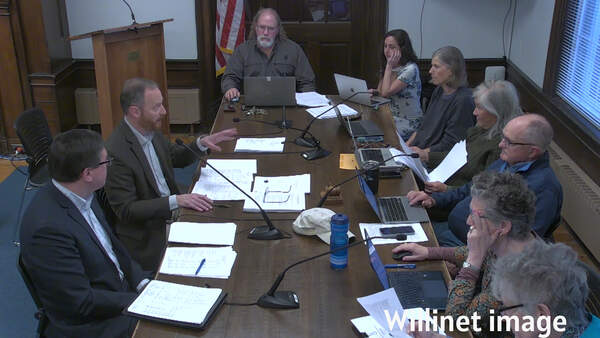
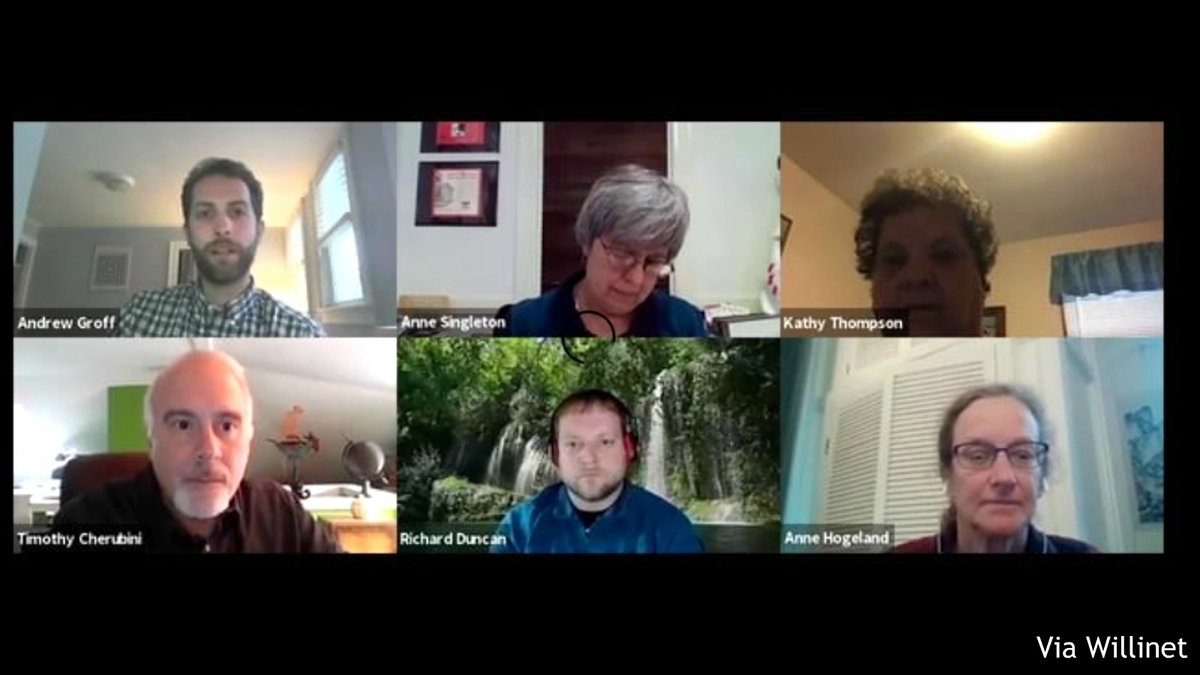
On Thursday, the commission met to deal with a couple of applications and discuss a request from Town Hall to look into a decades-old bylaw that appears to be out of step with current practice.
The commission agreed to designate two of its members to work with town staff and town counsel on a bylaw amendment proposal that the full commission can review and on which it can collect input from the general public.
Community Development Director Andrew Groff, who staffs the commission, told its members that given the U.S. Supreme Court's 2015 decision in Reed v. Town of Gilbert, Ariz., a review of the bylaw is a couple of years overdue.
"The rules have changed, and our bylaw is woefully out of date in that regard," Groff told the commissioners.
In the Reed case, the Supreme Court upheld the principle of "content neutrality" in a challenge to a local law regulating "Temporary Directional Signs Related to a Qualifying Event."
"[A]n innocuous justification cannot transform a facially content-based law into one that is content-neutral," wrote Justice Clarence Thomas in the court's opinion on a unanimous decision.
By that standard, even the title of the town code Section 53-7.4, "Temporary political signs," may not withstand a court challenge.
The bylaw goes on to limit "political signs" to ones "announcing candidates seeking public office, political parties and/or political and public issues contained on a ballot." It limits such signs to a period "not to exceed 60 days prior to the date of the election to which such signs are applicable." It requires signs to be removed within seven days after an election. And it restricts placement to "not more than one temporary political sign … on any zone lot."
In other words, there is a lot in the bylaw that goes against the current practice in town.
"Just about everybody who has political signs on their property has more than one," Groff said. "Based on where the Supreme Court has gone on free speech and how it interplays with signs, I really don't think our bylaw that says one political sign per property passes muster."
That is why the town does not bother to enforce elements of the bylaw.
"I don't think there's a compelling municipal reason for the town to be expending time, people and resources to limit people's right to political speech on their own property," Groff continued. "I don't have the authority to go on private property to remove said signage. So the process would be for us to send demand letters to several hundred people and end up at district court in North Adams, and I don't see that that process would end satisfactorily for town hall or for the community at large."
That said, there are elements of the bylaw, like the size of signs, that do speak to a compelling public interest: safety. And Thomas' opinion notes that municipalities can regulate "size, building materials, lighting, moving parts, and portability."
Groff asked that two members of the five-person Sign Commission join him and a constitutional law expert from town counsel KP Law to look at how to write a bylaw that achieves the design principles the town desires without addressing content.
Commission Chair Anne Singleton questioned whether there was enough time to draft a revised bylaw in time to get it on the spring's annual town meeting warrant. But Groff noted that, unlike the Planning Board, which drafts zoning bylaws, the Sign Commission is not restricted by the same timetable that basically forces the former to finish its work by the end of February or early March.
"We don't have to finish [a sign bylaw] until the Select Board closes the warrant, which is generally in early April," Groff said. "And it doesn't have to have a formal public hearing that has to be advertised in the newspaper [unlike zoning bylaws]. It can be proposed to the Board of Selectmen and included on the warrant, and the townspeople can vote on it by a simple majority."
While a public hearing prescribed by Massachusetts General Law may not be required of the Sign Commission, it still should allow time for discussion as a new sign bylaw is developed, Groff said.
"I think it's going to be important for this commission to talk about it at public meetings and get a lot of public feedback," Groff said. "But the first key is we need to work with our folks at KP Law and understand what we can and can't do anymore."
Singleton and Richard Duncan agreed to serve on the working group to talk with the town counsel about the issue.
In other business on Thursday, the Sign Commission permitted First Congregational Church on Main Street to again this year post a seasonal sign expressing the message that "Immigrants and refugees will always be welcome here" from Nov. 23 through Jan. 10.
And it OK'd new permanent signage for Field Park explaining the 1753 House, an historic renovation built in 1953 during the bicentennial celebration of the town charter.
The new sign, which will stand about the same height as the previous sign, will acknowledge the historic presence of the Mohican Nations on land currently named for Ephraim Williams.
Lauren Stevens of the town's 1753 House Committee spoke on behalf of the application, which the commission approved, 5-0.
"The committee liked the idea of adding an acknowledgement of the Mohicans who were here before us, so did the town's DIRE Committee," Stevens said.
Tags: signage,