Drury High Switches to Remote Learning Until After Thanksgiving
NORTH ADAMS, Mass. — Drury High School will go to fully remote learning until after the Thanksgiving holiday after a second individual tested positive for COVID-19.
Grades 7 and 8 had already shifted to remote learning until at least Nov. 19 after an individual reported testing positive on Tuesday.
School officials on Friday learned of a second positive test for COVID-19 in an individual at Drury High School. The shift to remote is an effort "to minimize the risk of additional positive cases," according to a news release on the school district's website from Assistant Superintendent Kimberly Roberts-Morandi.
"Cleaning and disinfecting of the exposed location will be completed in accordance with the DPH and CDC guidance. Every individual with a potential exposure has been given instructions on the course of action they need to take, including self-isolating and testing, if directed," the release states.
The high school will be closed and students will be fully remote effective Monday, Nov. 16. Cohort A will resume in-person instruction on Monday, Nov. 30, and Cohort B on Thursday, Dec. 3.
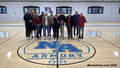
Students who are attending the Greenhouse program or Armory Campus are not affected and will continue their usual schedule, including in-person instruction.
Novel coronavirus cases have risen sharply in the county, particularly in Pittsfield, which has put all schools on remote learning and suspended table service at restaurants. North Adams has not gotten to that point, but city officials say they are keeping an eye on local cases.
Statewide, there is potential for the governor to rollback the Phase 3 reopening plans as a number of communities have already taken a step back, including Pittsfield. A field hospital is being stood up at the DCU Center in Worcester, the first since June.
In Williamstown, the private Pine Cobble School went remote this week until after the Thanksgiving break after its four sending counties, Berkshire, Bennington, Rensselaer and Washington, rose above the risk indices for more than 72 hours.
Other school districts remain open but are cautiously watching the numbers.
"Transmission is not occurring within our school settings but primarily outside of school in social gatherings," Southern Berkshire Regional School District Superintendent Leslie Blake-Davis wrote to parents. "Our response has been to closely monitor conditions in our learning settings as we become aware of test results and community metrics."
Tags: COVID-19, NAPS,
More Coronavirus Updates