Social Justice Club Explores Mohican History in Stockbridge
.JPG)
The bust above the entrance of Town Hall, the former Plain School, is believed to be Chief Konkapot, who had approved the Christian mission.
These chiefs grappled with accepting a missionary by the name of John Sergeant. They took four days of debate and then exchanged a wampum belt and agreed that the Mohican Nation would now be centered in "Indian Town" instead of the principal homelands in Hudson Valley.
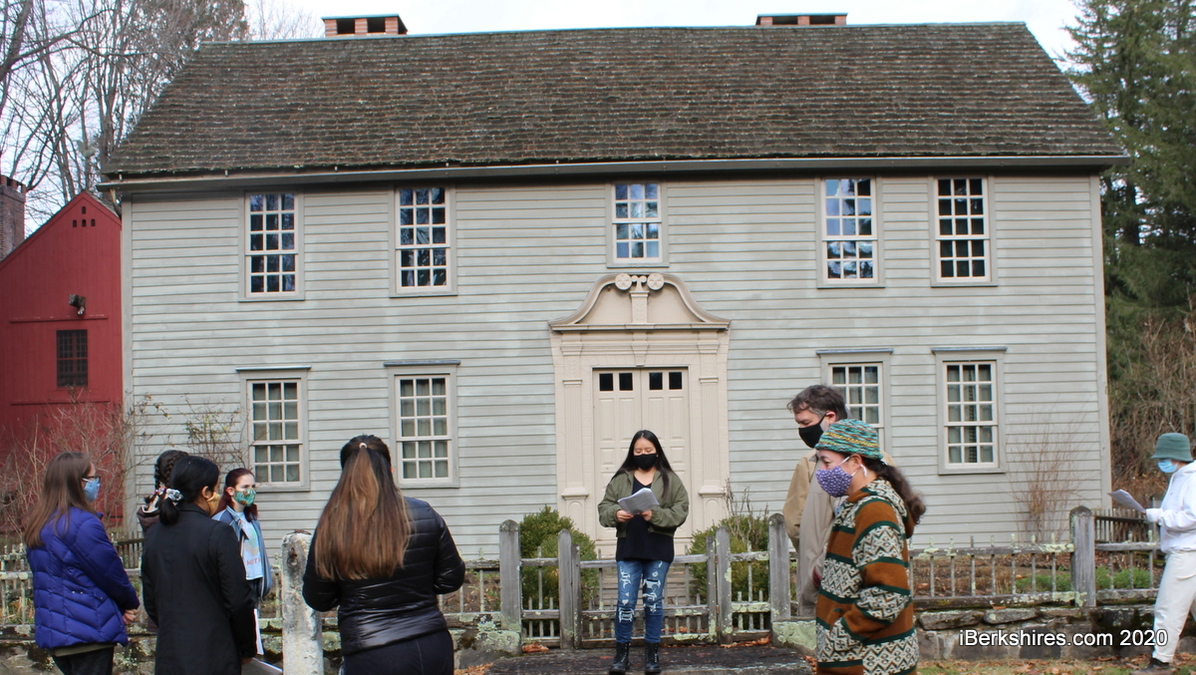
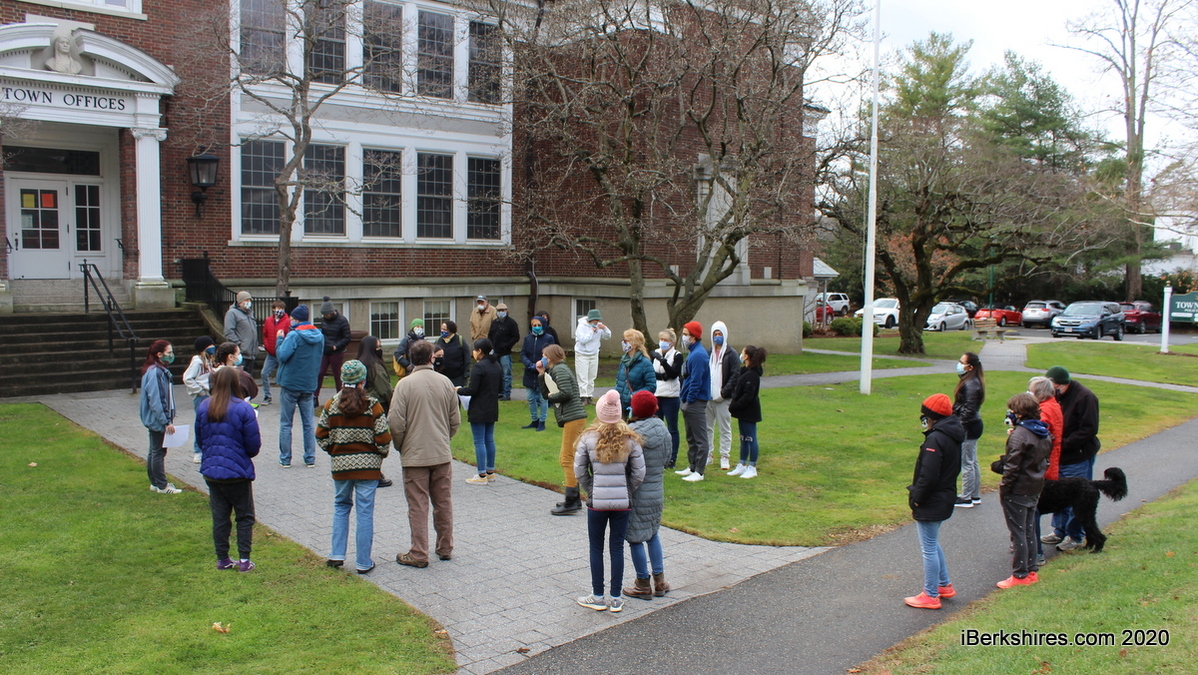
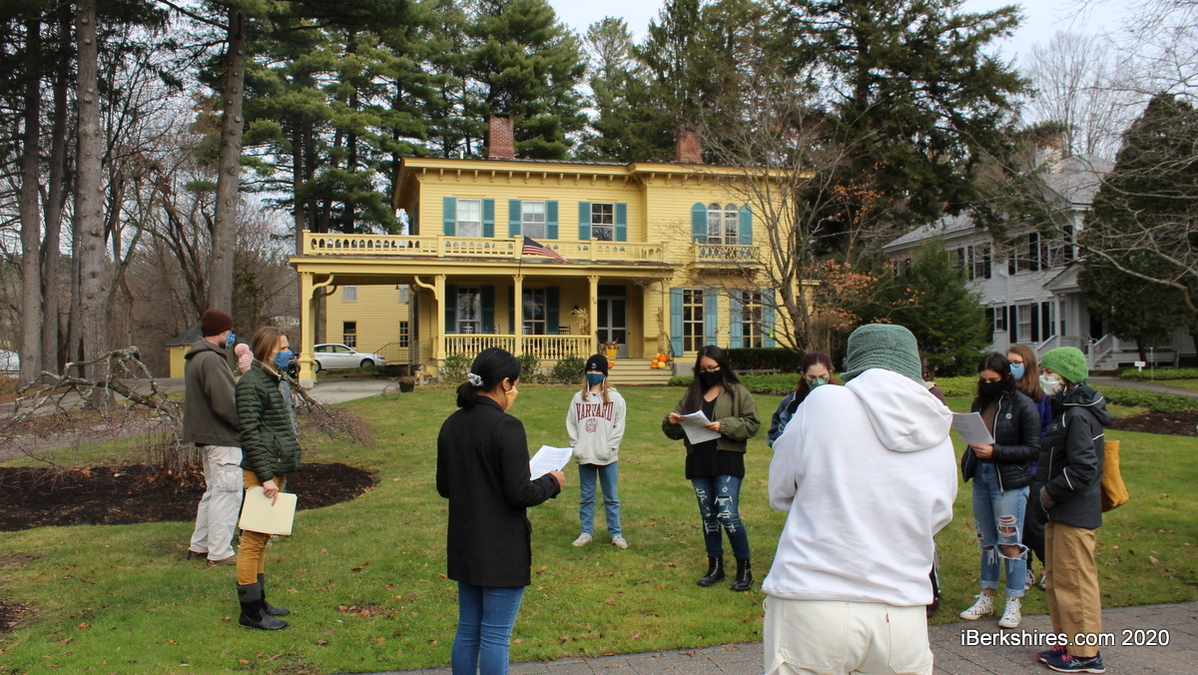
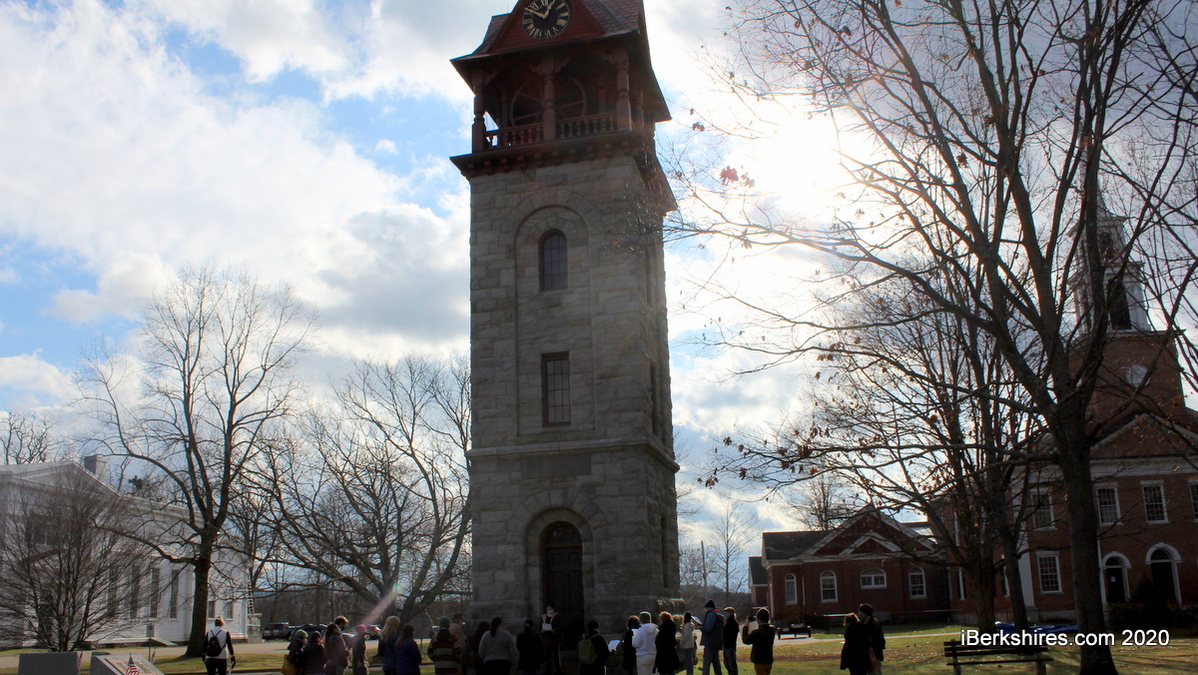
The history of the Stockbridge-Munsee Community was explored Saturday during a walking tour of Main Street by the Mount Everett Social Justice League.
The club centered at the Sheffield high school discusses issues around racial injustice, so organizers wanted to do an event, especially around Thanksgiving.
Formed over the summer, the club has since started a program to get more diverse books in the Southern Berkshire Regional elementary schools, placed a free book box in downtown Great Barrington featuring diverse books and authors, and helped club member Lucia Cicerchia arrange the Great Barrington Women's Rally in October.
"I love it so much," said Mount Everett Regional School senior Cecelia Caldwell. "Just within ourselves we try to always keep educating ourselves, we do monthly sort of book clubs where we pick topics and pick what we read and then discuss."
High school librarian Michelle Raszl said the club is small but very dedicated to the topics they study and advocate for.
"I'm really happy to see that kids are so impassioned," she said.
Raszl reached out to the Stockbridge-Munsee Community for this event. The Mohican people were pushed out of Stockbridge into New York and now Wisconsin, where they were given 23,000 acres of land to compensate for what they originally had in Stockbridge.
The walking tour was created by the Stockbridge Munsee Community, which has ancestral pilgrimages back to Stockbridge. They also provided the historical facts for the tour.
Many Stockbridge residents aren't aware of the Native American history that the town holds, Raszl said.
Raszl worked with a tribal historic preservation officer in Troy, N.Y., for this event. In August 2015, the Stockbridge Munsee Community of Mohican Indians opened its New York Tribal Historic Preservation Office in Troy. This was seen as a significant development because of the Mohican tribe's historic homeland in Hudson Valley. An office was also opened in Wiliamstown.
Raszl said this is a great thing to educate the public on because not only is it local, but it has happened everywhere and is still happening.
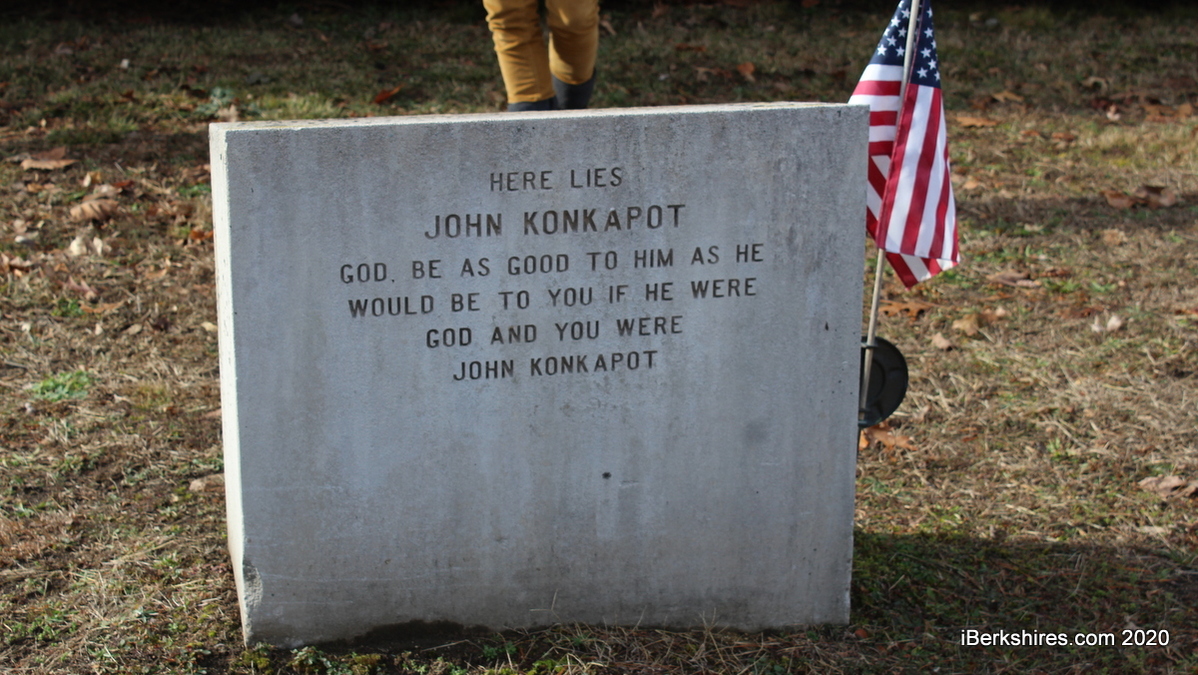
The tour took participants on a walk down Main Street, stopping at 11 locations to give a short history lesson on their ties to the Mohican tribe. These locations included the Red Lion Inn, the Town Hall, the Mission House, the cemetery, and the Indian Burial Ground.
Members of the Mount Everett Justice League took turns reading historical facts at each location.
Today, the Mohicans continue as a federally recognized Native American nation called the Stockbridge-Munsee Community. They have roughly 1,500 enrolled members and are based on a reservation in northern Wisconsin.
The Stockbridge natives were primarily Mohican people who existed in the region long before the town. Stockbridge was first called "Indian Town" with the stated purpose to be a Christianized settlement. This was intended to be an experiment in assimilation to supposedly help the tribe fit in with colonial society, similar to the 14 other Puritan towns that had been established in New England between 1651 and 1678.
On March 17, 1735, the Massachusetts Legislature granted a six-mile square township to be laid out on the Housatonic River north of Monument Mountain, and in 1737 a royal charter creating Indian Town gave 1/60th of the land each to Sergeant, a schoolmaster, and four English families.
This was a total of 2,304 of the 23,404 acres that made up Indian Town. Because of this, the Mohicans, who had an initial population there of about 125 people, were expected to model themselves after the English families.
For more information on the Stockbridge-Munsee Community, visit www.mohican.com.