McCandless: District, Union Working to Improve COVID-19 Agreement
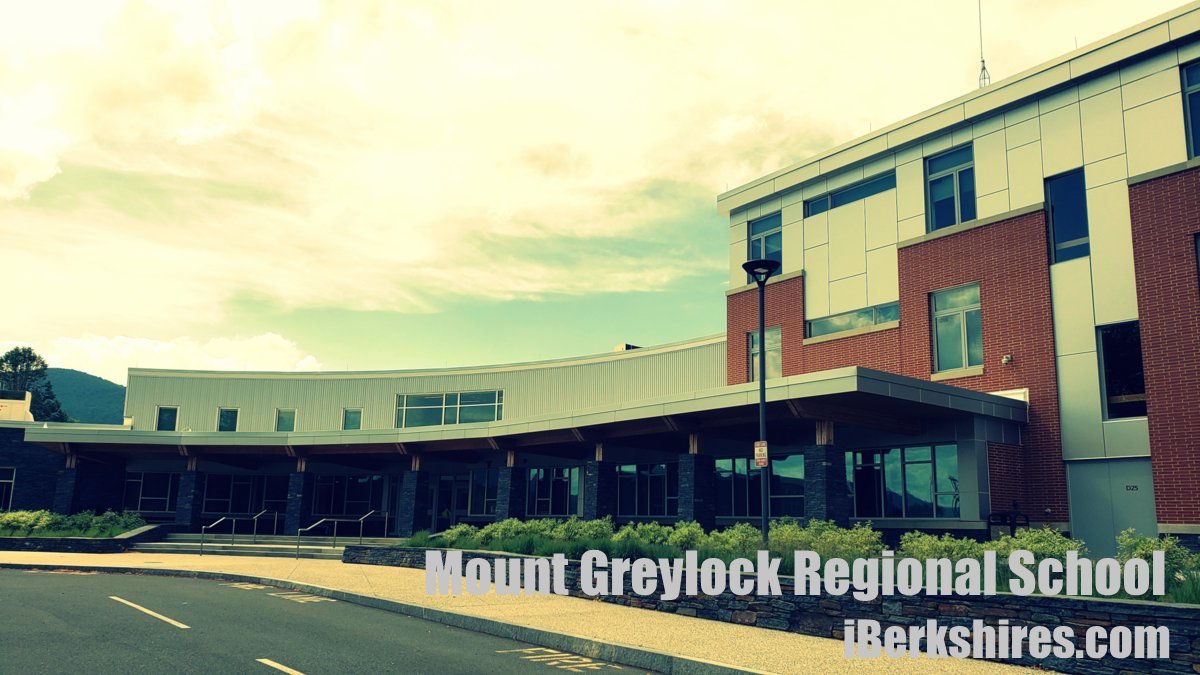
WILLIAMSTOWN, Mass. — Mount Greylock Regional School District officials are working to tweak a memorandum of understanding with the teachers union that allowed the opening of school in September, but it is too soon to say whether those talks will lead to a resumption of in-person instruction.
Last week, Mount Greylock went to fully remote learning all three of its schools after the county's 14-day COVID-19 test positivity rate reached 3.01 percent, just north of the 3 percent threshold for remote learning in the September MOA.
Superintendent Jason McCandless on Tuesday told the School Committee that he is not overly optimistic that metric will decline when the state Department of Public Health releases new numbers on Thursday evening.
In the meantime, the administration is in talks with the Mount Greylock Educators Association about aspects of the MOA. Next week, those conversations will be expanded to include the district's counsel and a representative from the Massachusetts Teachers Association, the statewide union.
"The process is iterative and ongoing," McCandless said in answer to a question from Jose Constantine. "We have a demand to bargain letter from the Mount Greylock Educators Association. That's why the MTA rep and our attorney are getting involved. That's very specifically around the map and the color-coded thing and the gray communities and yellow communities and green and red communities. It's very specific around that.
"But every time we sit and spend time with the educators that serve as the leadership team of the association, we are working on that [MOA]. We are working on really specific points for really specific groups of students in terms of expanding or contracting. But, in essence, we're also having these bigger conversations about: Is it time to revisit this metric that may have been appropriate in July but might not be appropriate right now?"
McCandless said it was up to the School Committee whether it wanted its members involved in the negotiations at this point. On Tuesday, the panel agreed to name Julia Bowen, Curtis Elfenbein and Chair Christina Conry to its Negotiations Subcommittee.
Ultimately, any major changes to the MOA would need signoff from the full School Committee, McCandless said.
In answer to a question from Carolyn Greene, McCandless dismissed the idea that such talks should occur in open session, an idea that was discussed on the committee in the summer while the MOA was under development.
"As much as it's very tempting to wish to negotiate in open sessions, I've never been engaged in a negotiation … that was done in an open meeting," he said. "The propensity to draw stark, contrasting lines between 'us' and 'them' is always present in negotiations. Doing those negotiations publicly … magnifies the already pretty organic ability to really draw stark, contrasting lines between what you want and what I want.
"I don't know that it would be of much value."
As for the pressing issue of getting kids back in the school building, the School Committee on Tuesday heard public comments for and against taking a more aggressive approach to opening the building doors.
Dr. Catherine Keating, herself a former member of the now-defunct Williamstown Elementary School Committee, read a petition she helped author that gained 124 signatures in just 36 hours.
"I have been witnessing the negative repercussions of remote and hybrid learning on families on a professional level all day at work and also at home with our children," the family practitioner said. "Not to sound dramatic, but I do feel like we're witnessing a crisis."
After introducing herself to the committee, Keating read into the record the letter circulated online that pointed to adverse impacts of school closures, including a widening income gap.
The letter, which also was sent to the office of Gov. Charlie Baker (whose administration has been pushing school districts to prioritize in-person learning), suggests that the district should abandon the AARBB model of hybrid learning at Mount Greylock and stop using Wednesdays to do a deep clean at the middle-high school. The letter-writers point to a New York Times article on a study that found no evidence that such cleaning impedes the spread of the airborne novel coronavirus.
And the letter said that with "a bit of creativity," the district should be able to have full-time learning at both its elementary schools while maintaining "between 3-6 feet" of social distancing.
The School Committee last week also received a letter signed by nine practitioners at Northern Berkshire Pediatrics that echoed Keating's warning of a crisis in pediatric health.
"In our clinic, we are seeing far more major depression, anxiety, and thoughts of suicide in teenagers than we've ever seen before, and the local therapists are booking out months because they are so busy," they wrote. "One of us reviewed three separate Emergency Room notes from suicide attempts over the holiday weekend.
"Many children are left to care for siblings while they are all attempting to learn remotely so that parents can work. We are all seeing record amounts of weight gain -- some in excess of 30 pounds -- and increased injuries due to lack of appropriate supervision. We are seeing younger children without schedules or structure at home presenting as behavior problems that their already stressed parents do not handle well."
On the other hand, Amie Hane, a parent of two students in the district and psychology professor at Williams College, sent the School Committee a letter that acknowledged the "important information" provided by Northern Berkshire Pediatrics but argued against throwing open the schoolhouse doors in the middle of a pandemic.
"To claim that schools are safer than homes is misleading," Hane wrote. "It may preclude making any efforts to further mitigate infection risk inside buildings while blaming teachers for not being willing to serve as frontline workers.
"The claim that outbreaks in schools have not been seen is not supported by the data. In the commonwealth alone, there were 30 clusters in the last two weeks in the K-12 schools, as reported in the [Dec. 3] Mass Dashboard. There were 90 clusters in childcare settings. Cluster risk was ranked as follows: 1. households; 2. long-term care facilities; 3. childcare centers; 4. K-12 schools. The K-12 school cluster counts in the last two weeks exceeds hospitals, colleges, social gatherings, restaurants, recreation centers and places of worship."
Hane noted that when Mount Greylock closed to in-person learning last week -- prior to the districtwide move to remote learning -- it did so with the goal of reviewing its protocols. Since the results of that review were not available, she thought a push to reopen was premature.
"Finally, teachers are not health-care providers," Hane wrote. "Teachers are educators. Teachers do not take the Hippocratic Oath to do no harm. But they indeed do less harm by promoting public health in this pandemic as they watch numbers and work hard to flexibly educate in and out of the building."
McCandless stressed the difficulty of balancing the risks of virus transmission against the risks to students' social/emotional and academic development. And he said he understood the frustration some may feel with the pace of change to address the latter.
"This situation has really brought to light that there are lots and lots and lots of answers," McCandless said. "Everybody who you speak with has an answer. My frustration as a leader right now is that I am kind of viewing most of the answers as variations of wrong, where at least I know they're wrong for somebody or a large group of somebodies or a small group of somebodies. But the absolute right answer seems to be invisible, if it's present at all.
"We're actually moving forward. For some families and some folks, it's just glacial and infuriating. But for others, we're moving forward in positive and substantive ways to try to identify what's working in the current agreement and what we could be doing better across the board."
Tags: COVID-19, MGRSD, remote learning,
More Coronavirus Updates