Mount Greylock Investigating Racist 'Zoom Bomb' at High School
From Principal Jacob Schutz: Mount Greylock Regional School is committed to being a community that promotes the ideals of diversity, belonging, inclusion and equity. We recognize the presence of systemic racism and pledge to do the work to build an antiracist school community.
— Mount Greylock Regional School (@MGMounties) January 21, 2021
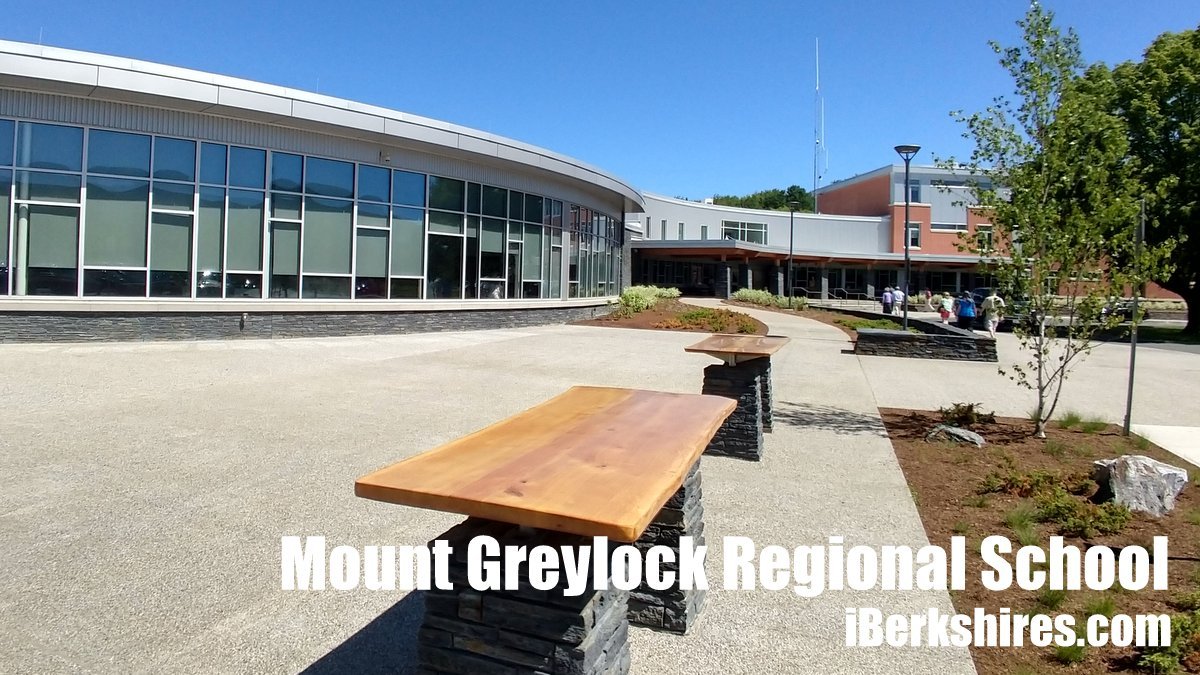
WILLIAMSTOWN, Mass. — Mount Greylock Regional School is investigating an incident in which an intruder entered a virtual classroom to target a student with racist audio.
Principal Jacob Schutz and Assistant Principal Colin Shebar notified the school community of the Thursday incident in a campuswide email at 4:56 on Thursday, about four hours after the school acknowledged the incident on its Twitter account.
According to the school's incident report, which was shared in the email, at the end of a high school class, a student lied his or her way into the room and played a song that involved the lyric, "f***k the (n-word)."
The incident report goes on to explain the outreach from school staff to the student targeted and his or her family.
"Mount Greylock Regional School is committed to being a community that promotes the ideals of diversity, belonging, inclusion and equity," Schutz tweeted and included in the email blast. "We recognize the presence of systemic racism and pledge to do the work to build an antiracist school community. Racist actions have no place at MGRS."
Later Thursday evening, Schutz said the school has notified the Williamstown Police Department about the incident, but he declined to say the extent to which outside agencies are assisting school personnel with the investigation.
Schutz also said the school is operating under the assumption that the perpetrator is a student at the middle-high school.
"I would say we have no reason to believe it's anybody other than a student based off of how our Zoom information is published and available to students," Schutz said. "That being said, it's not foolproof."
Schutz said there have been a handful of incidents of students entering virtual classrooms where they did not belong, though none involved targeting of other students over race. He said he is aware of no incidents to date where an individual outside the school community has entered one of the school's virtual classrooms.
According to the incident report, the class was engaged in self-guided work and the teacher was monitoring student work at the time of the incursion.
"During the first half of the class, the teacher heard the 'ding' of someone entering the Zoom waiting room," the report reads. "Upon seeing the student's name, the person was let into the room (the teacher assumed the student had been kicked out of the Zoom and was rejoining). This was the imposter responsible for unmuting and playing the music at the end of the period."
The report indicated many of the students in the class had the volume turned down to concentrate on their work and did not hear the offensive song, which reportedly played for about 30 seconds.
"During this time, the teacher, several times, muted the person playing the music," the incident report reads.
The student whose name was appropriated by the perpetrator, referred to as "the victim" in the incident report, stayed in the classroom after the period ended to make sure that the teacher knew they were not behind the incident.
Mount Greylock staff, including the assistance principal and the victim's counselor talked with the victim over the next couple of periods, and school staff will follow up with the victim's family, the report reads.
School counseling staff will join the targeted class during its next session to help the students process the incident, and the school promised to provide updates on its investigation when appropriate.
In addition, the Mount Greylock administration: met Thursday with the Greylock Multicultural Student Union to talk about next steps; promised to refocus the diversity, equity inclusion goals of the School Council; talked about extending the district's relationship with the Disruptive Equity Education Project; and said it will look at technology updates and training to "better prepare staff and students to appropriately respond in a digital realm."
At Thursday evening's meeting of Williamstown Diversity, Inclusion and Racial Equity Committee, committee members said the were pleased with the school's quick response and efforts to be transparent with the community about the incident.
"We have good partners to talk with," Kerri Nicoll said. "These are issues that are long-standing, and more needs to be done, but we have some windows to do some of that work."
Schutz said he looks forward to sharing that work.
"I want to move forward as a community to figure this stuff out, and we can't do it alone," he said. "I appreciate the support so far that the community has offered, and I look forward to continuing that relationship with everybody."
Tags: MGRS, racism,