Williamstown DIRE Committee: 'Detox' Good for the Town
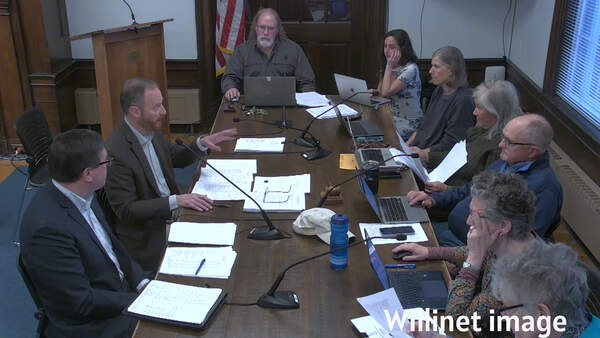
WILLIAMSTOWN, Mass. — As it nears the end of its inaugural year and faces the first departure of a founding member, the town's diversity committee Monday reflected on the importance of the discussions it has had and the perspectives it has centered in the town's conversation.
"One of the things I hope this year has started to plant the seeds of is whatever our backgrounds, whatever our races, whatever our identities, these are all issues that aren't about non-Black people helping Black people," Aruna D'Souza said. "They aren't about non-POC helping [people of color]. They're really about everyone coming together to build the community that they want themselves and their kids to grow up in.
"It's in everyone's self interest, and everyone should be working in their self interest in that way."
Not for the first time, members of the Diversity, Inclusion and Racial Equity Committee acknowledged that while DEI work may benefit everyone, it is going to make some members of the community uncomfortable.
"I would like to see some type of education around centering marginalized voices," Bilal Ansari said when the panel talked about its goals for the year ahead. "If it feels uncomfortable, know that that is just a symptom of white supremacy that you have benefited from in your life, and you're going through withdrawal. Go through your withdrawal, but don't try to take the centering of marginalized voices away. It's detox for you.
"It's a difficult journey. It's difficult to do. But it is the necessary. I understand it's not easy, but detox is good."
D'Souza, who said she will be leaving the committee at the end of June because of changes in her professional life, highlighted how difficult that journey can be.
"Being, in a sense, the public face of conversations people would rather not have, it is hard when some of your neighbors are standoffish because you're saying things they disagree with or tradespeople won't call you back because they know you're talking about stuff they don't approve of," D'Souza said. "It actually changes life in the town."
That said, D'Souza still encouraged people committed to the work of the DIRE Committee to seek positions on the panel if and when they become available.
"But come in knowing, which, as a Black person in 2021 America you already know, it really is work," D'Souza said. "And it's a kind of work that's not always visible. It's worth it. Obviously, everyone is here because they see the potential joy that can come from such work and the potential for this town that can come from such work.
"It's worth it. But it's just not easy having conversations people would rather not have and people don't see the urgency of having because they're not, in a daily way, aware of how it affects their daily lives, too."
D'Souza's upcoming departure raises questions that the DIRE Committee and the Select Board, which created the advisory panel, need to address. The Select Board created the committee last summer, appointing its nine members and giving them a mission "to address [inclusion, diversity and equity] through the development of forums for open and safe discussion of these issues, and for the development of actionable recommendations to improve the attainment of these goals in Williamstown for all residents."
Beyond that, the Select Board intentionally left a lot of the mechanics of the newly created committee — including its name — up to the committee itself.
There was talk among the Select Board of staggering terms for the membership of what became the DIRE Committee (one-year seats, two-year seats, three-year seats that would eventually all become three-year appointments, for example) in order to create continuity. Ultimately, all nine members were appointed for one year with an understanding that individuals could decide at that point whether to continue on the advisory board.
On Monday, D'Souza left the colleagues who will be remaining on DIRE some suggestions for a Year 2 to-do list.
First on her "wish list" was a meeting devoted to the Not in Our County Plege to which town meeting committed in August.
"That might include inviting someone from a town who has implemented that pledge to talk about what works and what's been effective," D'Souza said.
D'Souza also said the DIRE Committee should engage the Williamstown Housing Authority to talk about affordable housing and income inequality, and with the Mount Greylock Regional School Committee on the issue of policing in schools.
"We started a discussion about the police presence in schools but, because the superintendent was not in place yet and all sorts of other things, it was overtaken by events, and we never followed up on that," D'Souza said. "I think having a structured discussion with the superintendent and members of the School Committee, the public, would be a useful thing to do."
Andrew Art suggested that the committee's future meetings should include more conversations with representatives from the Stockbridge-Munsee Band of Mohican Indians.
"They're doing a lot of educating," Art said. "I feel like we should be doing more to also center the work that they're doing locally."
In other business on Monday, the DIRE Committee heard a report from D'Souza about the progress of the community advisory panel that will be recommending an interim police chief to interim Town Manager Charlie Blanchard.
D'Souza said the panel had interviewed four candidates and would be interviewing a fifth this week.
"I've been happily surprised at the quality of some of the candidates," D'Souza said. "A lot of that comes out of people in the town putting out feelers and doing research and soliciting people to apply for the position, which is great. One of the things that's been gratifying this past year is seeing how active people have become in these processes, directly and indirectly."
The committee Monday was to have received an update from Jennifer James, the social worker hired by the town to do a community assessment, but she was not able to attend the meeting, Chair Mohammed Memfis informed the committee.
"The main thing now is to get the website for this [study] up and running," Memfis said in passing along what he heard from James. "The plan is for essentially every single person in Williamstown or every single mailbox to get a piece of documentation about what the research is and inviting them to participate in the research.
"The first piece of this is the communications infrastructure so when they are in front of public forums, people will have information about what's being done and have the opportunity to participate in those types of forums."
Tags: DIRE,