New Pittsfield Culvert Allows Fish, Wildlife to Pass
.jpg)
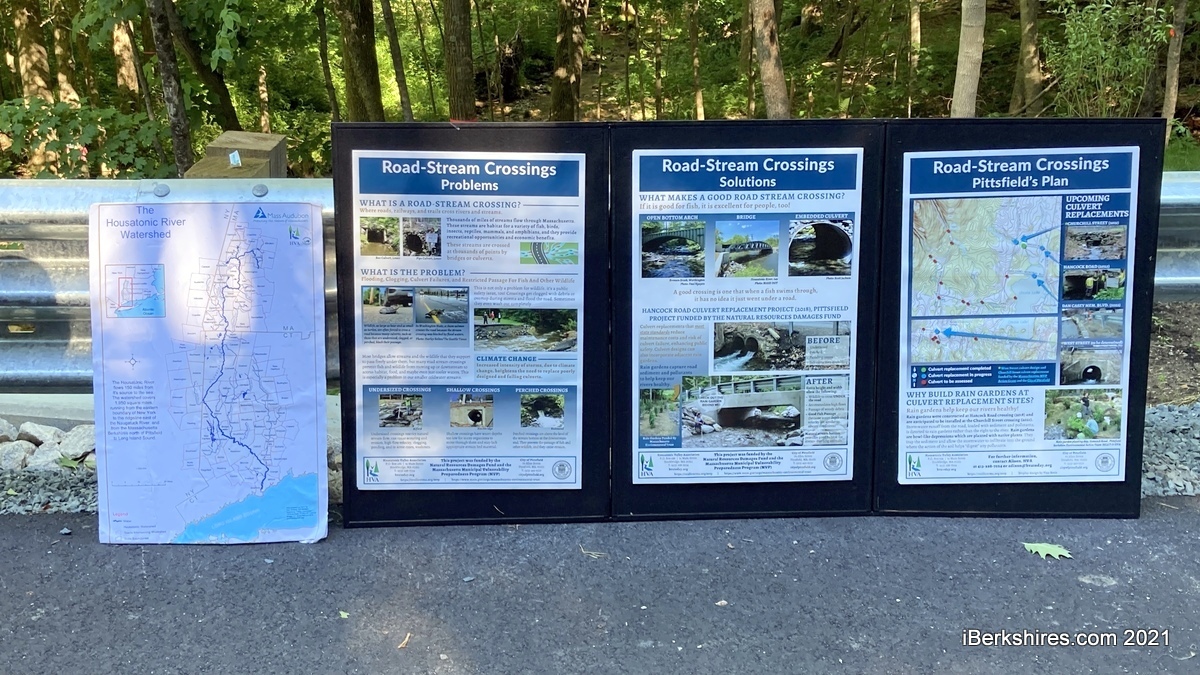
PITTSFIELD, Mass. — After seven months of construction, the city recently finished an 18-by-8.4-foot culvert on Churchill Street that allows aquatic life and wildlife to pass underneath without disturbance.
The new structure is a big improvement from the previous culvert: a 48-inch tunnel that made it difficult for even fish to pass through.
The project was done in collaboration with the Berkshire Watershed Conservation and Berkshire Environmental Action Team.
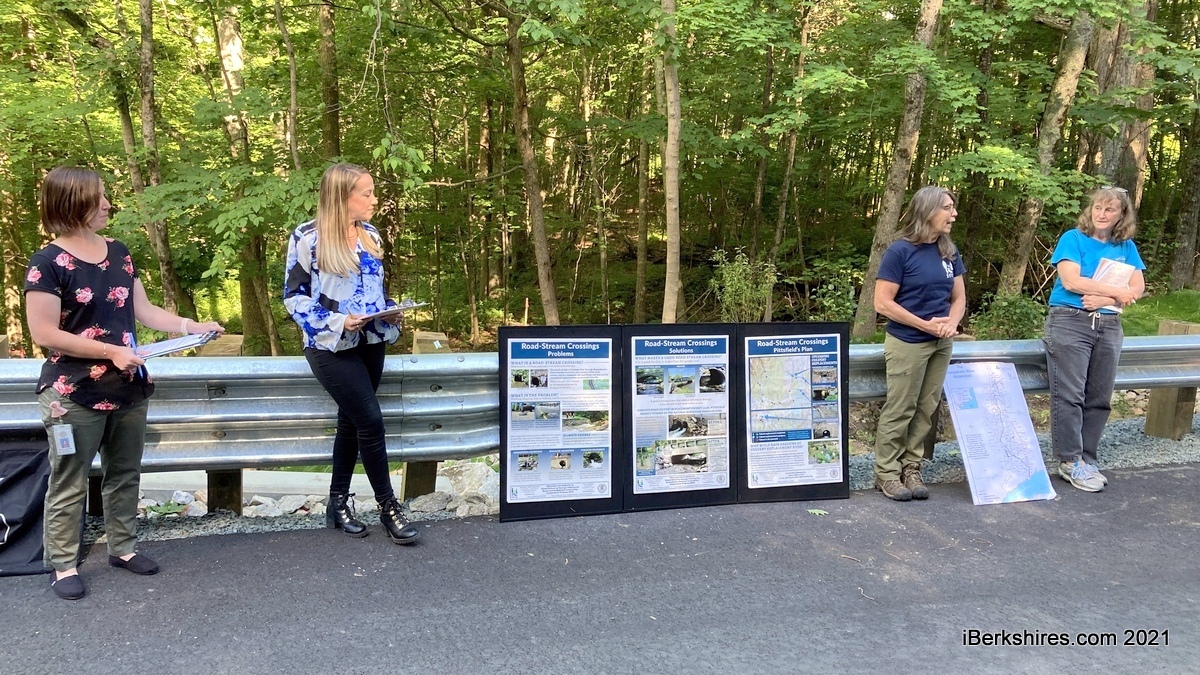
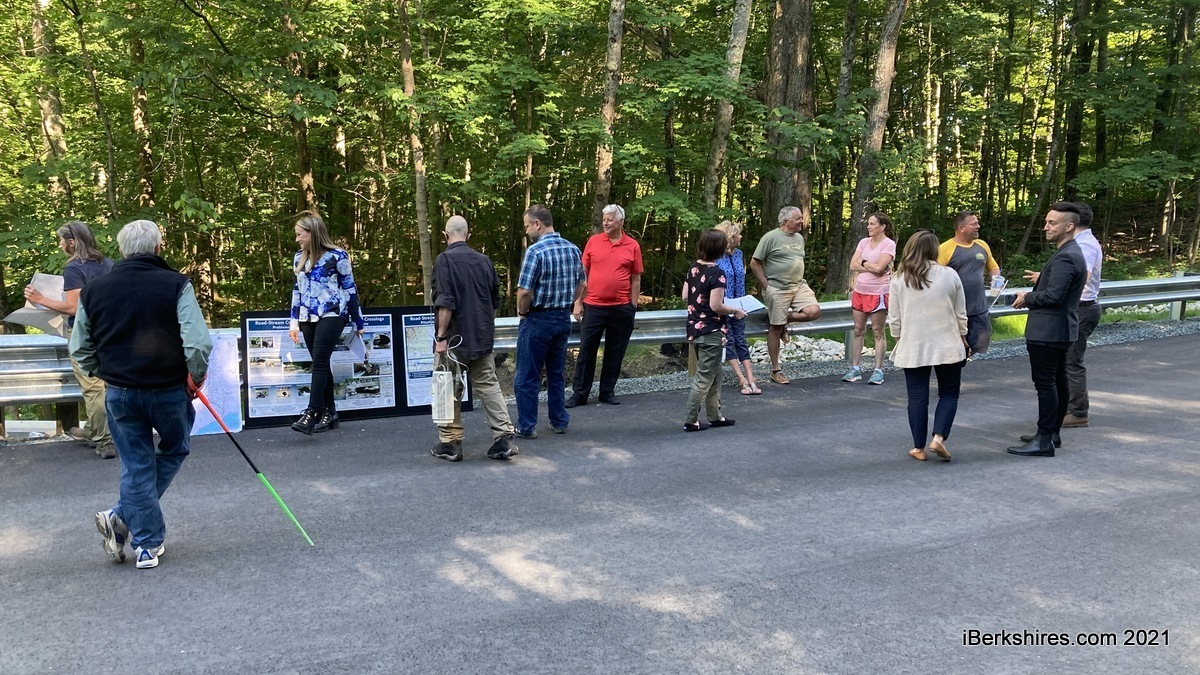
On Wednesday, City Engineer Allison McMordie and Events Coordinator Becky Manship invited the public to the site for an unveiling and a walkthrough of the project, which was funded with around $710,000 from a Municipal Vulnerability Preparedness (MVP) grant and matched 25 percent, or about $170,000, from the city.
Councilor at Large Peter White, Ward 5 Councilor Patrick Kavey, Ward 6 Councilor Dina Guiel Lampiasi, and Ward 7 Councilor Anthony Maffuccio were in attendance at the meeting along with about 10 neighborhood residents.
This culvert was chosen for an overhaul because of the cold, high-quality stream that flows beneath it.
"It's cold enough year-round to maintain a habitat for cold-water fish," McMordie said. "It's critical to keep these waters protected and maintained, especially without any barriers or impacts to the stream."
The original was described as a 48-inch "squashed metal pipe" with stone headwalls in mismatched order that posed passage issues with the stream.
The undersized pipe also posed public safety hazards, the watershed's Manager Alison Dixon explained, because it caused road flooding in high-storm events by clogging with sediment and not allowing water to pass through.
The new design — an 18 feet wide and 8.4 feet tall square pass through — is designed to increase the hydraulic capacity and improve conditions for the wildlife and fish crossing. It is an open-bottom design that makes fish believe they are passing through a natural stream.
A culvert downstream on Hancock Road was replaced in 2018 because it was a barrier for aquatic passage and stream flow like the Churchill Street culvert. The original plan was to overhaul both simultaneously but the downstream structure had to be completed first to not compromise infrastructure.
The city was awarded a planning grant for the project in 2018. At this time, vulnerability assessment work was completed that defined extreme weather and climate-related hazards that may affect the community, identified future vulnerabilities and strengths, and how to take action and reduce risks.
As a result of the study and a city hazard mitigation plan that was created simultaneously, the Churchill Street culvert and a culvert on West Street at Maybrook were identified as high priority.
In June 2019, the city applied for the MVP grant for the replacement of the Churchill Street culvert and the design of the West Street structure and received $709,939. As part of the MVP grant, Pittsfield matched 25 percent with city funds that can be in cash or in time.
The MVP program provides support for cities and towns in Massachusetts to begin the process of planning for climate change resiliency and implementing priority projects. It is an initiative of the Mass Executive Office of Environmental, Energy, and Environmental Affairs.
"This project was actually awarded for about $650,000," McMordie said. "And that didn't include engineering fees or anything like that, so that was just the raw cost of the cover."
The project also received $124,000 in Natural Resources Damages Program grants for additional asphalt that was needed for stormwater mitigation, a post-construction survey, outreach materials, and monitoring construction from beginning to end.
McMordie said the build was met with "quite a bit" of challenges from the beginning and the city is using this as a learning experience. Construction began in December 2020 and ended this month.
There was a delay because of the COVID-19 pandemic, they were pushed into winter construction, and encountering a large number of rocks pushed the project back weeks.
She also mentioned the long detour that brought residents through Lanesborough while they weren’t able to pass through the construction site.
After a resident expressed concern for a damaged culvert farther down Hancock Road, Commissioner of Public Services and Utilities Ricardo Morales said there are a number of other similar structures that are prioritized for renovation.
Tags: culvert, wildlife,