North Adams DPW Taking on Woodlawn Sewer Project
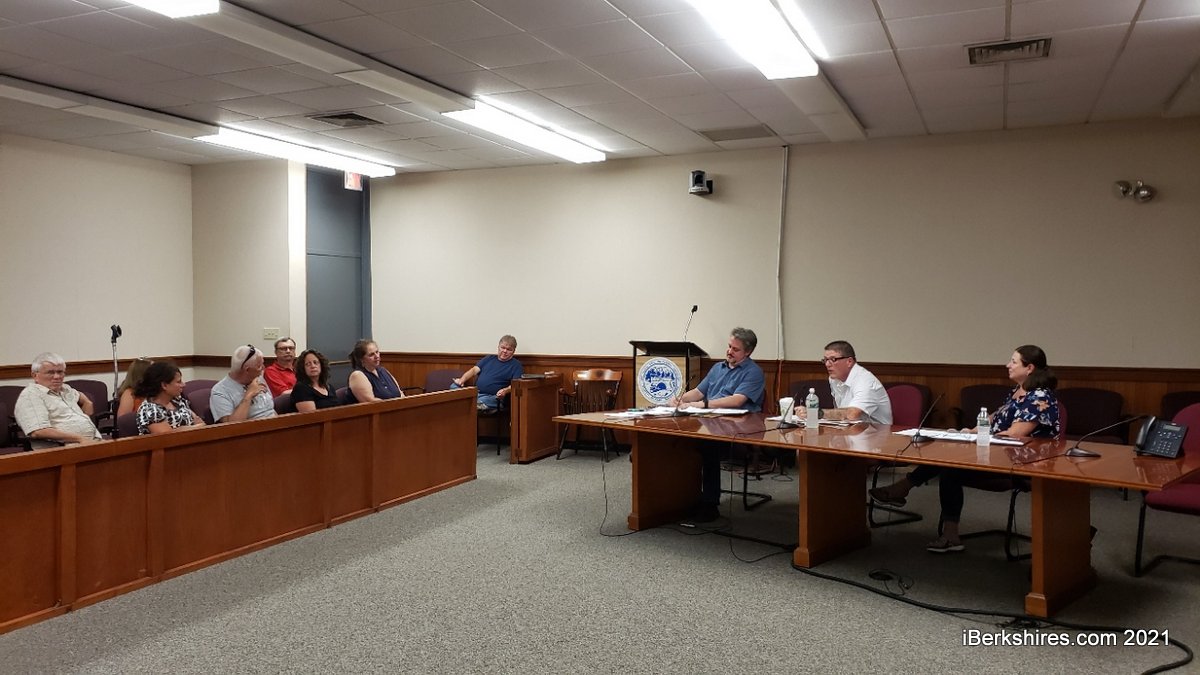
The Public Services Committee — Keith Bona, Peter Oleskiewicz and Marie T. Harpin — meet with Woodlawn residents and Commissioner Timothy Lescarbeau on Wednesday.
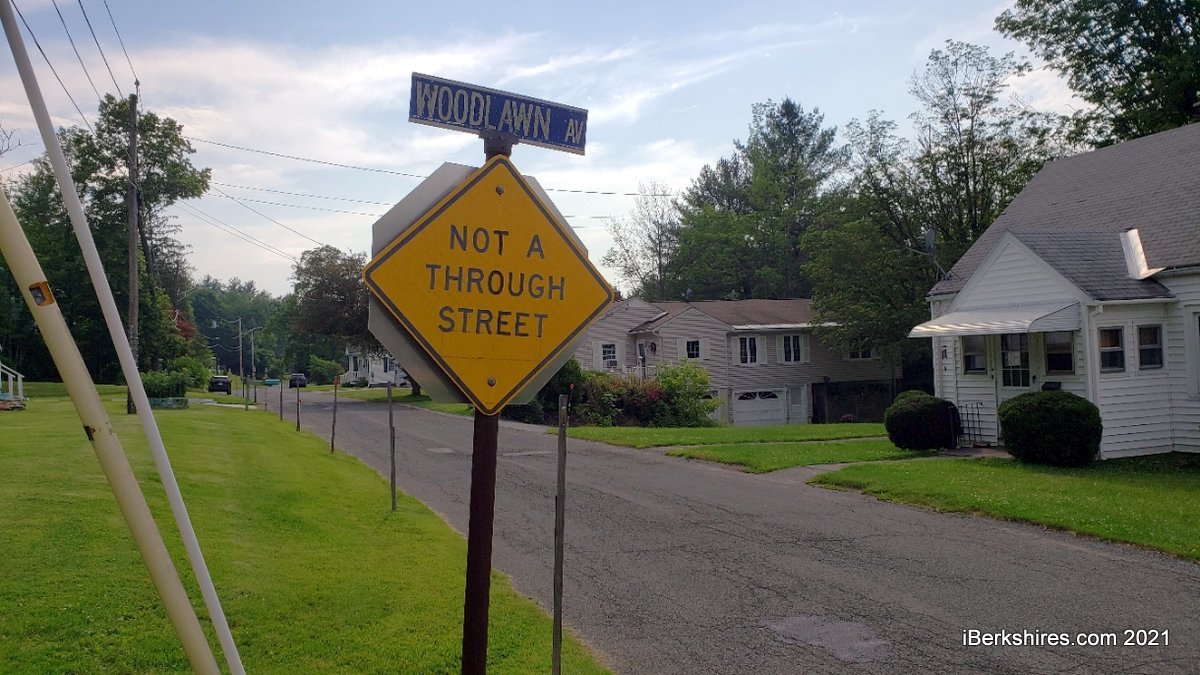
The administration on Thursday morning agreed to put in a force main, or pressurized sewer pipe, on the dead-end street and connect it to the main sewer system line on Notch Road.
The four homeowners on the street (a fifth house is owned by a bank) approached the city about taking up or sharing the cost of putting in a force main. The estimate they received was about $26,000 including paving, and another $5,000 to $6,000 for the individual substations.
"It's definitely worse in the last year and a half or so," Lisa Tessier of 108 Woodlawn told the Public Services Committee on Wednesday. "My biggest fear is waiting ... I just don't want anything to happen in the house, which doesn't happen at the moment, although every now and then you can smell downstream and stuff."
The residents talked of bad smells, saturated lawns, and constant streams through their back yards.
When the sewer system was installed, it didn't include all of Woodlawn. The houses in question are on a lower grade so require pumping to connect to the system.
Public Services Commissioner Timothy Lescarbeau said there have been discussions about Woodlawn for at least a decade.
His department already has the piping for the force main and could cover the paving — saving the residents about $5,000 — but said on Wednesday he was unsure if the department could handle the project.
"We're really small right now. You know, 30 years ago they had 40 people just in the Highway Department," he said, adding "I have a skeleton crew of best. And, you know, if I devote the time to this project, which I don't personally have a problem, but nothing else will get done during that time. And this is where emergencies come up, it just our projects tend to take a lot longer than somebody else doing them."
Putting the project out to bid would balloon the cost to upwards of $75,000 because the city would have to pay prevailing wage, Lescarbeau noted, and even if the residents paid part of it, such as through the "betterment" clause in state law, it would still cost them more than paying a contractor themselves.
There was also the option of each homeowner putting in a separate septic but this, too, would likely be more expensive and there was no guarantee their lands would perc. Lescarbeau said he understood their concerns because his house also is not connected to city sewer. But if the work was done, the city would maintain the line.
"That was always the plan was to take ownership over the main only because then that doesn't fall back on them," he said. "Just their individual line from the main to the house is their responsibility."
The homeowners said one concern was not everyone on the street had the financial wherewithal to cover needed costs.
"It's going to be significant costs for each homeowner to convert from what we have basically now, the gravity system to our back yards," said Karl D'Ambrosio. "We'd have to put electric pumps in all these holding tanks and pump them up to force main separately under pressure."
The Public Services Committee had questioned whether the city could still take on the project rather than bid it out.
"What do you imagine, if the city was to do it ... it would take time to do it, is what you're saying?" asked Chairman Keith Bona. "It'd be hard to dedicate time to do it?"
Lescarbeau estimated two to three weeks because, he explained, while the job is simple — dig a trench, put in a line — the trench can't be left uncovered. So there would be a lot of repetitious digging and covering, especially if the crews were called away for emergencies elsewhere.
The homeowners, however, weren't that concerned about how long it would take if they could be assured it would happen by winter.
"I would think that we can all kind of live with what we have, you know, and it got postponed for a week as long as we know, the goal is to get [it done] before winter, that would be ideal," said Tessier.
Lescarbeau said he could provide the materials and the paving out of his budget but to do the project, he would need permission from "the corner office."
"In reality the [City Council] doesn't have the authority to tell the mayor to spend this money, we don't," Bona said, asking Lescarbeau if he'd spoken with the mayor. Lescarbeau said he had briefly, and the committee asked him to go back to the mayor and also to ask the administration how other funding might be used toward the project.
Mayor Thomas Bernard agreed the next day that the Department of Public Works could take on the project, expected to start later in the summer.
Tessier, who has largely been the point person for the group, responded to Lescarbeau with an email saying, "I don't know how to sound anyway other than a child at Christmas! ... I'm so grateful, as I know the other residents will be as well."
Corrections: a quote was misattributed and the description of where it would connect to the sewer was incorrect. iBerkshires regrets the error.
Tags: public services, sewer,