North Adams Council Looks to Revive Colorful Crosswalks
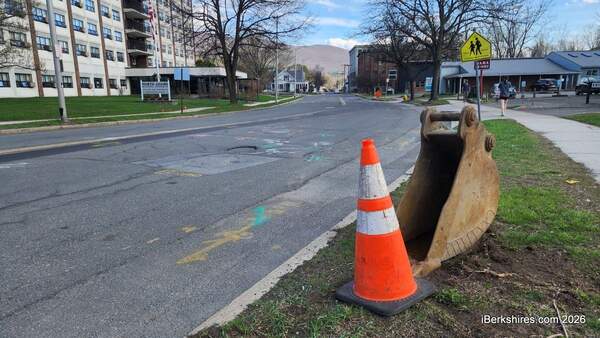
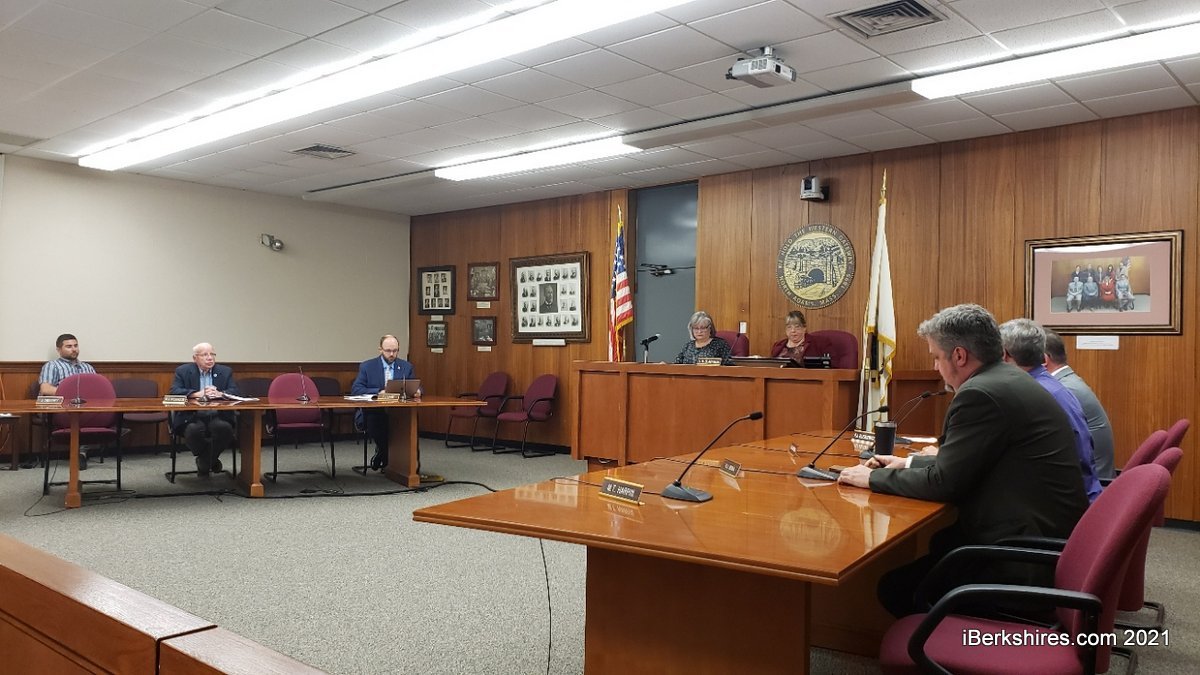
NORTH ADAMS, Mass. — The City Council will look into brightening up the city with more colorful crosswalks.
Several pedestrian rights of way had been painted in by volunteers with the group Art About Town a decade ago but the project was dropped over concerns about crossing the state Department of Transportation
"This is something that's been raised a number of times by a number of community members and continues to get squashed so I figured it was worth going through the process," said Councilor Benjamin Lamb at Tuesday's meeting.
In his communication to the council asking that the matter be referred to both the Traffic Committee and Public Arts Commission, Lamb wrote that "the Art About Town volunteer efforts to create whimsy and fun through the integration of art in our downtown was not only a great way to inject high contact visuals into the city, but it also represented a community bonding activity through their installation, and the use of a practice for traffic slowing to help make downtown more pedestrian and bike friendly."
Rather than one person in the administration making the determination, Lamb thought it would be better for both boards — in consultation with the city solicitor — to examine if the practice could be revived. He said he had already discussed the matter with the mayor, who had indicated he would prefer an analysis that would create a standing policy.
The councilor thought that bringing the Public Arts Commission into the mix might spark some creativity in considering the crosswalks — sending it directly to the solicitor, on the other hand, might get a simple "no" answer.
"Maybe it's not every crosswalk potentially available to do this, maybe it's certain side streets and you do see in some communities we only do side streets and that's noticeable. Maybe there's a reason for that," he said.
Councilor Lisa Blackmer, acting as president, thought the state may have less control of some streets than others, offering some "nuance" to what the city could do.
"I strongly support the color crosswalks. They bring the community together, everybody has fun putting them out there," said Councilor Wayne Wilkinson. "You know there's probably a maintenance factor but I always really enjoyed them, I think it's a good idea."
Councilor Keith Bona, however, said his concern was that the city could lose funding, which had been raised years ago as a reason to discontinue the practice.
"But again," he added, "the question would be the why are all these other communities doing it and are they losing funding?"
Williamstown at one point had added safety words to its crosswalks and Great Barrington, more recently, had painted rainbow crossings. What funding if any had those communities lost, asked Lamb, and did the city get that funding anyways?
"I think that there's a line in there that they can navigate," he said of the referring boards. "How have other communities managed to do this, looking at actual examples that are out there that have functioned and haven't gotten them into some deep pit of despair when it comes to the legal ramifications of it."
Bona said the city could just act MassDOT but Lamb said they would probably be told to look at the guidebook and interpret it.
"Ultimately, the goal here is to get away from one person in either an elected or a higher position making a unilateral decision on any of these requests, and instead actually having a fully vetted, fully processed outcome that determines where it's going to land," he said.
Lamb also asked that the issue of speeding on Eagle Street be referred to the Traffic Commission and Public Safety Committee after hearing concerns of businesses and community members about safety on the narrow historic street.
"I've seen incidents or near incidents in many cases myself on the historic corridor," he said. "I'm bringing this forward to get kind of a joint approach to it, to really tackle some of the intermediary approaches that can be undertaken that won't cost the way a full streetscape would cost, but can provide those best practices in traffic slowing and safety for pedestrians."
Bona asked that Public Works be looped in if the discussion was about signs and speed bumps, which he thought could affect efficient plowing. Lamb noted other communities have speed bumps without appearing to have plowing issues but agreed Public Works should be consulted.
The city had done some planning on turning Eagle Street into a woonerf, or shared pedestrian/vehicle street, but that is in the very preliminary stage.
Anna Farrington, who has a gallery on Eagle Street, advocated during hearing of visitors for traffic calming measures for the narrow roadway for the time being, such as signs, enforcement and speed bumps.
"I would like city to consider some very straightforward upgrades to pedestrian markings and the Department of Transportation standard street signs, possibly speed limits signs as folks come on through to and down North Eagle Street to that intersection," she said. "Also signs that indicate that there are crosswalks, there would be helpful."
In other business, the council affirmed the reappointment of Alyssa "Laini" Sporbert and the appointment Emily Johnson to the North Adams Public Arts Commission for terms to expire May 1, 2025. Johnson fills the seat left vacant by William Blackmer.
• The council voted to pass to a second reading and be published changes in the Youth Commission ordinance to encourage participation in the moribund panel. Bona had last year brought forward the request, noting Tuesday that his daughter had been an original member of the commission but that it hadn't met in five or six years. The amended version cuts the commission down from 15 members to nine, of which three would be adults "who have an understanding of the needs of young people in North Adams." The age cut off would be 13 to 22, and it would not require that two members be college students.
• The City Council passed to a second reading and to be published a change in ordinance that would give the administration more flexibility in where to start experienced hires on the salary scale with council approval. The change was prompted by the mayor's request to start the youth services librarian position at a higher step after a number of candidates declined the job because of salary. The council affirmed this change as well, with Bona noting the funds were already in this year's budget.
• Councilors Marie T. Harpin, Jason LaForest and Jessica Sweeney were absent.
Tags: crosswalk, Eagle Street,