Injured Hummingbird Heals at Warm Lamp
 |
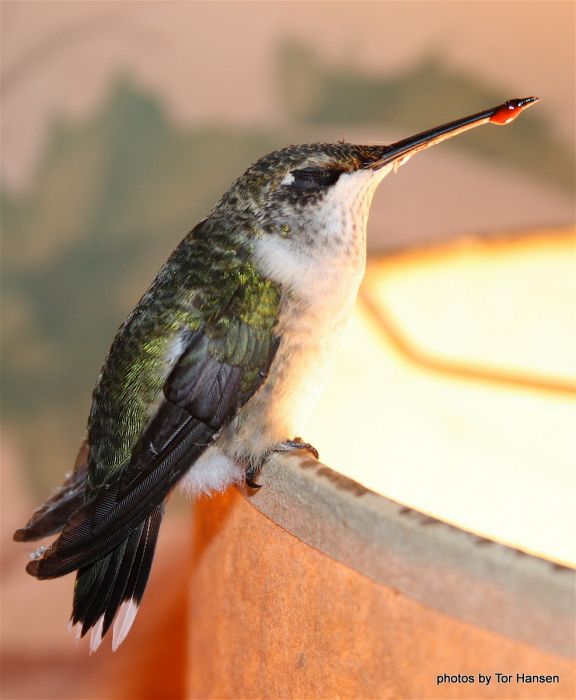
An injured ruby-throated hummingbird stunned from hitting glass window is placed on a warm lampshade, where it spent the night.
For the next day and a half, I provided care at a table lamp, to eventually see it fly away.
As sunlight filled my living room that Sept. 12, 2012, I prepared for Sunday service at my local church, and thought nothing about leaving a window open to usher in the fresh air to such a promising day. Little did I know that when I returned from church and jubilant choir singing, I would be greeted with a lively hummingbird that somehow had entered the window left ajar.
Early in the spring, my inventive mind had installed several hummingbird feeders around Marshside, and one was attached to the picture window where I wrote eco-notes on my computer. Via a suction cup a tubular feeder was attached to the window glass, so that I could observe the hummer close up while I wrote my nature stories. What a joy to see the living ruby-throated hummer so close!
The adventuresome hummingbird had entered through an adjacent window, and as I approached it dashed into the picture window glass and fell to the floor. What had I done? I stooped to gather it in my hands, and wondered what to do next. Its tender heart was racing, and frightened eyes beamed up at me, a giant hulk ... was I predator and this was my prey?
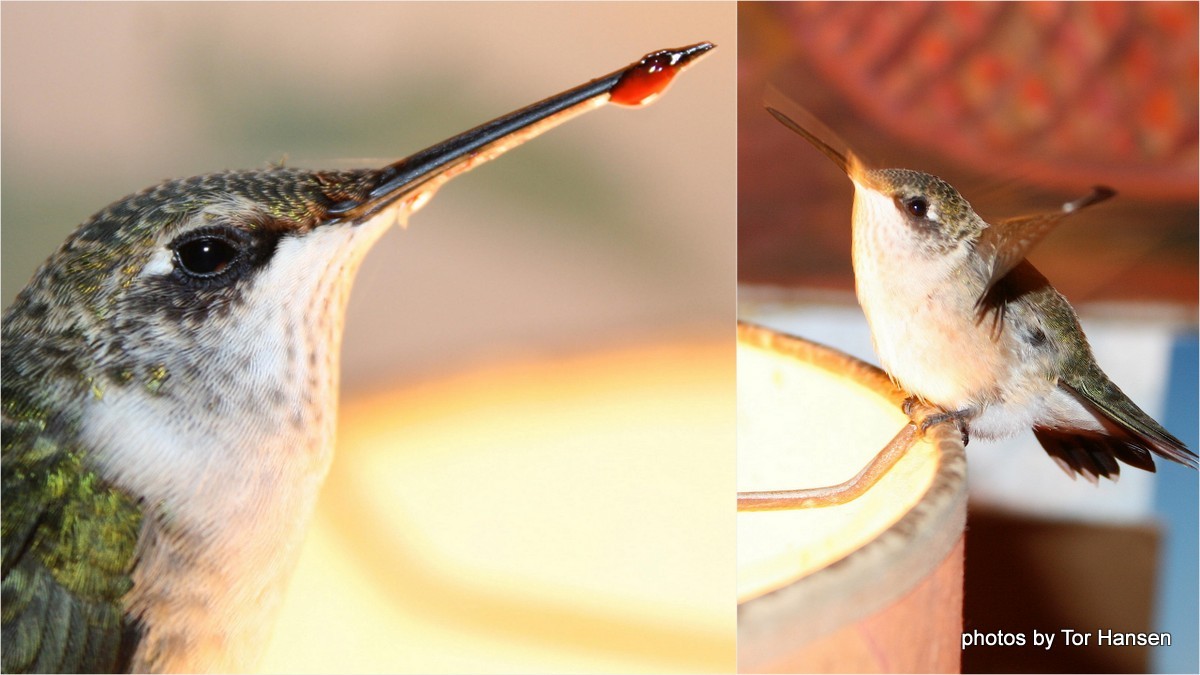
Just then I noticed blood oozing out of its traumatized bill. All was not lost, since signs of resilient life issued from the stunned little bird, likely a new female recently fledged from the nest. What would serve as ambulance, hospital, and recovery room?
It did not seem to mind my hands cupping the shocked bird, more clinging to life despite the hidden pain. Its flickering eyes dropped now and again into tired moments with eyelids closed.
Reasoning that a helpful healing would require warmth, a likely solution became apparent, when I selected a table lamp nearby. Slowly I moved to place the bewildered bird on the rim of the lampshade and turned on the lamp. The hummingbird clung to the metal rim, and all seemed well with the healing warmth permeating through the air. With a tissue paper I removed the bloody droplet from intact bill. Would this be all I could do as I stared at hummingbird blood in the tissue? Hours passed, and I left the lamp on through the night.
When I awoke next morning, the little bird was still sitting there, perched on the warm rim. No more blood droplets were evident and the bird perked up at my approach.
Not all hummingbirds are so fortunate. Shortly after I arrived in Costa Rica to work for reforestation and saving the rainforest at Selva Verde Lodge in the deep humid rainforest on Rio Sarapiqui Heredia, a manager called to come quickly to try to save a long-billed hermit that found its way into the screen enclosed cocina where visitors were at lunch.
The bird had slammed into the screen and broken its bill. I felt awful not able to reset the dangling lower bill. But I did glue its long curved bill back together and wrapped it in twine. Soon after it was released and perhaps revived to new life. Later all screens were removed and there have been no subsequent accidents.
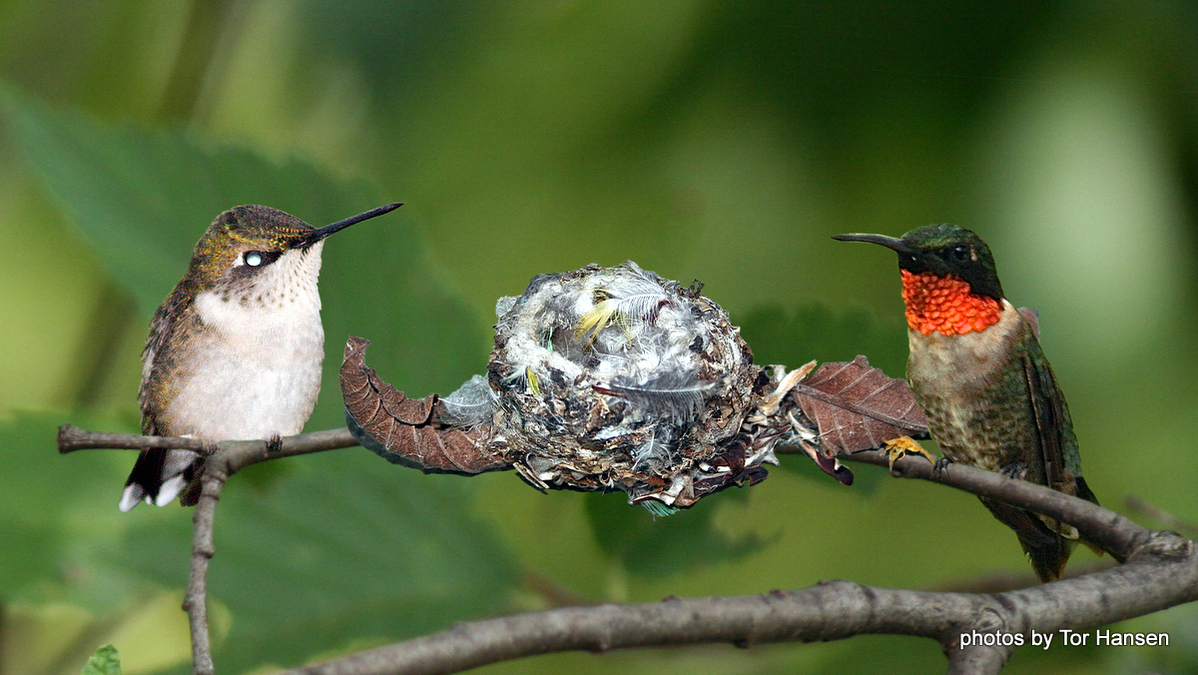
One day back in Truro after a strong gusty nor'easter rattled the Cape, while I sat at my picture window an unusual hummingbird appeared imbibing at my suction cup feeder. I raced to activate my camera, but It departed before I could get its picture. Upon digging into David Sibley's excellent bird book, it turned out to be an opulent broad-billed hummingbird, with feathers aglow in blue, green, and a red bill tipped in black. How great to see such a bio-gem.
But the lost bird was beyond its normal geographical range, that being widely distributed from the south across Texas, Arizona and California. Nor'easters pack a hard punch, but was it strong enough to throw a small bird so far off course?
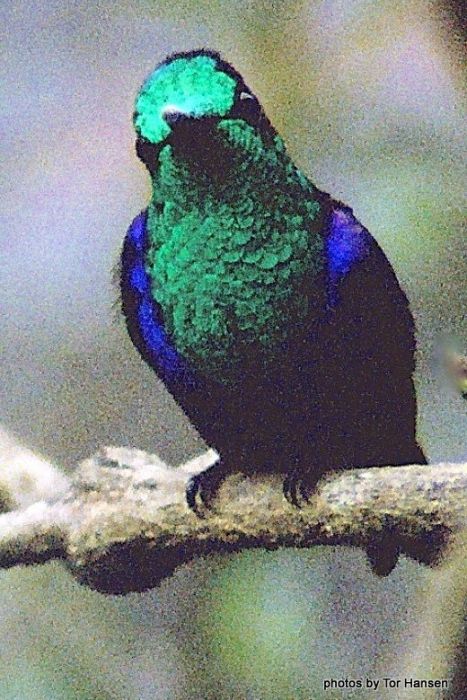
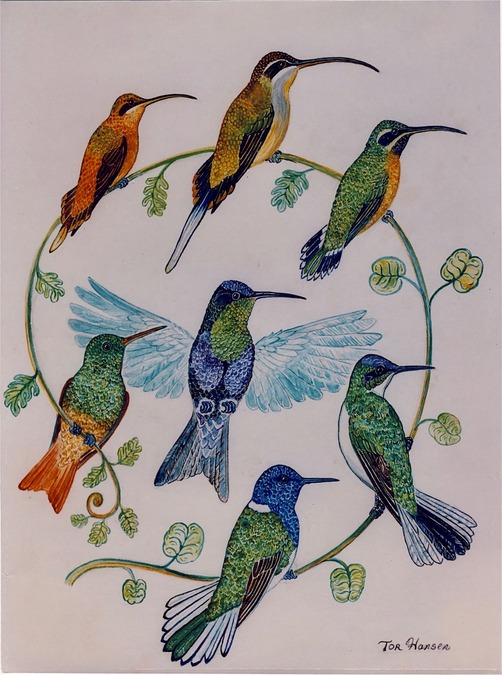
A green-crowned woodnymph in Ecuador.
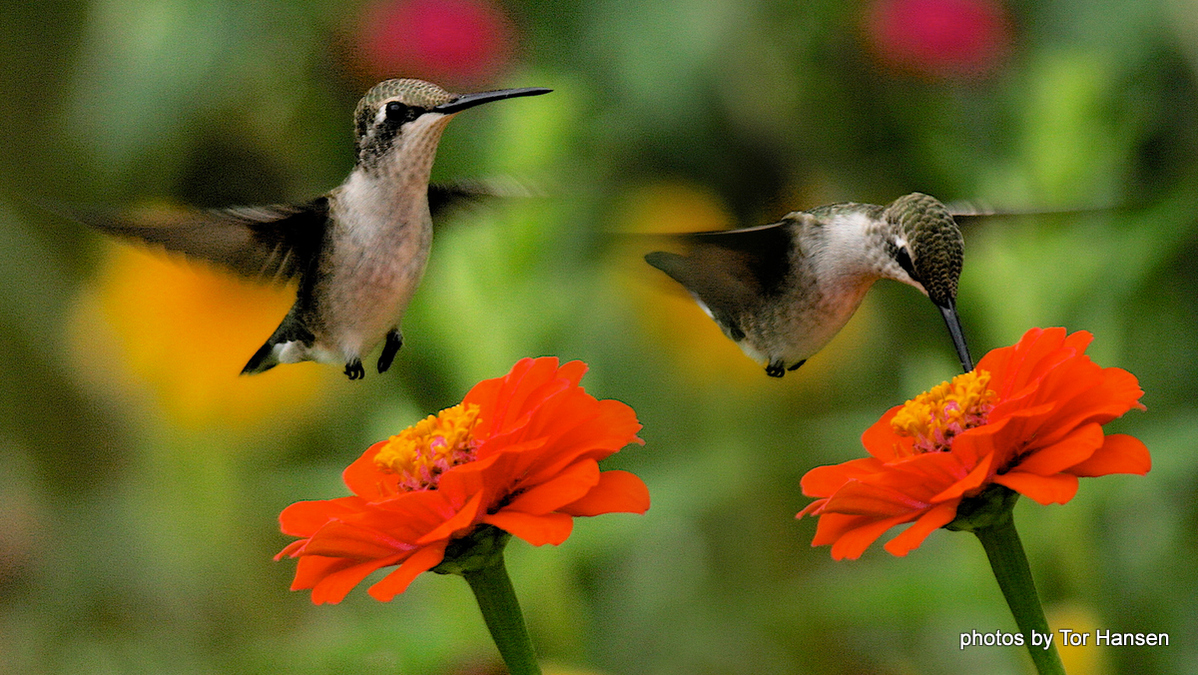
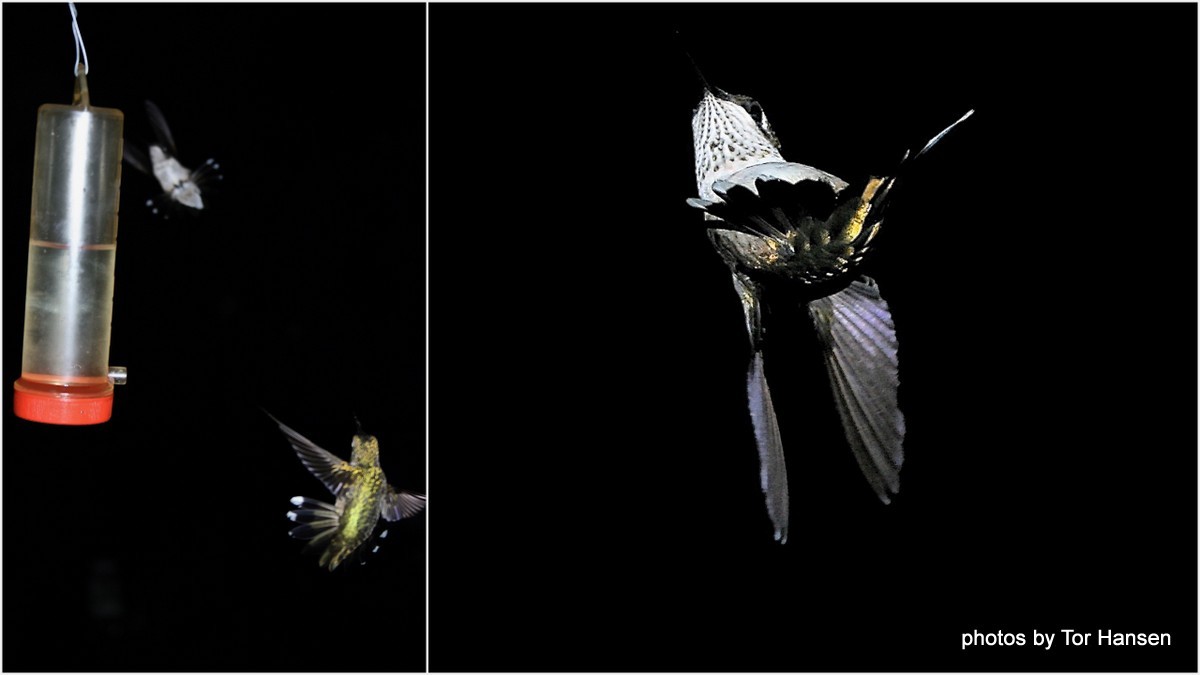
Marshside in North Truro yielded some unforgettable sorties by the ruby throats, especially after dark. Who would have though to search for nocturnal mating activity? Sure enough, a pair of ruby throats put on quite a show ... and all the marvelous acrobatics would go unnoticed save the mini-maglite for starters, and then a followup with the Canon's flash. Lo and behold, they did perform a most daring and remarkable ballet of sorts. I managed to get a few good shots.
When you are in the Southwestern deserts, look for Anna's and Costa hummers performing their extremely deep dives in order to attract a female. Notice the wide fanned tail that acts like a brake and as a rudder. If you stop near a century plant, scan the tip-top for perching Rufous species, where they may oversee their territories. Now and again we hear of non-migratory hummers that overwinter in someone's care, usually indoors, in a greenhouse, or sun-lit parlor, and on Cape Cod.
Our only known species here in the Berkshires is the ruby throat. It will visit your sugar-water feeders in late April and early May all summer long until mid-September.
When you stroll near high bush blueberry look for them gathering nectar when blueberry is in bloom. Bears also work the berry bushes, and I wonder do bears recognize hummingbirds as friends of the realm.
Tor Hansen is a naturalist writer, photographer, and musician. His column Berkshire Wild looks at especially butterflies, birds and other small creatures at home in the Berkshires and Massachusetts. He does talks and presentations and can be contacted at torhansen46@gmail.com.
Tags: birds,