Pittsfield City Council Continues Vote on Tax Rate Classification
PITTSFIELD, Mass. — Residents won't know the fiscal 2022 tax classification just yet.
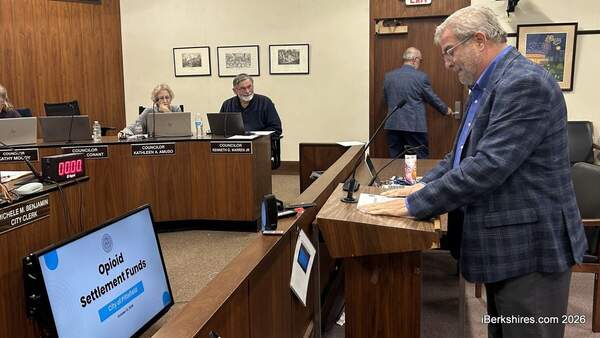
The City Council on Tuesday voted to continue the tax classification hearing until the Nov. 23 meeting. Mayor Linda Tyer is proposing a split tax of $18.56 per $1,000 of valuation for residential and a commercial, industrial, and personal property tax rate of $39.90
The motion passed 6-3 with Ward 3 Councilor Nicholas Caccamo, President Peter Marchetti, and Councilor at Large Peter White voting in opposition.
At-Large Councilors Earl Persip III and Yuki Cohen were absent.
With the proposed rates, the average homeowner would see their tax rate drop by almost a dollar from $19.25 in fiscal 2021 but property taxes would increase by almost $200, or 5 percent, due to rising values. Tyer is proposing a split tax rate with a shift toward commercial of 1.72; the higher the shift, the more tax burden is place on commercial and industrial properties.
This was a hard sell for Ward 2 Councilor Kevin Morandi and Ward 4 Councilor Chris Connell, who asked that the council doesn't approve the rates. Ward 5 Councilor Patrick Kavey also voiced concern for his constituents being priced out of their homes.
About an hour into deliberation, the council took a recess so that the administration could calculate the rate using an additional million dollars in free cash to bring the increase down by one percent. This was requested by Ward 7 Councilor Anthony Maffuccio.
With that calculation, the average homeowner would see an approximately 3.9 percent increase, which amounts to about $150.
Because it utilizes more free cash, it would drop the levy from about $94.6 million to $93.6 million
The city's levy capacity has increased and, for the first time since 2015, Pittsfield is no longer constrained under Proposition 2 1/2. For fiscal 2022, the levy is $94,664,472 with about $5.3 million excess levy capacity.
Proposition 2 1/2 limits on the amount of property tax revenue a community can raise through real and personal property taxes to 2.5 percent of the prior year's levy plus new growth.
The city saw a $254,625,346 increase in total real and personal property values over fiscal 2021 largely due to a 9 percent increase in the value of single-family homes over the fiscal 2021 amount of $207,030,940.
The average single-family home is now valued at $222,000, up from $204,000 last year. With this home value, the average homeowner can expect to pay about $4,122 in property taxes this year, which represents a $196, or a 5 percent, increase.
Some 330 of the city's homes belong to second homeowners with 43 new ones this year. In total, the part-timers contribute $245,000 in personal property tax.
Connell was enthusiastic about utilizing free cash to drop the residential rate, saying that "5 percent is just too much."
He pointed out that prices across the board have been rising because of the pandemic and said the city will force out people who are living on Social Security or pensions.
"We're gonna rely on second homeowners to keep building up those assessed values based on sales numbers, and forcing all the people that built the city of Pittsfield, forcing them out," he said.
Chief Assessor Paula King said the levy has more impact on the rates than the housing market.
She provided the values based on last year's average home price of around $204,000, which stated that the residential rate would be $20.21, or a $195.73 increase.
"It doesn't really have to do with the fact that the housing market has increased," King explained. "It's the fact that we have to pay for the levy."
Morandi claimed the city had a spending problem because of the rise in budgets over his 10 years on the council.
"This isn't just a tax rate or a tax increase, 5 percent it's not across the board, no it's not, but some people can't even afford $100," he said. "They're struggling, look at the income in Pittsfield, the median income, a lot of people are struggling and especially during COVID."
He added that the budget or the tax rate will not gain his vote until he sees proper city services being given to residents, specifically with the sidewalk and road paving.
Maffuccio originally sided with the proposal, expressing that he would like to see the commercial rate take more of the burden from the residential one but he understands that residents would probably pay it back with increased pricing for goods and services.
Kavey shared a story about one of his constituents who had to utilize grant funding to pay her mortgage during COVID-19 after becoming unemployed and feared for people being priced out of the ward or city.
He would like to see the tax rate lowered to prevent this.
"There are specific neighborhoods in my ward where I hear from presidents who are older, who are saying they're going to have to go and sell they're going to have to go to Hinsdale, they're going to have to go to the hilltowns for cheaper living," he said.
"And I don't want to see that happening, I want to continue to see young professionals continue to see families move in but I also don't want to price out the people who lived here for years."
Councilors-elect Karen Kalinowsky and Charles Kronick also spoke against the increase during the open microphone segment.
White said the city needs to stray from the idea of property taxes being the only way of funding its budget. This is why he supports the Fair Share Amendment, which poses an additional 4 percent surtax on annual incomes over $1 million.
The council will vote on the tax classification again at its Nov. 23 meeting in two weeks.
Tags: fiscal 2022, property taxes, tax classification,