Adams Board of Health Discusses New Emergency COVID-19 Restrictions
ADAMS, Mass — The Board of Health issued a new emergency order on Monday that imposes new COVID-19 restrictions.
The emergency order, which was the main topic at the board's Wednesday meeting, encourages businesses, clubs and special public events to have distancing and masking restrictions. Additionally, the order requires these entities to directly notify the board of COVID-19 cases and conduct cleaning afterward.
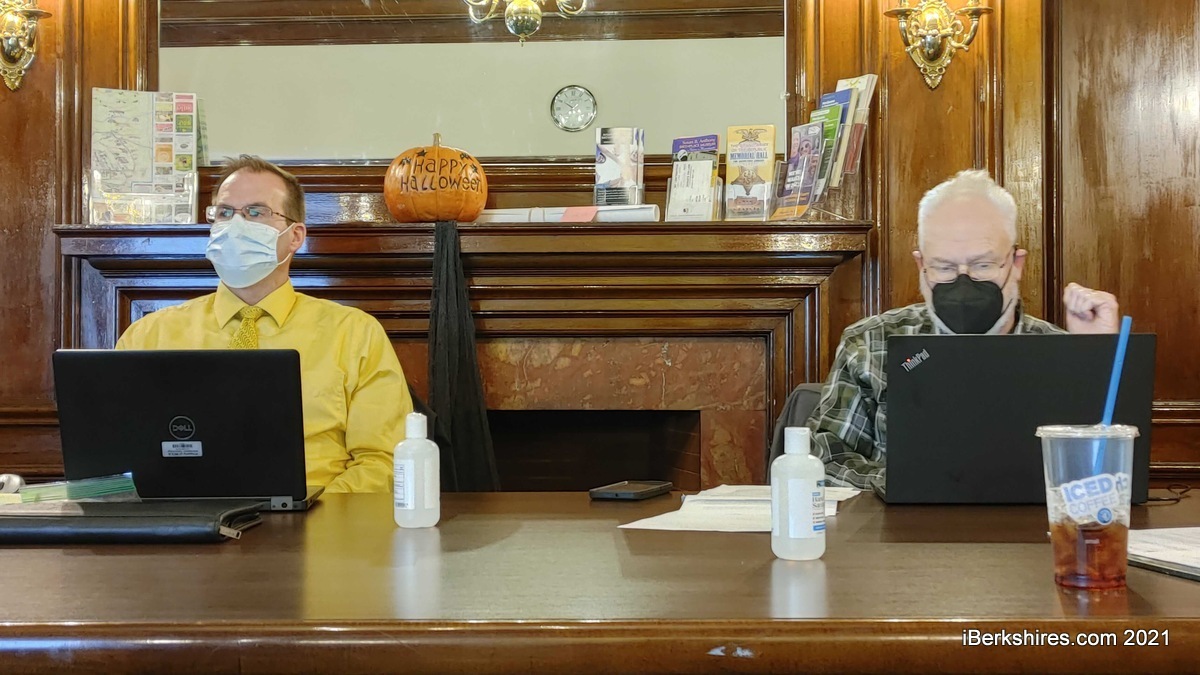
"The rationale is, basically, information for us to reduce the spread of COVID," said board Chair David Rhoads.
Rhoads said because the state will soon no longer be offering contact tracing, having businesses report this information directly to the board will be helpful. As part of explaining the reasoning behind the order, Rhoads shared his COVID-19 report.
He reported that 90 Hoosac Valley Elementary School children attended the school's Nov. 15 vaccine clinic, with another 600 receiving inoculations at Northern Berkshire Pediatrics. Adams had 43 new reported COVID-19 cases between Oct. 24 and Nov. 6, accounting for 7.43 percent of the cases in Berkshire County.
One statistic in particular that Rhoads said was alarming was the 14-day incident rate per 100,000 residents in Adams was 37.3 between Oct. 24 and Nov. 6, compared to 32.7 for Berkshire County and 18.2 for the state.
"It is a disturbing trend," he said. "But I do wish to note you can see the numbers do go up and down. When numbers go down, it is not time to relax."
Town Counsel Edmund St. John IV said he took some issue with the wording of the order that makes it hard to enforce.
"Much of the order uses the wording 'encouraged' or 'strongly encouraged,'" he said. "That type of language is not mandatory language. And it's not enforceable language. First of all, how do you determine what is encouraging? How do you measure a strong encouragement?"
Board Vice Chair Joyce Brewer said she was worried about businesses and the community following the non-mandatory parts of the order, such as encouraging social distancing and mask-wearing.
"Regardless of whether we have COVID, people are going to start gathering to these kinds of locations. That's the one thing I was thinking about," she said. "If it were the middle of the summer, it'd be one thing. But it's coming into a closed buildings holiday season, where people are going to be definitely trying to do some of those normal things that we did before COVID."
After concerns from audience members about giving the personal information of employees, Code Enforcement Officer Mark Blaisdell clarified that entities impacted by this order only need to inform the board of the COVID-19 case and nothing else.
"This is medical information, and therefore, it is protected," he said. "Very rarely will we ever get a person's name unless they're calling us leaving a message. But even in that case, it doesn't get disseminated out to the public. That's all protected information."
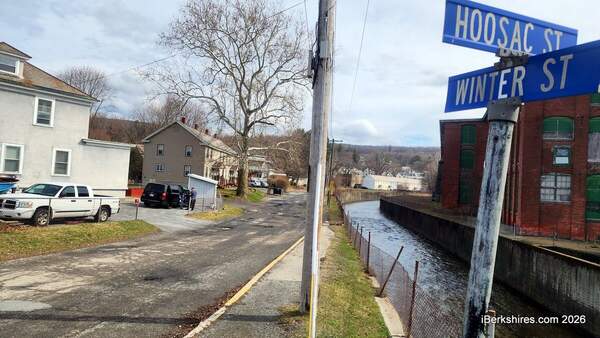
Also discussed at the meeting, the board briefly mentioned the discharge of calcium carbonate into the Hoosic River on Tuesday. Rhoads read a statement from the Northern Berkshire Regional Emergency Planning Committee, which said calcium carbonate is not toxic to humans, and Specialty Minerals is working to fix the issue.
Tags: COVID-19,
More Coronavirus Updates