Pittsfield Shows Higher Chapter 70 Funding, Rebounding Local Receipts
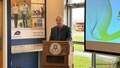
PITTSFIELD, Mass. — The city's budget season kicked off on Monday with a review of Pittsfield's financial condition to the City Council and School Committee.
The city's projected revenue for the fiscal 2023 is about $183.6 million. This is about $8 million more than this year's projected revenue of about $175.5 million and is primarily driven by a $4 million to $5 million increase in Chapter 70 funding for schools.
Finance Director Matthew Kerwood said tax collections from FY22 are "on target."
About $94.7 million is committed to being collected during the fiscal year and 74 percent of real estate and personal property taxes have been received by the close of the third-quarter ending in March.
About $12.9 million of that number is expected for local receipts, which struggled alongside the hospitality industry during the thick of the COVID-19 pandemic and have since been rebounding.
Some 73 percent of expected hotel/motel receipts have been collected and 61 percent of meals tax has been raised. In the third quarter of FY21, only about 56 percent of hotel/motel receipts and about 65 percent for meals had been received.
Though the receipts have increased, Kerwood noted that he keeps the estimates conservative.
"I am conservative in the local receipts estimates and have always been that way, and quite frankly COVID has made me more conservative relative to it," he explained.
"Especially as it relates to those that are economy driven, hotel/motel, meals, motor vehicle excise, so you're going to see in FY23, and we'll talk about that in a minute, not a lot of growth in the estimated receipts."
Championing all of the local receipts is the marijuana income which is at 85 percent.
The city is not doing as well in investment income, which is at 7 percent, and parking ticket receipts at 25 percent.
Kerwood related the low parking ticket revenue to the pandemic causing some of the office buildings in downtown to remain vacant. He said it is starting to tick back up but is not at pre-COVID levels.
"There's this mix of positive and negative but looking at it in the total picture, again, I continue to be conservative in that view of local receipts," he said.
The city's general stabilization account is at about $4.8 million with about $211,000 generated from cannabis income and the public works stabilization account amount to about $551,000 with the same amount of cannabis income.
The free cash balance is about $4.9 million. About $5.1 million of free cash was certified but the city had about $162,000 appropriated to the Pittsfield Municipal Airport for an easement project early this year.
For FY23, the projected levy is about $104 million. In November, Mayor Linda Tyer delivered news that the city's levy capacity has increased.
The city's levy ceiling is no longer under the constraints of Proposition 2 1/2 for the first time since fiscal 2015 and the projected levy ceiling is about $106 million.
"The levy ceiling is above the levy limit which is exactly what you want to have happen," Kerwood explained.
"So we are again for FY23 in a place where we want to be as relates to the relationship between the levy ceiling and the levy limit."
About $65.9 million is expected in state aid for the upcoming fiscal year including an increase in Chapter 70 funding to about $54.3 million.
Kerwood pointed out that the unemployment insurance account is trending below the budgeted amount because the city is still working off credits from the more than $500,000 in unemployment fraud that was spent in FY20.
Police overtime and veterans assistance are also trending low.
Solid waste disposal and winter operations accounts are trending higher, which Kerwood said is no surprise.
On May 10, Tyer will distribute the five-year capital plan and budget to the City Council followed by hearings in May and June and a budget approval on June 14.
Tags: fiscal 2022, pittsfield_budget,