Pittsfield Health Board Considers Fine-Tuning Tobacco Rules
PITTSFIELD, Mass. — The Board of Health is looking into fine-tuning the city's tobacco product regulations.
Tri-Town Health Department Director James Wilusz recommended various amendments to the city's tobacco ordinance at the board's June meeting. The two main suggestions address products that slip through the state's bans and "smoking bars."
The department has been administering a tobacco awareness program since 1994.
"Pittsfield is still very high in smoking prevalence and smoking during pregnancy, it came down a little bit pre-pandemic, I think because of the local policy efforts, but I think coming out of the pandemic, we expect it to go back up again for obvious reasons," Wilusz said.
"Substance abuse, opioid use, there's mental health challenges going on, vaping is up again, and so on so forth."
No changes were made to the ordinance at this meeting but the board will review the recommendations and reconvene in July. The city's regulations for the sale of tobacco and nicotine products were last amended in January of 2019.
In December 2019, Gov. Charlie Bakers signed an Act Modernizing Tobacco Control, which imposed new restrictions on the sale of nicotine vaping, flavored vaping, and tobacco products.
A few months prior, the governor declared a public health emergency and put a temporary ban on the sale of all vape products in the state.
The act only allows the sale of non-flavored nicotine products with 35 milligrams per milliliter of nicotine or less. It also restricts the sale of non-flavored nicotine vaping products held to the same standard to licensed, adult-only retail tobacco stores and smoking bars.
Under the new legislation, people can only purchase and smoke flavored nicotine vaping products in smoking bars, of which there are about 24 in the state.
Wilusz said the COVID-19 pandemic created a lull in education and compliance checks after the policy changes and pointed to adjustments that could be made to the city's regulations to clear up the confusion between local and state law.
"So there's this set of regulations over here locally and under the new state law over here, and they're just not meeting in the middle, and it does cause confusion to boards of health, it does cause confusion to retailers," he explained, adding that the department has been trying to encourage local boards of health to merge its ordinance with state law.
Though, he did point out that the city is one of the leaders in having strong tobacco regulations.
The first recommendations were to address the ordinance's definition of a "blunt wrap" and address flavored non-tobacco smoking products such as hemp cigarettes that are slipping through the cracks.
Wilusz explained that the city does not allow the sale of blunt wraps, yet the product is being sold as as cigars with loose-leaf tobacco to go around that definition. This, he said, is a common tactic of "big tobacco."
To address this, the state has adjusted its definition of a blunt wrap to capture these products being marketed as cigars.
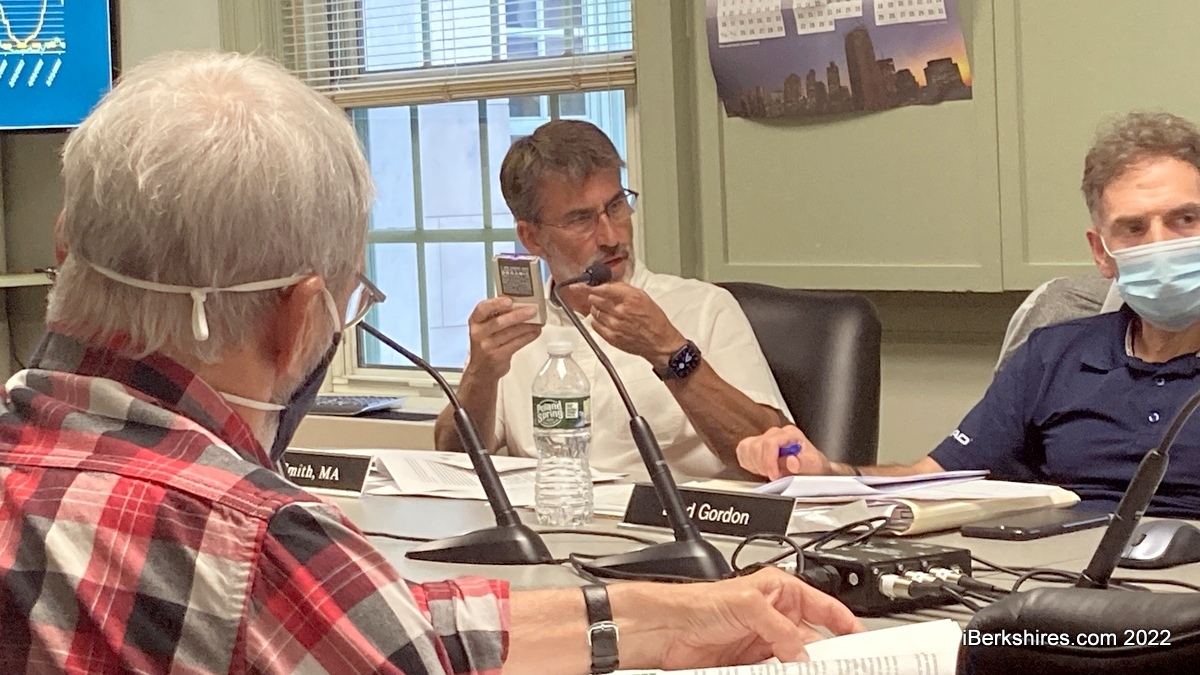
"What's happening is, a cigar is a tightly rolled product with stuffed tobacco," Wilusz said while passing around an example of the product.
"And so what they're doing is putting this like little flat roll in and just throwing some white specks of tobacco in there and it's skirting definition of cigar and blunt wrap."
The city's regulations define a blunt wrap as "any tobacco product manufactured or packaged as "a wrap or as a hollow tube made wholly tube made wholly or in part from tobacco that is designed or intended to be filled by the consumer with loose tobacco or other fillers."
Cigars are defined as "any roll of tobacco that is wrapped in leaf tobacco or in any substance containing tobacco with or without a tip or mouthpiece not otherwise defined as a cigarette under Massachusetts General Law, Chapter 64C, Section 1, Paragraph 1."
He also suggested a new policy decision to regulate the sale of flavored rolling papers that do not have tobacco or nicotine in them and passed around a box of hemp cigarettes as an example.
This is reportedly not captured in the new state law.
"It gets confusing because you have flavored tobacco which can't be sold, flavored vapes can't be sold, but there's this whole new line of these other products that aren't tobacco, don't have nicotine, it's got CBD and it's got hemp in them, they can sell those flavors in the store technically, if you don't have a local policy capturing that," Wilusz explained.
"And so there's not a lot of data out there yet on use and prevalence for young people on these hemp type products, but what we're seeing hearing anecdotally across the state, it's causing a lot of confusion in the retail environment, not only for boards of health, inspectors, even retailers."
Board member Kimberly Loring noted a warning on the side of the hemp smokes package say the product was dangerous for a person's health, as it produces tar and carbon monoxide and poses the risk of cancer or reproductive harm.
The way that the new state is written, retailers can be slapped with a $1,000 fine for selling a prohibited product.
The second recommendation was to not allow smoking bars within city limits. A smoking bar, as defined in the city's regulations, is an establishment that primarily is engaged in the retail sale of tobacco products for consumption by customers on the premises and is required by state law to maintain a valid permit to operate a smoking bar issued by the state Department of Revenue.
It includes but is not limited to establishments known as "cigar bars" and "hookah bars."
In its environmental smoke regulations, Pittsfield does not allow smoking in smoking bars but the city does not prohibit smoking bars.
"But why would someone want to have a smoking bar in the city of Pittsfield if they can't smoke inside?" Wilusz speculated.
"So your old regulation is debatable if it still stands because all the definitions of smoking have changed over the years."
He added that with the new state regulations on flavored products, there is not an influx of smoking bars opening but if the city was to get an application with the ordinance as it stands, it would have to be entertained.
Chair Bobbie Orsi said it would be helpful for the board to review the feedback and discuss it at the next meeting in July, where they may possibly move to adopt or edit the recommendations as they see appropriate.
Tags: tobacco regulations,