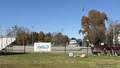
Developers Pursue Duplex Project with Affordable Component for Former Williamstown Grange Site
WILLIAMSTOWN, Mass. — The owner of the former Grange Hall property on Water Street is looking to develop more than 20 sustainable, energy-efficient homes with a quarter of the owner-occupied units set aside for residents earning up to 80 percent of the area median income.
Last week, Alexander Carlisle appeared before the board of the town's Affordable Housing Trust to seek its support for the project in anticipation of an approval process that will involve the town waiving zoning regulations to allow the development.
Carlisle and his wife purchased the 6.6-acre 584 Water St. property in 2005 with hopes of renovating the historic structure after it no longer served the local branch of the Grange, America's oldest advocacy group for agriculture.
The Great Recession in 2008 killed off initial interest that the couple had in such a project, but the Carlisles' fallback position had been to subdivide the property into three single-family residential lots.
"But we realized building costs had become so high that there was simply no interest in it," he told the board. "No one was asking to buy lots, period. Even in the recent run-up to the housing bubble, there was no interest as well. Some of the fancier lots in town with great views … they had to drop their lot prices, which finally sold during this incredible time of housing pressure."
The Carlisles pursued the idea of establishing a community-supported agriculture farm on the property and communicated with Williams College about locating faculty housing on the site before connecting with Hicks Stone and Bill Freeman, who put together a plan to erect pre-fabricated, two-family duplexes on helical piles on the site.
"Right now, we have 22 units [in the plan]," Stone told the trustees. "It's conceivable we could get 26."
The developers face two primary regulatory hurdles.
The first is a need for approval from the town's Conservation Commission, which has jurisdiction over projects that occur near waterways like the Green River, which abuts the Grange Hall property.
The second is the town's zoning bylaw, which would not allow that many residents on that size parcel.
That is where the affordable housing component comes in.
Under Chapter 40B of Massachusetts General Law, local zoning can be waived to permit developments that include at least 25 percent affordable units – six such income-restricted units in the development currently under consideration.
In a community with less than 10 percent of its housing stock classified as "affordable" by the commonwealth – basically income restricted housing – Chapter 40B development is allowed by law. Williamstown, on the other hand, is nearing the 10 percent threshold with recent developments that include 330 Cole Ave., Highland Woods and 27 more planned units at the third phase of the Cable Mills development.
If the project stays at 22 units, Stone said he projects the market rate units to sell for about $750,000. The six units designated as affordable – which would be indistinguishable from their neighbors in the complex – would sell for $175,000.
"I've taken the Pittsfield area median income and calculated the monthly amounts for housing expenditure," Stone said. "At 70 percent [AMI] it's $1,488 per month. At 80 percent, it's $1,700 per month. At a sales price of $175,000 with an assumed down payment of 5 percent … you end up with a monthly payment of about $1,684 a month, which places it below the 80 percent threshold."
That number includes the homeowners association fees that would be associated with the planned duplexes. The development includes a central green space for the residences in addition to the existing marsh land on the site.
"My colleague, Bill Freeman, is very interested in pollinator pathways and natural landscaping," Stone said.
Stone is a Harvard-trained architect with a firm in New York City who moved to Williamstown "as part of the COVID diaspora," he told the housing board.
In addition to an interest in preserving green space at the planned development, he and Freeman share a passion for sustainable architecture, he said.
He shared that the duplexes under development would have maximum insulation and "a fairly sophisticated heat recovery ventilator, dehumidifier and heating and cooling unit made in Canada by Minotair."
He noted that energy efficiency will add to all of the units' long-term affordability.
"Our motto is, 'Planet, People and Profit,' with the emphasis on the planet and serving the people," Stone said. "I'd love to see a combustion-free, net-zero housing development with an affordable component in Williamstown. I hope this will be one step in a number of projects like this."
As for the existing Grange Hall, Carlisle said that over the years, he has realized that any attempt to make the structure a fully-functioning, four-season building would not be cost effective.
"As someone who has been involved in historic preservation most of my career, I know the process to take a building like that and turn it into a four-season structure is so damaging to the original building structure that it's not advantageous to anyone to do that," he said.
He said he is interested in finding "alternate uses" for the Grange Hall, either on its current site or by disassembling and relocating the historic structure.
"The cost of taking it down would be much less than the cost of conversion," he said. "It's possible to repurpose it in a much more cost-effective, utilitarian manner."
Carlisle said he was surprised when the developers expressed an interest in keeping the Grange Hall on the property and working around it, but a decision one or another is still a ways off.
Carlisle and his partners did not come to the Affordable Housing Trust last Wednesday with any specific requests, and the trustees did not take any votes. The developers did not give a timeline for when they would begin the formal process of seeking the wetlands and zoning approval they would need to break ground.
Trustee Daniel Gura recommended that the group run the numbers to see whether an infusion of town funds – either from the Affordable Housing Trust or directly from the Community Preservation Act allotments at next year's annual town meeting – would help increase the number of affordable units in the project above the required 25 percent.
Gura said they may find the number needed to move that needle is beyond the town's capacity to help but it is worth exploring the question.
Gura also complimented the development team for pursuing a mixed-income development.
"The single most valuable and lasting way to create affordable housing is through mixed-income," he said. "The extracted value of those who are the low-income recipients, to be in a mixed neighborhood, their outcomes vastly outweigh any other structure. The data is staggering … versus putting 50 low-income people in one place. [Mixed-income] is what we at Habitat for Humanity are doing nationwide.
"I don't mind a $700,000 house next to a $175,000 house. It sounds great to me."
Stone told the board that based on conversations with some of the residents in the Water Street neighborhood, there was support for the proposal, but he acknowledged there could be some opposition when the time comes to go through the Chapter 40B process.
"I'm told Williamstown is not as NIMBY-oriented as some other communities," Stone said. "Is that your impression?"
"Largely, but not totally," board Chair Tom Sheldon replied.
Tags: affordable housing, housing,