Adams to Install New Wayfinding and Information Signs
ADAMS, Mass. — The town plans to install 16 new informational and wayfinding signs to help direct visitors and residents to important places throughout Adams.
The Zoning Board of Appeals approved the new signs on Tuesday after hearing a presentation from Community Development director Eammon Coughlin. A number of local organizations, Coughlin said, were involved with the project, including ProAdams, Downtown Adams and 1Berkshire.
"We received a small grant of about $16,000 to be able to implement this project ... We're basically trying to capture some of the visitors that are already here in town," he said. "Either going to Greylock Glen, or using the rail trail, and getting them to stick around in Adams. See all the sites."
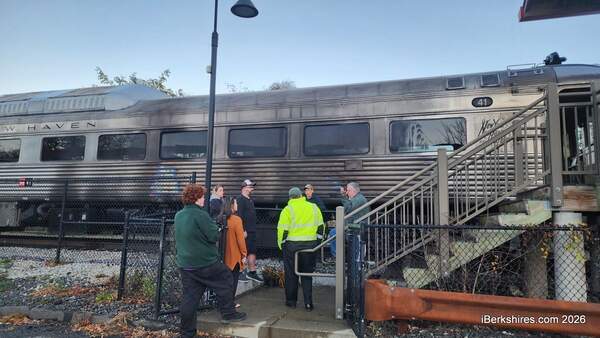
Four freestanding informational signs will be placed at Park Street, the corner of East Hoosac and Summer Street, Russell Field and the Adams Station near the passenger platform. Each will include a map for that area of town and a brochure box filled with local information.
Six smaller informational signs will also go up, with three on Gould Road, two on West Mountain Road and one at the Mount Greylock summit. These signs will include a QR code that links to exploreadams.com when scanned.
The town will place six wayfinding signs at Friend Street, the corner of Maple and Park Street, and Hoosac, East and East Hoosac streets. These signs direct residents to several locations, including the Greylock Glen, the Quaker Meeting House and the Susan B. Anthony Birthplace and Museum.
The town will also improve three currently existing wayfinding signs on Commercial, Hoosac and Columbia streets as part of the project. The new signage for these will continue to use existing brackets and sign poles.
"We're planning on replacing those and actually making them a little bit larger, so they're a little bit more readable," Coughlin said.
Board member Raymond Gargan Jr., who abstained from the vote because of his involvement in the project, said the new signs should be much more legible. The lettering on the current signage, he said, is made of vinyl cutouts.
"We're improving the legibility of those in a couple ways. We're using a much heavier font, and the font will be cut of reflective mylar, so they'll be very bright. Even at night they'll be legible," Gargan said.
Board Chair Wayne Piaggi said he thinks the signs will be beneficial and help people unfamiliar with the area get around. He said he often see's visitors to town looking for where to go and how to get to places.
"Everybody who comes into town is looking for directions on how to get to here, what do we have here to offer," he said. "These signs are going to help a whole lot."
Coughlin said the scope of the project expanded as more organizations got involved, with the original plan including only the four freestanding signs. He said the new signs should avoid cluttering the road.
"We tried to keep the sign area to a minimum. We don't wanna put billboards up around town, that's not the goal," he said. "We're committed to, if there's existing trailhead signs, we can put our signs on to try and minimize the impact up there. We don't want to be just making a lot of new clutter."
The signs for the project, Coughlin said, will be made by Adams-based Whitco at 190 Howland Ave.
Tags: signage,