Williamstown Police and Community Council Works to 'Shepherd' Change
WILLIAMSTOWN, Mass. — A group of more than a dozen residents are continuing the work begun by a daylong symposium on policing.
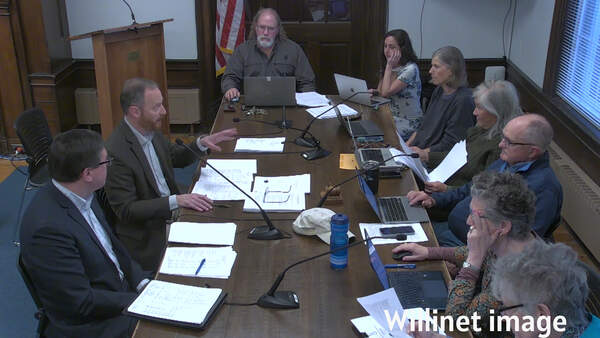
The Strengthening Police and Community Partnerships Council met in June and July to begin addressing the goals and aspirations that emerged from March's community forum at Mount Greylock Regional School.
"We had our first independent meeting in June, which was two working groups," facilitator Lucy Gerold said on Friday. "One was to finalize a drafted charter that outlines who we are and what our scope is so it gives us definition. The second thing was to take all those recommendations [from the March meeting] and prioritize them so that we can begin some work on addressing the priority issues.
"We just took the work of the two work groups last night and looked at it as a whole group."
That group of about 15 was drawn from the March conference, where about 80 people, including residents and law enforcement officers from the area, participated in small group discussions focusing on concerns about policing and steps that might help improve trust between the police and community.
The one-day forum and ongoing council are part of the SPCP program developed by the Department of Justice and implemented in communities around the country. Interim Police Chief Michael Ziemba asked the DOJ to bring the program to town in the wake of tensions that rose to the surface in the last two years after an August 2020 lawsuit raised allegations of racism and sexual misconduct at the WPD.
After waiting for a final document from DOJ that compiled results of the March conference, the local group was able to get down to the business of implementation, Gerold said.
Finding a time that works for everyone's schedule might be a challenge, especially during the summer. But Gerold said the council's members are committed to doing the work, which has an initial time horizon of two years.
"Almost everyone showed up last night to an in-person meeting with a great discussion," she said. "We wanted an in person meeting where we all could gather together, with social distance. Being in person is really important for groups to work through stuff, and it helps build them and strengthen them."
The council will meet twice in August, but to enable maximum participation for members who are traveling, those meetings will be held virtually, Gerold said.
The SPCP Council also will have an in-person presence at the town's National Night Out event on Aug. 2 at the Spruces Park.
"That will be one way of introducing ourselves to the community with our charter and priorities. We'll have our top four priorities, and they end up being 'umbrellas,' we believe, for a lot of things.
"For example, in a number of meetings [at the March conference], you might have heard about a need for mental health resources for police when they respond to an incident and mental health resources for the officers themselves. You could maybe put an umbrella of all that stuff under mental health.
"Our first four priorities will be looking more broadly than specifically."
Although the local group, at this point, is independent of the staff at the Department of Justice, Gerold said she thinks she can turn to the agency if she has a question. Also, the DOJ has connected her to the facilitators and chairs of SPCP Councils that have gone through the process in other communities.
The council cannot unilaterally require changes at the Police Department, but the interim chief is a collaborative partner who brought the SPCP program to town and has an interest in working to make changes, Gerold said.
"Early in the summer [community members] came to us and wanted us to do certain things," she said. "That's not within our scope.
"Our authority comes from the community who we are acting on behalf of to ensure that what they brought forward is addressed. That's where our authority comes from. There's strong support in the community, strong support from the Select Board to see those things accomplished. It's our responsibility to shepherd it."
Tags: williamstown police,