Pittsfield City Council Rejects Public Hearing on Homeless Encampments
PITTSFIELD, Mass. — A majority of the City Council on Tuesday shot down a councilor's attempt to have a public hearing on homeless campers in the city.
In a 3-8 vote, Ward 2 Councilor Charles Kronick's petition requesting the Committee of the Whole host a hearing to address the impact of homelessness in the community failed with no conversation.
Kronick, Councilor at Large Karen Kalinowsky, and Ward 1 Councilor Kenneth Warren voted in favor.
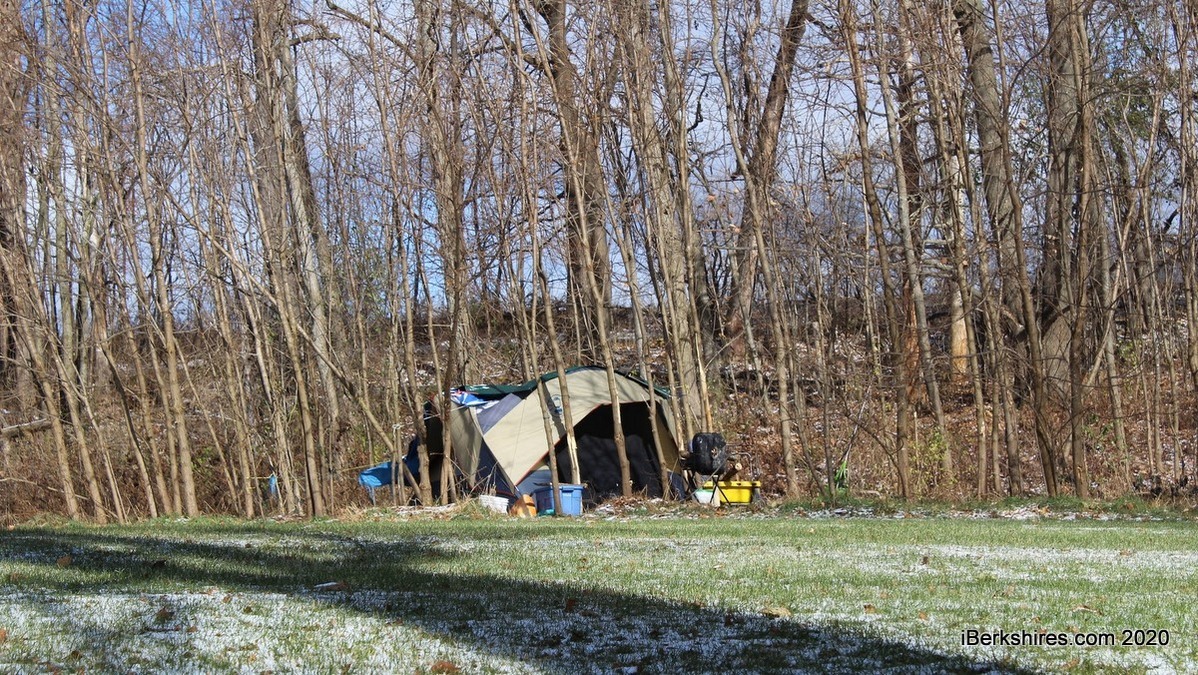
In his petition, the councilor claimed that residents and business owners are demanding through him that the council act on homeless encampments, describing a "universal decline in neighborhoods, houses of worship, and businesses because of the proliferation of homeless tent cities."
"The goal of this petition is two-fold. 1. Provide an opportunity for the public to petition their elected representatives directly on this issue. 2. Call for a strategy to compel the City to exercise its authority and protect our residents," he wrote.
"This is a code and a law enforcement problem that has been created by the City, and we as a Council must demand it be corrected."
Kronick's proposed solution is to fine property owners who allow encampments that violate city codes and enforce no-trespassing orders by removal of "people from property they have no right to occupy."
He said the camps are extending beyond Springside Park into the Morningside neighborhood, businesses on North Street, and the Church of Christian Science on Wendell Avenue.
Kronick argued that the tent cities are a "direct hazard" to the community due to human waste, trash, drug paraphernalia and medical waste, public bonfires, utility theft, aggressive behavior by tent occupants, and trespassing.
He alleged a lack of penalties and action by the Health Department and police "leaves residents, businesses, and home [sic] of worship one acceptable option which is to leave town for a better place where these camps are forbidden."
During open microphone, two residents spoke on the petition — one in favor and one against.
Delaware Avenue resident Michael Barosso said the homeless camps are causing blight. He doesn't have an answer to how it can be corrected but hoped that the council could help out.
"My son played Little League baseball in Springside Park and within Springside Park, the level of needles, feces, etc., was disgusting for the players also for family and friends that came to visit him and to watch the games," Barosso said.
"The other thing is it's happening beyond Springside Park within churches, church properties, which makes churchgoers fearful to attend church."
He added that North Street businesses working to revitalize the corridor and people that come to North Street and see the homeless camps turn the other way.
School Committee member Vicky Smith, who is a resident of Ward 6, praised the Berkshire Athenaeum's compassionate treatment of the marginalized population at the facility.
She urged kindness, trauma-informed response, and speaking to the unhoused population before speaking about them.
"When I read the letters in the [Berkshire Eagle] about the panhandlers on the medians, I stopped to talk with one, I listened to his story of what happened to him. He said picking up that sign was the hardest thing he's ever done in his life but he saw no other options. The hardest part, he said, was the mean-spirited and hurtful things people would say to him," Smith said.
"If you have a public hearing on the homelessness issue, I suggest you talk with our houseless neighbors before we talk about them. If you can't find it in your heart to be kind at least do no harm. I challenge you and our whole community to consider how the community is contributing to the homeless issue."
Since the onset of the COVID-19 pandemic, the city has seen an uptick in homelessness, with many residing in camps in Springside Park or sleeping outside of the library.
Housing has been a major topic in the allocation of the city's $41 million in American Rescue Plan Act funds.
Over the summer, the city allocated $8.6 million in ARPA for housing initiatives, including $354,500 for the Fenn Street Emergency Shelter and $6.5 million for Pittsfield Permanent Supportive Housing and Housing Resource Center.
Kronick Petition on Homeless Encampments by iBerkshires.com on Scribd
Tags: homeless,