Q&A: Williamstown's Wild Oats Cooperative Marks 40 Years
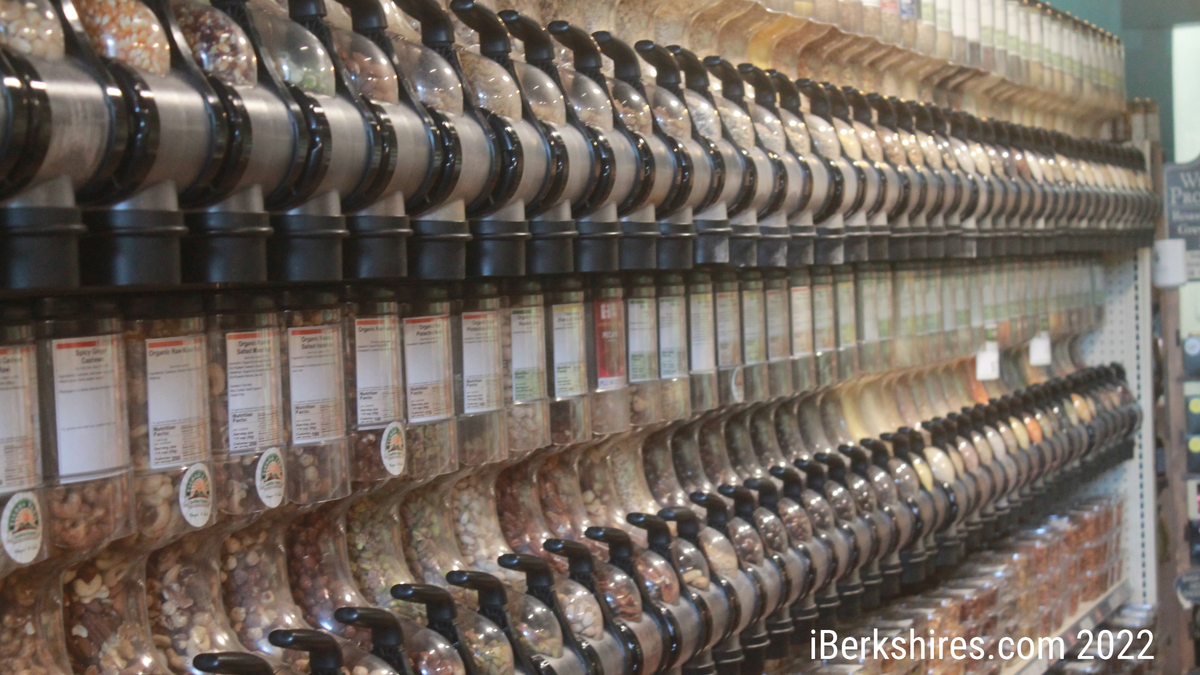
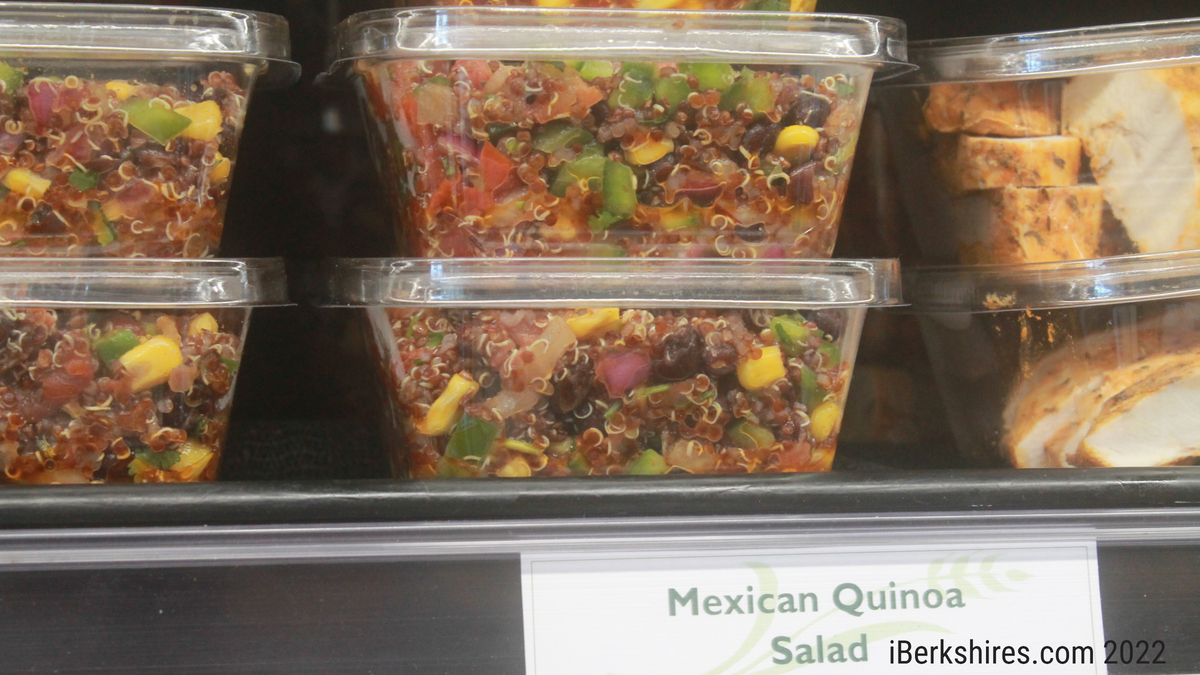
The co-op offers an assortment of products that can be purchased
"I left a large chain retailer to come to Wild Oats," the store's general manager said recently. "I had dealt with many issues from guests, from shoppers, working for this other entity and did not experience any of those issues at Wild Oats.
"It was quite the shock, I would say."
The kind of "we're all in this together" attitude that public health officials were promoting during the pandemic is baked into the culture at the Wild Oats cooperative.
"We did not close any day during the pandemic that we wouldn't normally close," Wild Oats Marketing and Owner Relations Manager Scott Menhinick said. "And we only close four days a year. We were here every day. In the days before people put masks on and we didn't know if we were going to die, we were working 12-hour days during the pandemic.
"And there was no shouting or fighting. People knew us, so that existing relationship made it so different for us. I would not have wanted to work at a Walmart or someplace like that during the height of the pandemic."
Wild Oats has been offering area shoppers a different kind of shopping experience for nearly 40 years. This fall, it is celebrating that milestone with a number of special events, some tied to October's National Co-Op Month, which celebrates a model the International Cooperative Alliance describes as, "autonomous association[s] of persons united voluntarily to meet their common economic, social and cultural needs and aspirations through a jointly owned and democratically controlled enterprise."
The Williamstown co-op has more than 1,700 active owner-members who pay $20 per year for 10 years or a $200 in a lump sum for a stake in the operation. Membership gives them access to select discounts on merchandise and a vote on co-op bylaws and the election of its board of directors.
Wild Oats' anniversary and Co-Op Month celebration kicks off this weekend when Wild Oats marches in Sunday's Fall Foliage Parade in North Adams and runs through early December, when the co-op holds its annual meeting for member owners and marks the 40th anniversary of its incorporation as the Central Williamstown Food Co-Op in 1982.
The festivities also include a new partnership with local currency BerkShares, a series of "Wild Oats Wednesdays" that kicks off with an Oct. 5 celebration for member-owners at Greylock Works and the store's second annual Families Feeding Families initiative to support Thanksgiving meals distributed by the Williamstown Food Pantry.
Recently, Neste and Menhinick sat down with iBerkshires.com to talk about the anniversary celebration and what sets Wild Oats apart.
Question: Tell me about the collaboration with BerkShares. Why is this the right time to start accepting them at Wild Oats and why have you not taken this step before now?
Lytle: We've been reviewing this partnership for quite some time now. Initially, I had some concerns. I needed to reach out to colleagues to get their opinion on the partnership. But at the end of the day, BerkShares is focused on keeping funds local — supporting the local economy. That's what we're here to do as well. The partnership, honestly, seems like a no-brainer at this point.
I went down to Berkshire Food Co-Op and visited with a few of their managers. I got their opinion on it. That, of course, created some followup questions for BerkShares themselves. But I was pleased with their response, and we decided to move forward with this.
Q: Is it something your members were calling for?
Lytle: I've had a couple of guests ask about a potential partnership, and there was even a panel discussion one of the board's committees did a while back where one of the guests was asking questions and brought up a potential partnership. So there has been some interest.
Q: And I know this initiative isn't as new, but this is the second year you've done the Families Feeding Families program, right?
Menhinick: It's something that came out of the pandemic, just seeing the additional need. The Williamstown Food Pantry, one of our partners, brought it to us. And we had a person down in our kitchen who had this idea for, basically, Jackie in our bakery, came up with the idea. So we put together a program that was a way for customers to be able to participate in this, offering shoppers the chance to purchase Thanksgiving meals for those in need. And people just jumped on it last year. In fact, we had to cut it off at one point because we couldn't make that much food. So we fed 69 families. It was amazing what we could do in the first year.
We love to do stuff like that because we partner with people in the community who have the resources and the know-how to execute those things. We know how to cook food. They know who needs the food and how to get it to them. So any time we can have a community partnership like that, we love to do that. It's very much in the co-op spirit.
Q: You have a similar program, the Round Up for Change program, which benefits non-profits.
Menhinick: We started that in June 2020.
Q: Was that a pandemic program too or was it something that you were planning that year anyway?
Menhinick: Basically, there were a lot of reasons to do a roundup. One of the more random reasons was we had other programs that were based on people in need coming into the store and getting the food. … What we found in the pandemic was people were less able than they used to be to get to the store and get the food. So we were trying to figure out ways to get the food to the people. We changed that program around where we actually started donating food to the food pantry rather than giving coupons out.
Through that idea, we started developing this roundup program. We feature a different partner organization every month through that.
Q: What kinds of numbers are we talking about? What percentage of customers choose to round up?
Menhinick: We're finding the numbers are a little lower during the inflationary period we're at now. But at its peak, it was over $4,000 a month that we were donating. And it's still pretty close.
From August, we just gave away $3,700. We're over $93,000 for the program. It's more than we could have ever imagined, how successful it is.
The whole beauty of it is how quickly spare change adds up. Most of the donations we get are obviously less than a dollar. Sometimes it's 5 cents or whatever, and at the end of the month, we have $4,000 to give to someone and put it to work in the community. It feels almost magical that it works out that way.
It's a pretty common thing. We didn't invent it or anything, but our angle is we make sure the organization is active in our community, that the money is being spent in Williamstown, North Adams and the surrounding communities.
Q: How many of the people shopping at the store are member-owners?
Lytle: About 60 percent of our sales are from member-owners.
Q: How much time goes into capturing the other 40 percent?
Lytle: That other 40 percent is extremely important to us. Much of what we do isn't targeted at member-owners. We aim to serve the entire community. Member-owner or not, all are welcome.
Q: But in terms of recruitment. How important is it to the co-op to grow that base?
Lytle: It's extremely important to grow our membership. That equity helps us re-invest in the co-op, whether it be new equipment like what's going on downstairs in our kitchen right now or various other items we need in our departments to better serve our guests.
Q: What are you doing in the kitchen?
Lytle: We're installing another double-decker oven. It's basically going to increase the functionality of the kitchen. Right now we have three departments using two ovens. It's not very functional. This will help increase productivity down there.
The prepared foods manager and I are in conversations about reopening our hot bar. That was an area that was a staple pre-pandemic that unfortunately was shut down. I've been hesitant to bring that back because I want to make sure we do it right. Part of doing it right is making sure that the team has the right equipment to properly serve the guest.
Menhinick: To get back to your question about recruiting, we will do an owner drive all month long in October. It's a great opportunity to focus on co-ops of all kinds, whether they be farmer co-ops, worker co-ops, fair trade coffee or member-owned co-ops like ours. … We've been steadily growing our business for 40 years in that co-op model. Because of our location, we have member-owners from three states.
Q: What is your market?
Menhinick: It's mostly the local areas: Williamstown, North Adams, Pownal (Vt.) and Bennington (Vt.). They're getting a new community market [in Vermont] now, so we don't know how many people that will pull away.
Lytle: We even are able to pull guests from South County, surprisingly enough, with the Berkshire Food Co-Op down there. I wouldn't say it's a strong percentage, but everything helps.
Menhinick: A lot is based on Williams [College] and the influence Williams has had on bringing professors and students to the area.
The average person didn't care about local and organic food as much as we do now. Now that it's become more of a mainstream issue and people are reading about it all the time, people who didn't used to be involved in co-ops are coming to us and saying, 'Do you have this? Do you have that?' and seeking us out that we wouldn't normally be able to get in the door.
Q: Do you have a strong connection to the college community?
Lytle: That engagement is exciting, seeing the kids want to get involved. I sat down a couple of days ago with a student who was asking me all kinds of questions about the cooperative model. And he was extremely interested. We were just talking and exploring different ways to increase engagement with the college.
Q: Are there other co-ops in the area of a non-retail variety?
Menhinick: Cabot Cheese is farmer owned. [The Vermont-based cooperative has member farms as near as Whitingham, Vt., and Buckland, Mass.]
One of the seven cooperative principles is cooperation between co-ops. As part of our mission, it's inherent to work with other cooperative stores like the new one in Schenectady, N.Y., or the Berkshire Food Co-Op. We're sort of on the same team without being in the same place.
Q: Having member-ownership as the model, I suppose it's like you have 1,700 bosses.
Menhinick: We reflect the community. We are the community.
The kind of stuff we sell, you could only get at a co-op for many years, for many of those 40 years. Now a lot of these brands are owned by corporations, so you can get a lot of this food anywhere else. So we lose that advantage as a co-op.
We need something else, and what we have is that mission. We're mission-based, and we're owned by our community. So if our community doesn't like what we're doing, they let us know. Our board is our member owners. There's an accountability other stores don't have. There's a give and take. There's a flexibility and ability to change that's built into that model.
Tags: anniversary,