image description
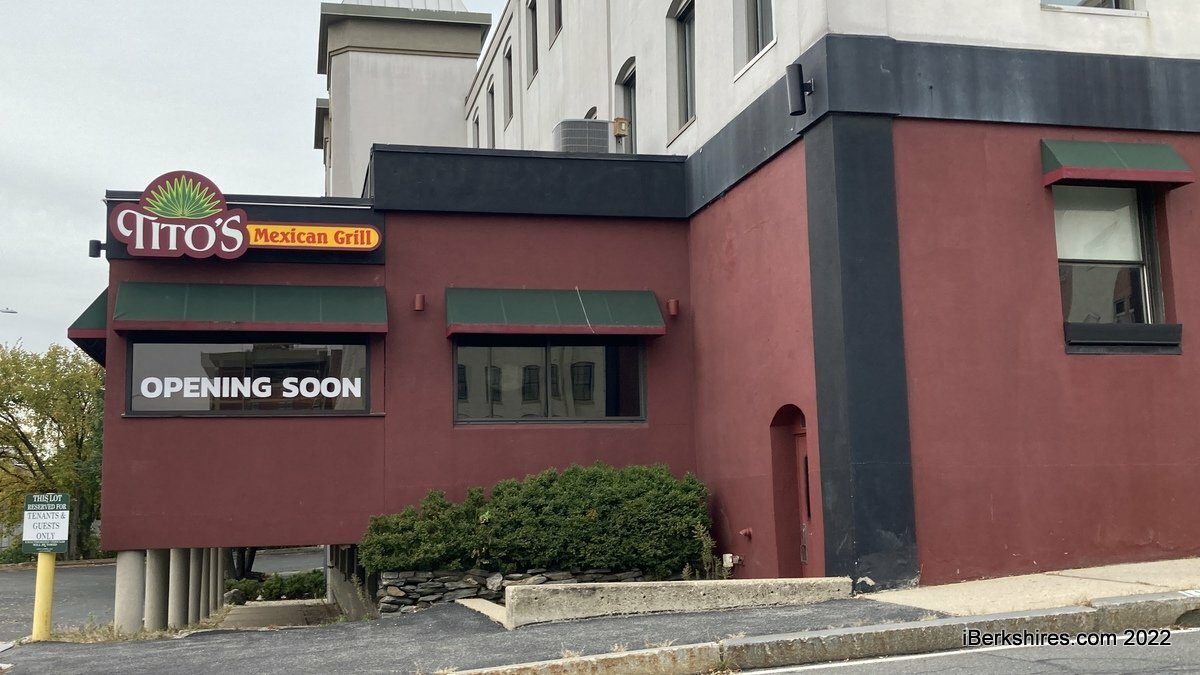
The new owner of Tito's has been stymied in reopening the eatery because of an existing alcohol license and a former owner who has disappeared.

Pittsfield License Board Pull Tito's License, Delays Transfer

By Brittany PolitoiBerkshires Staff
Print Story | Email Story

PITTSFIELD, Mass. — The Licensing Board on Monday rescinded Tito's Mexican Grill's liquor license after it was abandoned. 

Next month, the board will entertain a motion to transfer an existing license to Tito's under new ownership.

"This isn't what we would like to do with these licenses," board member Kathy Amuso said. "But I feel like we're put in a position that we have no choice."

The restaurant closed its doors about five months ago and principal Felipe Perez has been unable to be reached by either the city or the new owner, who is also the owner of La Fogata on Tyler Street.

Its Facebook page was changed to "Tito's by La Fogata" and in late August, the new owners posted that they were excited to reopen and were working on setting a date.

Attorney Loretta Mach explained that her client Miguel Gomez has purchased the business and filed an affidavit in relation to the situation. He was unable to secure the transfer of the former liquor license and could not obtain a new license with an existing one in place.

She went through the steps that have been taken over the last several months to locate and make a deal with Perez, all of which were unsuccessful.

In early June, they were told that they would have complete cooperation in acquiring the liquor license from Perez.  

"We reached out numerous times through email and other correspondence," Mach said. "Mostly email as we were never exactly sure of his current location."

She explained that they attempted to contact him six times in June and July for his signature.

"On July 26, I spoke with Mr. Perez's accountant, I should probably say former accountant since he hasn't really had any success in communicating with his former client either, Richard Lombardi," Mach added.

"Because there were tax clearances needed for the liquor license application and I was never given any of those tax clearances. Mr. Lombardi was unable to put me in touch with Mr. Perez."

The new owner then looked into purchasing another license and found a seller, Eleventh Pin Restaurant, which had operated in the former Ken's Bowl.

Mach added that Gomez spoke to the man he purchased the business from -- who was not Perez -- and was told that he will not be attending the hearing and has no interest in continuing the license.

"I think everybody knows on the board, the relevance that there's a license that it adheres to that location, whether or not it's being used is something that's an impediment to Mr. Gomez being able to operate at that location as long as that license is in effect," Chairman Thomas Campoli explained.


There was some question on whether the license was a special downtown liquor license, which would be returned to the city.  Upon further inspection, it was found to be a regular liquor license and will not return to the city.

"We hate to see that happening," Campoli said about rescinding the license. "But in this specific instance, obviously it's going to make way for a licensee to come in and operate in that location."

A notice of the board's decision will go to Tito's location at 34 Depot St. and the licensee will have the right to appeal it. Because of this, the vote to transfer the new license was continued until next month.

Amuso thanked the attorney and her client for their due diligence in trying to preserve the original license.

"I appreciate all the hard work that everybody went through to try to get that license where it should be and not have to do this," she said.

Campoli echoed her sentiment, adding that it sounds like they tried to make the transfer work but there was no interest or ability from the former licensee.

He observed that from reading documents pertaining to the situation, there may have been "economic forces" that may have precluded the transfer.

"I suspected that there may not have been able to produce the tax clearances, yes," Mach replied. "But I don't have personal knowledge."

In other news, the board approved a wine and malt restaurant license transfer to the new owners of Imperial Bowl at 555 Dalton Ave.

The bowling alley has been in operation for 45 years. 

Kari Mathes will be the primary owner and bar manager of the establishment. She explained that she has volunteer bar experience and "grew up in a bowling alley."

"The business is being sold real estate and the bowling assets and the applicant's intention is to maintain the facility as a bowling alley with a bunch of upgrades and improvements and things along the way that we think will make it more vibrant," the applicant's attorney explained.

The bar is proposed to be open from 11 a.m. every day and go until 10:30 p.m. Sunday through Thursday and midnight on Friday and Saturday.

Correction: this article incorrectly referred to Imperial as reopening. It has been corrected to note the bowling alley has been operating for 45 years. iBerkshires regrets the error.


Tags: license board,   alcohol license,   

If you would like to contribute information on this article, contact us at info@iberkshires.com.

Dalton Planners Hold Public Hearing on Tiny Homes Bylaw

By Breanna SteeleiBerkshires Staff

DALTON, Mass. — The Planning Board held a public hearing last week on a bylaw for mobile accessory dwelling units (ADU) that will be brought before a special town meeting.

For nearly two years, Amy Turnbull has been trying to amend the current ADU bylaws to allow mobile tiny homes.  

A movable tiny home is defined as a unit under 400 square feet that meets all of someone's daily needs, including sanitation, cooking, and other facilities, and which is also mobile. Most homes considered "tiny" are built on a trailer so they can be towed.

Her proposal defines a movable tiny house as a "residential property with an existing primary house, intended for year-round living," and outlines eight conditions for approval.

Among these conditions: the unit must adhere to accessory dwelling unit regulations, undergo site plan review, be licensed and registered with the state Registry of Motor Vehicles, have approved energy, water, and wastewater systems, and comply with American National Standards Institute 119.5 and National Fire Protection Association 1192 safety requirements.

Additionally, the unit must be certified for ANSI or NFPA compliance by a manufacturer or third-party inspector, including adherence to Appendix Q and the International Residential Code's structural guidelines and energy efficiency standards. The tiny house cannot move under its own power, and its undercarriage, wheels, axles, tongue, and hitch must be concealed from view. Wheels and leveling or support jacks are required to rest on a level gravel or paved surface.

Turnbull has gotten enough signatures for her petition to amend the current bylaws to add her definition of the mobile ADUs. Last Wednesday, the board held a public hearing on the petitions, which will be voted on at a special meeting.

Turnbull says she has two reasons for wanting to add this to the town's bylaws: aging in place and affordable housing.

"We need a variety of housing types in Dalton, and that we also need to address the idea that you know nearly 30 percent of our population by 2035 is going to be over 65 years old, and it's problematic because  ... there's not enough choice for these people to to age in place,"she said. "What movable tiny houses does, is it provides a less restrictive ADU. It's much cheaper to place, and it's easier to place, less time consuming. And what it offers to people is it offers people who are owners a place for their children to come and live, or a caregiver to come and live, or for the people who own their own house to come and live while they rent out their maybe their three bedroom home to a new family who wants to attend to Craneville simultaneously."

She said people need to move away from calling and treating the tiny homes as though they are trailers, as one former Planning Board member has voiced opinions on.

"That is an opinion, and I think we need to get over that, because I want to say that these are foundation homes, and that the chassis is a foundation, and it's a stick-built home on a chassis, and in very many ways it's like a modular house. I think we will not be surprised in the next 10 years if we see the market turn around and start to make smaller, tiny modular homes, but that is not the case right now, and we have a dire need for affordable housing," she said.

At a former Fire District meeting the Water Department drafted regulations for water hook-ups for these types of homes. The superintendent sent a letter to the Planning Board to be read at the meeting stating it will not be a hindrance for sewer system connection.

"The Department of Public Works does not feel that mobile ADUs will be an issue with the town sewer system. The homeowners will be responsible for any issues outside of the sewer main and connect and responsible for connecting in, so that would address any permits, fees, or anything like that would be added to that," the letter states. 

"The Water Department, as we've stated previous, and as you stated, the water department has come up with their own set of SOPs, standard operating procedures, for hooking up a an adu and a mobile adu, which will then have to meet winterization and all those, but they've laid out a plan for that, that they have, so I'd like to point that out," board Chair Robert Collins said.

One concern was raised that if someone can have a mobile ADU could they also have another tiny home on their property, including the main house. That situation is not likely, said Turnbull, as it would cost a considerable amount of money. Town Manager Eric Anderson also stated that in his former community when they adopted similar laws their first one wasn’t put in until a couple years later and then maybe one a year.

View Full Story

More Pittsfield Stories