image description
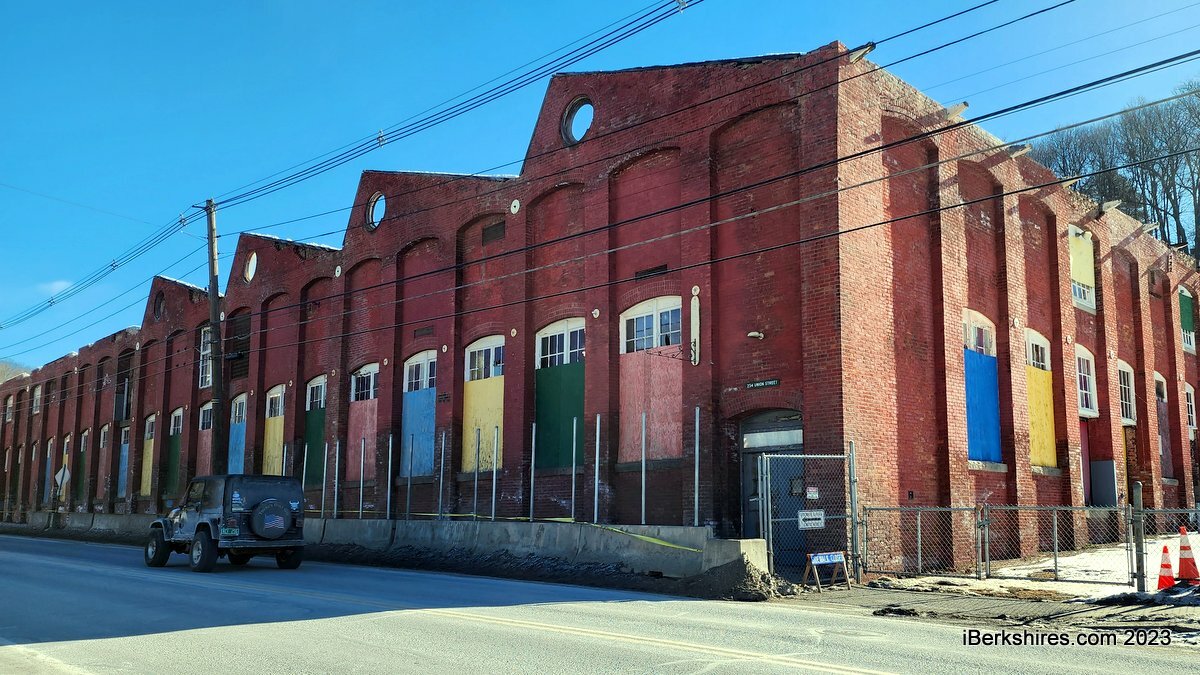
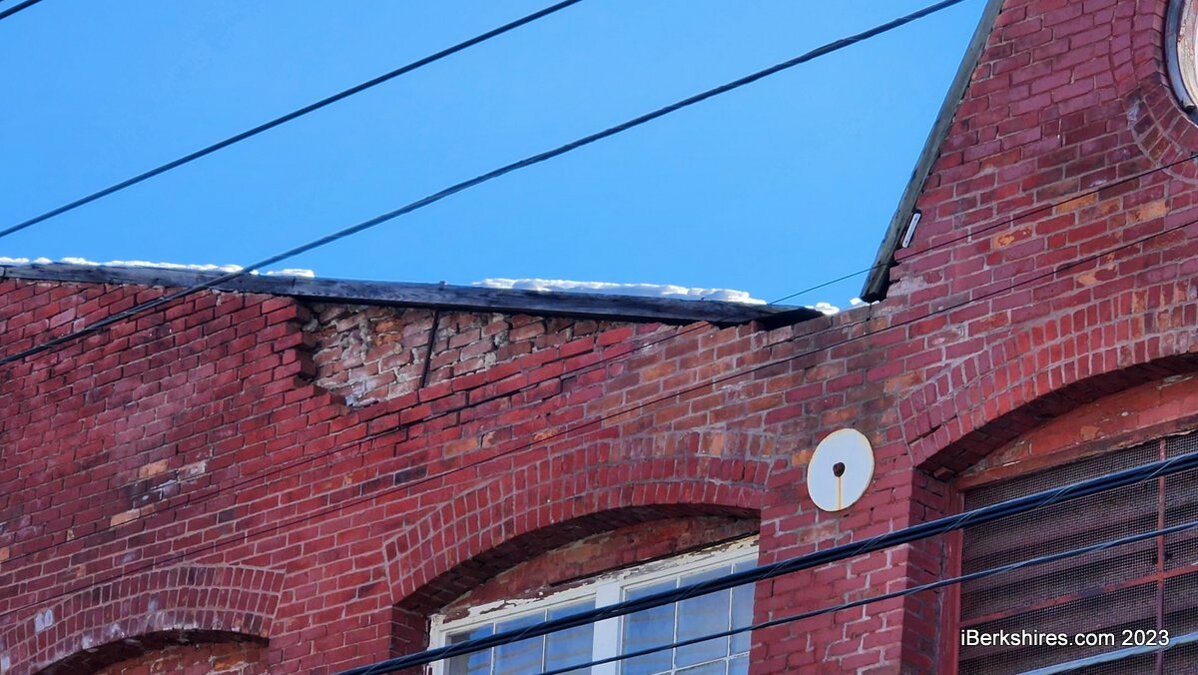
The sidewalk on the south side of Union Street has been closed off after more bricks fell from the walls of the Hoosic Mill.
image description
An attempt was made to preserve at least a few of the distinctive sawtooth edges.

Bricks Falling from North Adams Mill Causes Sidewalk Closure
Staff ReportsiBerkshires
Print Story | Email Story

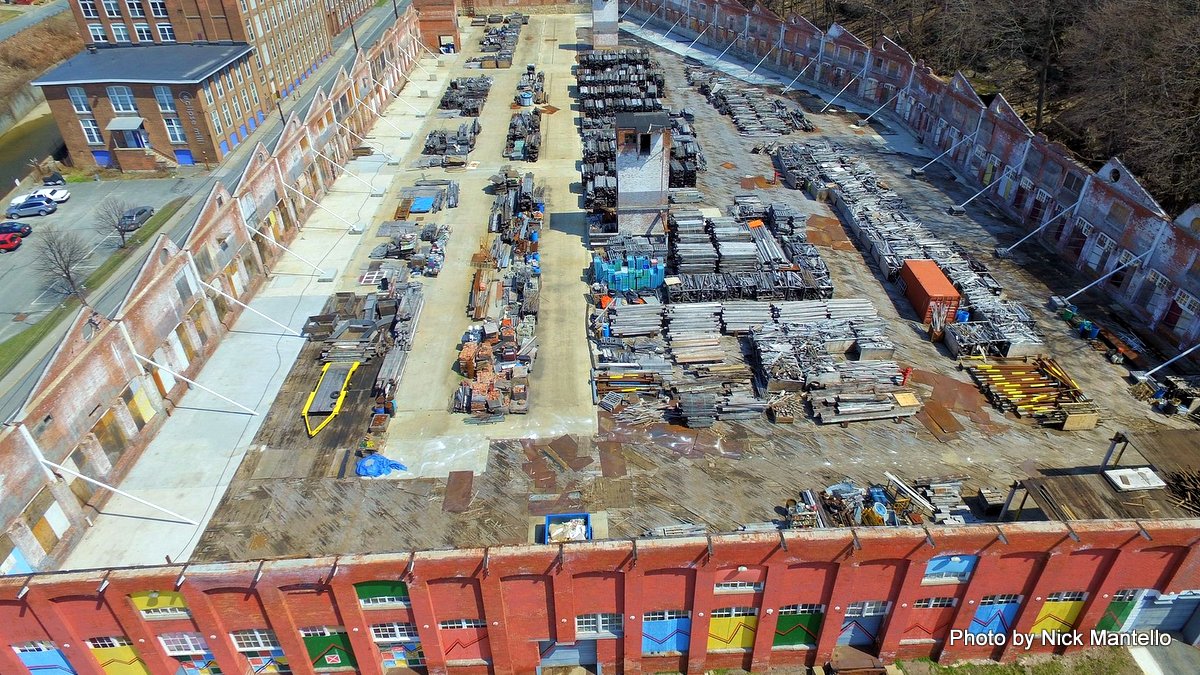
This drone image taken by Nick Mantello in 2017 shows how the interior of the mill is gone. A concrete pad was poured along the north side and steel struts put in place to stabilize the wall. 
NORTH ADAMS, Mass. — The sidewalk is once again closed on the south side of Union Street along the historic Hoosac Mill because of falling bricks. 
 
The century-old mill had a catastrophic roof collapse more than a decade ago, caused by excessive snow load, and the interior had to be gutted and the walls fortified. 
 
The nearly 200 yards of sidewalk was closed off for months and years at a time after the collapse and again several years ago as owner Ariel Sutain worked with an engineering firm to try to save some elements of the distinctive sawtooth roof.
 
The "serrated" roof configuration was made to allow for east-facing windows that brought light into the 265,000 square-foot textile mill. Those windows were covered over years ago.
 
Building Inspector William Meranti said this week that some more bricks had fallen. He said Sutain had called in the engineering firm to see if the wall could be saved — or the structure taken down. 
 
There's no roof and nothing left inside the bulk of the mill; a few structures on the east and west ends are of the nearly 6 acre property are still standing and usable. There's only four sawtooth elements left on the north side along Union Street and the walls are being support by steel braces and concrete. 
 
The mill was built in 1906 as part of the sprawling textile empire of Arnold Print Works and then purchased by the Hoosac Cotton Co. in 1911. It was later occupied by the former Hunter Outdoor Products and was a mushroom factory, Delftree.
 
Sutain bought the building in 2007 and had been upgrading and repairing it, including replacing windows and repointing the brickwork. One section became a gallery and another hosted artists for the North Adams Open Studios. The rest was rented out for storage.

Tags: Hoosac Mill,   
If you would like to contribute information on this article, contact us at info@iberkshires.com.

North Adams Finance Committee Warned of Coming Sludge Costs

By Tammy Daniels iBerkshires Staff
NORTH ADAMS, Mass. — Waste treatment plan supervisor Brad Furlon warned the Finance Committee last week to expect a future 500 percent increase in sludge disposal.
 
"Even though the district is still has the approval of suitability to apply compost to land, we no longer do it, primarily because of the contaminant, PFAs," he said. "Compost plant supplies is a $200,000 increase this year. There's no way around this cost whatsoever. ...
 
"Unfortunately, these costs are going to go up. They expect this sludge disposal cost in the next five to 10 years to increase 500 percent."
 
PFAs, or per- and polyfluoroalkyl substances, are considered "forever chemicals" because of how long it takes for them to breakdown. They are used in numerous products and have become endemic in air, soil and water.
 
The Hoosac Water Quality District, a shared regional waste treatment system between North Adams and Williamstown, had planned to accept sludge from other communities and sell off the resulting compost through waste hauler Casella. But that proposal ran into opposition; Williamstown has a citizens petition on its annual town meeting warrant this year that would prohibit the use of contaminated compost. 
 
The district is still producing compost, which has to be removed. 
 
"We had a backlog of about 2,500 yards of compost that was on site," Furlon said. "We worked on a plan to dispose of our compost. Even though the district is still has the approval of suitability to apply compost to land, we no longer do it, primarily because of the contaminant, PFAs. ... the most feasible way and economical that we looked at was to be able to take our compost to a landfill in Ontario, N.Y."
 
View Full Story

More North Adams Stories