Independence, Indigenous People Contemplated in Williamstown
WILLIAMSTOWN, Mass. — July Fourth celebrations Tuesday included a reminder that the land the American Revolution freed from Great Britain was first taken from its original inhabitants.
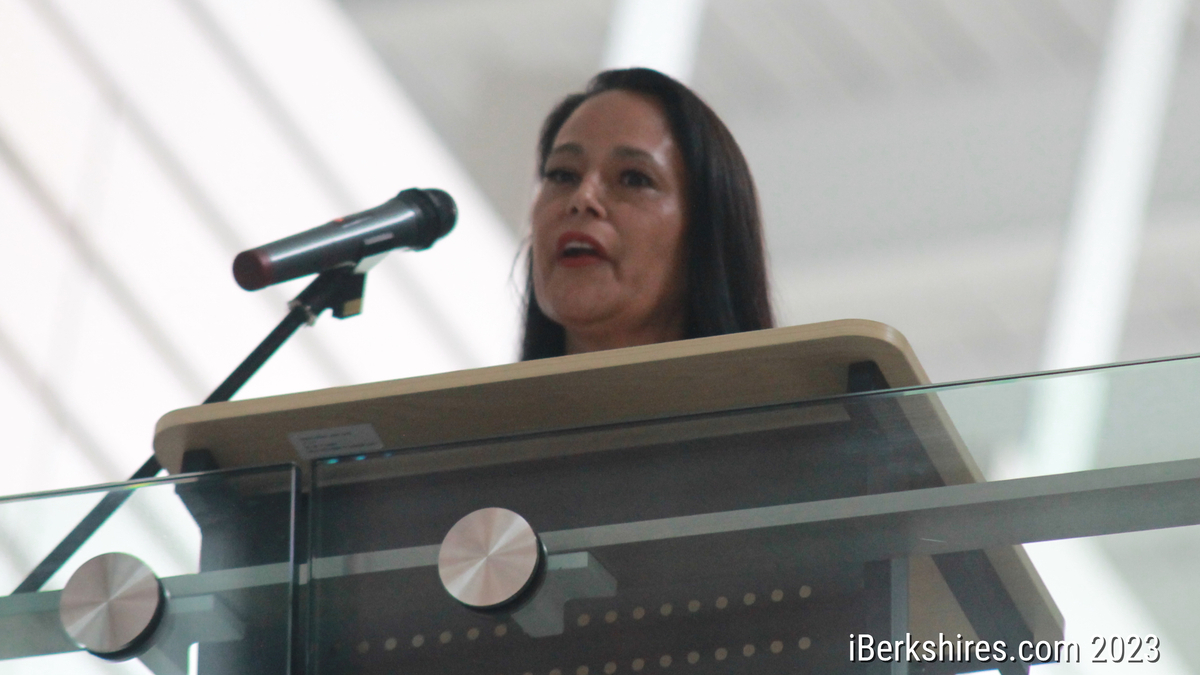
"Williamstown was a part of the original homelands of the Stockbridge-Munsee Community," Stockbridge-Munsee Band of Mohican Indians President Shannon Holsey told a crowd gathered in Williams College's Sawyer Library.
"Today, Williamstown is constituted by Mohican land agreements negotiated in 1758 and in 1763 with our Mohican sachems. At that time, they were facing colonial pressures, which forced signing of treasured places, such as the one here today, as we sought to survive as a tribe."
Holsey was part of the annual reading of founding documents hosted by Williams College.
Since 1987, the college and Williamstown Theatre Festival have partnered to present dramatic readings of documents like the Declaration of Independence and the response of King George III to the Continental Congress.
In 2017, excerpts from Frederick Douglass' "What to the Slave is the Fourth of July?" were added to the program.
This year, for the first time, organizers invited the Stockbridge-Munsee Community to participate.
For her text, Holsey, who has led the Stockbridge-Munsee since 2015, chose a July 4, 1854, address by John Quinney, himself a leader of the Mohican people.
Like Douglass' antebellum "What to a Slave is the Fourth of July?" address, Quinney's speech offers the perspective of those Americans who were and are able to enjoy the "Blessings of Liberty" referenced in the Preamble to the Constitution, the fourth text read at Tuesday's event.
Actor Kevin O'Rourke read the Declaration and Preamble. TL Thompson read from Douglass' oration.
Holsey capped the event with her thoughts and the words of Sachem Quinney.
"It may seem strange to you ... that I, an Indian, am interested in your Fourth of July celebration," Quinney had a crowd in Reidsville, N.Y., the Capital District. "After all, your people took away the land of my fathers, and the troubles you have caused will continue to hurt my race as long as we live.
"But, lucky for me, I have had a chance to go to school. I have read your histories and your stories of what happened between your people and my people. I learned that you are happy today because you are celebrating the birth of your nation. For me, I am sad, as I remember how many people were weak and let these lands get taken away from them."
Holsey said she hoped that Quinney's words would resonate with a 21st century audience.
"I hope Sachem Quinney's speech will give you pause to think about my tribe, who now live in northern Wisconsin and who once had a presence here in Williamstown," Holsey said. "We are still strong and mighty and fighting for tribe's land and rights.
"We are your neighbors."
Tags: 4th of July,