Wahconah Park Committee Sees Possible Designs
PITTSFIELD, Mass. — The Wahconah Park Restoration Committee got a first look at what the historic ballpark could become.
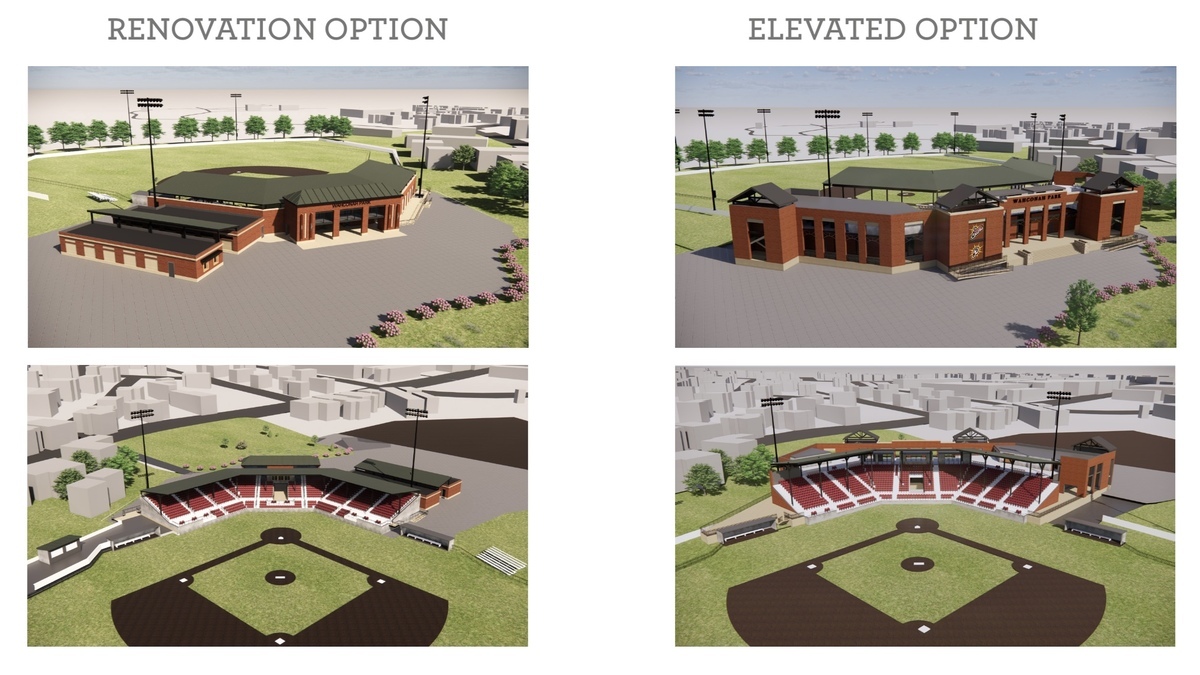
Members last week saw two possible plans: a renovated option and an elevated option. Other important aspects including flooding considerations and a natural grass versus artificial turf field were also mulled by committee members and the public.
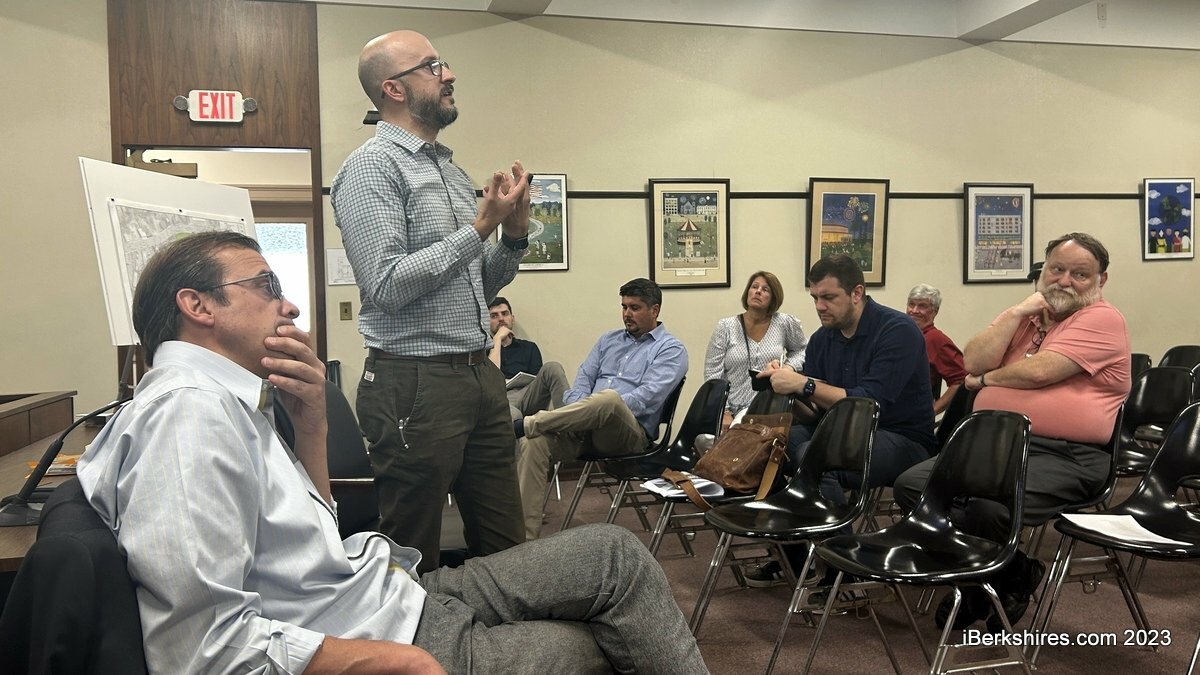
Principal architect Salvatore Canciello explained that the controlling factor of the renovated option is the potential to save the superstructure of the roof.
"While it still needs major repair, it is condemned, it is the only part of kind of the existing structure that has the potential to be saved. The reason for showing that is that when we get in front of the state Historic Commission, if they're adamant about saving that versus rebuilding it in the same character," he said.
"Which you'll see option two is rebuilding the whole building. The main focus of that is getting all of the habitable spaces out of the floodplain."
Both options fit around 1,300 fixed seats and have a brick exterior.
While retaining the existing roof, the renovated design rebuilds much of the existing program in a similar location, attempts the smallest footprint to meet program and current codes, and features an accessible press box and Pittsfield Sun's offices.
The press box was identified as in stark need of reconfiguring, as the current box is dramatically inaccessible.
The elevated option raises all program spaces above the flood pain and has a fully accessible lower and upper concourse. While the roof on this design is not original, it maintains its character.
Members were told to think of it as a beach house that is on stilts but there will be masonry so that it doesn't appear to be on stilts. This allows the water to flow underneath.
A PDF of the designs will be sent to the committee members so they can take a closer look and develop opinions in the next couple of weeks. Official plans are expected in August along with some kind of cost estimate.
"It's hard for me to make a recommendation without knowing some estimate of the cost," Chair Earl Persip III said.
The project is estimated to cost $10 million to $15 million and, on Friday, U.S. Rep. Richard Neal came to Pittsfield to tout a $3 million earmark from the federal government.
To address flooding, the designers propose bringing all of the parking up to a higher elevation to mitigate as much flooding as possible.
The designers began the conversation about a natural grass versus synthetic turf field with some cost estimates.
Grass would rate from $286,000 to $1,144,000, or about $2 to $8 per square foot, and would cost $18,000 to $45,000 to maintain per year. These costs include consumable materials, labor, irrigation costs, and striping frequency.
Synthetic turf would cost $1,114,000 to $1,573,000, or about $8 to $11 per square foot, and would cost $3,000 to $10,000 to maintain per year for labor, usage, repairs, and infill replacement as needed.
Companies will often honor an eight-year warranty on synthetic fields and they have been known to last about 10 years. The general rule of thumb is that the replacement cost is going to be about 60 percent of the construction cost.
Natural fields are subject to the weather and can be used no more than 700 to 800 hours per year while synthetic fields can be used for as many hours as needed based on conditions.
"There's been some strong opinions about grass. I've heard none positive for synthetic from the community," Persip said, asking his colleagues if they have any strong opinions on the matter.
Park Maintenance Superintendent Eddie Casella favors a synthetic field, pointing to the heavy maintenance that the natural field would require and the Sun's cancellation of games due to field conditions.
"Of those 12 cancellations, I would have lost one game [if the field was synthetic]," Sun's President Sander Stotland said.
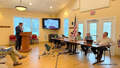
After the restoration committee meeting, the community was shown the presentation and given a chance to weigh in.
Residents discussed environmental concerns and Americans with Disabilities Act accommodations among other considerations.
"This is not my ward but it's really important to all of us. It's a piece of city history. It's a jewel of downtown. It's an anchor in downtown that does need to be upgraded. It's something that we need to take care of. It's a city park. I just want to make sure before we invest all this money that we're doing it in the right way," Ward 5 Councilor Patrick Kavey said, explaining that he wants to make sure the plans will sufficiently address flooding.
Councilor at Large Peter White called attention to the current outdoor beer garden, calling it one of the most inviting places, and wanted to confirm that there would still be outdoor concessions.
A community member seconded his testimony, adding that it is important to have family events in the park.
"It was the family stuff that brought us to the park," she said, explaining that as a single parent, she could bring her children and watch them while they played in the open area and now they go as teenagers.
2023_0720 Wahconah Workshop3 by Brittany Polito
Tags: Wahconah Park,