North Adams School Building Committee to Review Building Options

Print Story | Email Story
NORTH ADAMS, Mass. — The School Building Committee has some important dates coming up as it determines which school project will be submitted for approval to the Massachusetts School Building Authority.  
 
It will meet twice in September to narrow down the current options to three — and this will largely depend on the grade configuration that the School Committee will vote Aug. 29. 
 
The school district has held one public forum already on grade configuration (the video can be found here) and a second one is set for Tuesday, Aug. 22, at 5:30 p.m. at Brayton Elementary's Welcome Center and over Zoom
 
The question is whether to keep two kindergarten through Grade 6 schools or to create a preK through Grade 2 school and a Grade 3-6 school. The decision will help determine whether to close Brayton or Greylock elementary schools. The choices are currently to renovate or rebuild Greylock or renovate Brayton as either combined or split grade schools, made back in June
 
The MSBA is expected to reimburse up to 80 percent of eligible spending on a school project. The project is currently on schedule and on budget. 
 
A survey put out by the schools system had 877 responses of which 82 percent were from North Adams, 44 percent from parents/guardians, 25 percent from faculty and 22.4 percent from residents (those who do not have children in the schools or will not be affected by the reconfiguration).
 
Those preferring either an preK-2 or preK-6 school were about even; broken down into sectors, faculty was more in favor of the split grade option while parents/guardians leaned marginally toward preK-6. 
 
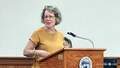
Superintendent Barbara Malkas said there have been a number of issues raised, including concerns over transportation, keeping children in the same families in the same school, the concept of the neighborhood school 
 
Others saw a split in grades as keeping children with their peers through their education journey, having a more focused development program, not having to travel between schools for programming and having more opportunities for inclusion with peers.  
 
"Amongst among the faculty respondents, certainly the benefit of being able to collaborate across grade levels really, I think, educators can definitely see the benefits of that," she said of splitting the grades. "And with ensuring that there's greater consistency with regards to curriculum delivery and instructional modality."
 
The recommendation for grade configuration will be made by the policy committee, Malkas said. "The policy that governs our organization of our schools is called the organization of instruction. It is an approved School Committee policy."
 
The committee also reviewed the criteria it will use for determining school project selection, such as cost, siting, community connection and access, education delivery and social emotional learning support, technology, special education, parent engagement, traffic patters, dropoff and pickup, work and meeting areas, STEAM learning, welcoming, proximity to fields and play areas, environmental issues and sustainability, transportation, neighborhood, topography, pedestrian access, parking, security and emergency access, and cohesive layout and accessibility. 
 
"The option development will happen after the Aug. 29 decision on which which way to go with the grade configuration," said Julia McFadden of TSKP Studio, the project's designer. "Then we'll develop the options and bring them to you, then we'll have those options cost estimated and bring that to you. 
 
"And then you'll be asked to select a preferred option from those three."
 
She anticipated coming to the Sept. 5 School Building Committee meeting with some initial development of the options and more fully developed product by the second meeting on Sept. 21. 
 
"And then finally, Oct. 12, is selecting the preferred option because we'll be coming up with cost estimates at that time that factor in to the other metrics that we're reviewing," McFadden said. 
 
The School Committee will vote on the recommendation on Oct. 17 and the preferred schematic design will be submitted to the MSBA on Oct. 26. 
 
Tuesday's meeting had a quorum but was lightly attended. That can't happen in these upcoming meetings, said Malkas. 
 
"We need to make sure the message gets out that these are important meetings coming up," she said. "While tonight we don't have a lot of expectation for School Building Committee decision making, the coming meetings in September, there will be expectations of voting on items that will ultimately determine the outcome of this project."

Tags: brayton/greylock project,   MSBA,   

If you would like to contribute information on this article, contact us at info@iberkshires.com.

Why the Massachusetts Art Community Is Worth Continued Investment

By James BirgeGuest Column
How do we quantify the value of art on society and culture? Even eye-popping figures, like the $100 million estimate for the jewels stolen from the Louvre, or the record auction last fall that saw a piece by Gustav Klimt sell for more than $236 million can't fully account for the value of the history, stories, and emotions behind the creations themselves. But beyond that, there is a measurable financial, cultural and social benefit of the arts that is often taken for granted. 

Closer to home, arts and cultural production in the Commonwealth of Massachusetts totals nearly $30 billion annually, representing more than 4 percent of the state's economic output, according to the Mass Cultural Council. All told, more than 130,000 jobs are spread across the commonwealth creating a vibrant and thriving artistic community for us all to enjoy. 

Despite the obvious impact, these figures are under threat. A recent survey by MassCreative compiled recent federal cuts to the National Endowment for the Arts, the National Endowment for the Humanities and the Institute of Museum and Library Services and identified 63 grants canceled and $4.2 million in grant funding rescinded across New England so far this year. 

The dollars, of course, are important. But they also only scratch the surface on what they bring to the community. Today, we risk losing part of the culture and identity many now take for granted. 

While others choose to look past these less tangible, but just as vital benefits, we're doing the opposite. Massachusetts College of Liberal Arts is all in to ensure the next generation retains their access to works of art, while also being empowered to create themselves. 

Last fall, MCLA officially broke ground on the new Campagna Kleefeld Center for Creativity in the Arts, which will serve as a new hub for the campus and the local community for arts programming. When complete in fall of 2027, our students will benefit, but so will all of Berkshire County and artists in the surrounding area. 

This exciting new facility is just one of the many forthcomings our region can enjoy in the coming years. Just a few miles away, anticipation builds for the Fall 2027 anticipated opening for the Williams College Museum of Art. Years in the making, the museum likewise grows from an enduring commitment to the arts, both in curriculum and in practice. Exciting times are also underway for the Clark Art Institute with the construction of a new facility to house a collection of 331 works of art, including paintings, sculptures, drawings and other works. Their wing is scheduled for completion in 2028. And listeners will no doubt enjoy the sounds and melodies from Mass MoCA Records, the latest endeavor to foster creativity and artistic pursuits through music launched in October as well. Of course, many are also awaiting the reopening of the Berkshire Museum anticipated this summer, after a tremendous renovation process to rejuvenate the experience for visitors. 

So much time, energy, and yes, dollars, have already been invested in taking these facilities from ideas and sketches and making them reality. But they represent much more than new buildings. They represent new opportunities to cultivate and accelerate the thriving arts community in Massachusetts and the northern Berkshires. 

Art, regardless of the medium, is a reflection of who we are, where we've been, and what we aspire to be. It can be inspired by hopes or fears and chronicle collective triumphs as well as tribulations. The goal of art is not only to document history, but to inspire those positioned to change it and to feel something new or even to provoke us to revisit our own assumptions or misconceptions. 

As unfathomable of a number as $30 billion can seem, boiling down the impact to any number inherently discounts the unknowable downstream effects our graduates will bring to the community and the broader world after they leave our institutions. Likewise, rescinding $4.2 million now removes a huge chunk of that growth potential.  

Justification for making these investments today when simply boiled down to dollars and cents still places us on solid ground strictly from a financial perspective that forgoes all of the intangible, but no less valuable, benefits as well.  

The arts are still worth our support. And our community will be richer for it. 

James Birge, PhD, is president of Massachusetts College of Liberal Arts in North Adams.  


View Full Story

More North Adams Stories