Williamstown Grappling With 'Fairness' of Property Tax Proposal
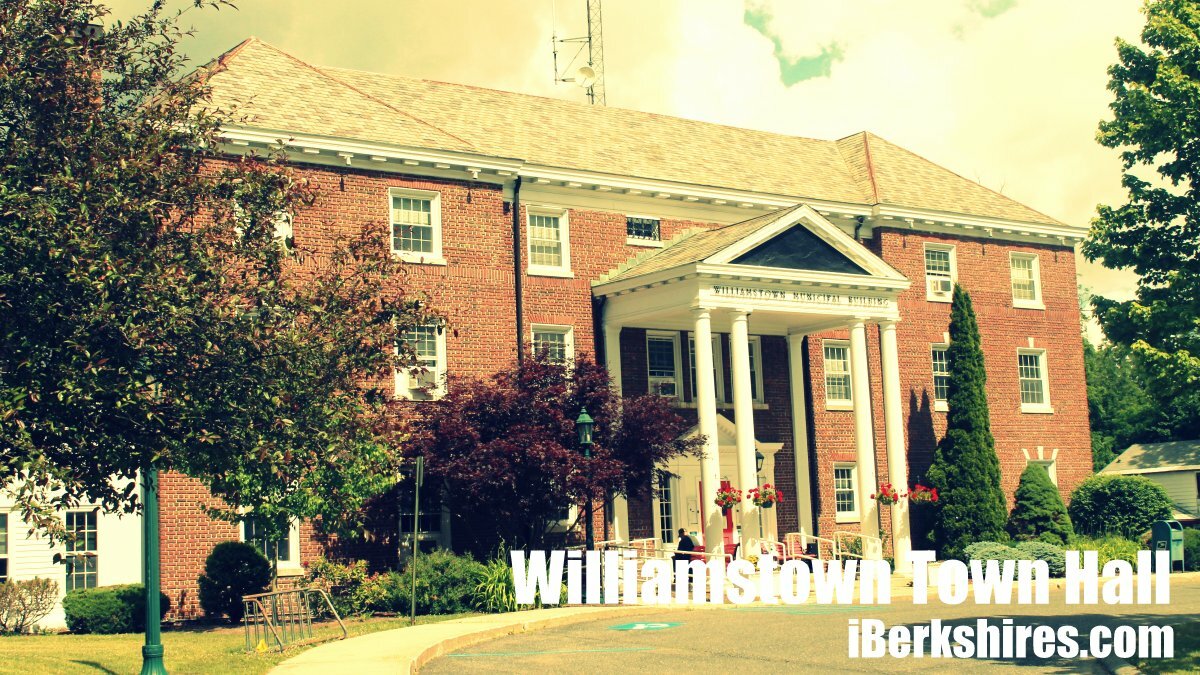
WILLIAMSTOWN, Mass. — A property tax proposal that has dominated Select Board discussions this summer largely comes down to a question of how one defines "fairness."
Select Board member Stephanie Boyd has been advocating that the town consider adopting the commonwealth's residential tax exemption as a way to shift some of the tax levy away from owners of lower-priced homes and toward owners of higher-end properties.
She talked about the RTE in her campaign for the board in the spring, and she has argued in recent meetings that the exemption is one small step the town can make to require those who have a little more to pay a little more to support town services.
"The first thing we should talk about is our principles," Boyd said recently. "What are we trying to do with the tax policy? Everybody wants it to be fair. But what does that mean?
"Our current property tax is based on the theory that those with more expensive homes can pay more — even the way we do it today. I think it's worthwhile for us to evaluate whether our current tax system is doing what we want it to do."
Jeffrey Thomas is sure that it is.
Thomas, a former member of the Select Board, spoke from the floor of the body's Aug. 14 meeting to address the body for even thinking about replacing the current system, where all property in town (excluding tax-exempt properties or land protected by state programs) is taxed at the same "mill" rate, currently projected at $15.89 per $1,000 of property value.
"There's an implicit compact with communities that's been validated by the [Williamstown] Select Board as long as I can remember: Regardless of the property you own, you're going to pay a proportionate share of the tax burden," Thomas said last week. "We're not going to say to commercial property owners, 'You should pay more.' We're not going to say to second-home owners, 'You should pay more.'
"That's the deal we've all agreed to, implicitly. Maybe some of us are not aware that was the deal. But it worked for us. Select Boards and assessors year in and year out have said, this is fair. The minute you shift it around, you're going to make it unfair to some segment of the community."
The Select Board makes its annual decision to support the "implicit compact" at its tax classification hearing held in late summer. That is the meeting where the board decides whether to "split" the tax rate between the residential and commercial class or opt for a single tax rate and where it decides whether to apply the RTE, enacted into state law in 1979.
This year's tax classification hearing is scheduled for Monday, Sept. 11.
The exemption, if adopted by a municipality, allows the community to exclude up to 35 percent of the average property value from each residential lot, as long it is the full-time residence of the owner.
To date, just 19 of Massachusetts' 351 cities and towns have adopted the RTE.
That list includes Boston and Cambridge as well as a number of communities on Cape Cod and the Islands. On the Cape, the RTE is seen as a way to provide tax relief to full-time residents by raising more revenue from pricey second homes and vacation rental properties.
While Williamstown does not have nearly the percentage of vacation homes as, say, Provincetown, Boyd has argued that the RTE still has a place in the town. According to her calculations, the exemption would lead to lower annual property tax bills for most Williamstown homeowners with the difference made up by higher tax bills for those owning homes valued at $655,723 or more — a price point known as the "break-even" point.
It is a little like the argument in favor of the "Fair Share Amendment," or millionaires tax, that passed with 52 percent of the vote statewide — and 75 percent of the vote in Williamstown — in November 2022.
"What we're talking about here tonight is whether those of us with a lot of stuff can share a little bit of it with our community," Boyd said at the Select Board's most recent meeting.
A couple of weeks later, she said her argument is resonating with the community.
"Many of the people I've spoken to on the street — both people who would benefit from reduced taxes and those who would have to pay more — have said it's reasonable," Boyd said last week. "I think there's more support in the community than we're hearing from."
The board did hear from two former members — Thomas and Hugh Daley — at its mid-August meeting. Both urged the panel to follow past practice and reject the idea of implementing the RTE.
Thomas followed up his presentation with an email that he circulated to town residents with the subject line, "Select Board may raise your property taxes."
In it, he laid out the reasons he believes the RTE is a bad fit for the town. He repeated an argument made by Town Assessor Chris Lamarre, that the town's less than 1 percent delinquency rate on property tax bills proves residents are not overly burdened by the tax already. Thomas also detailed his reasons why the current system of one tax rate for all properties is more fair.
"In fact, property taxes [as currently allocated] are progressive with respect to property values," Thomas wrote. "Property tax payments are used solely to pay for town services, which are equally available to all primary residents. A family that lives here utilizes the same amount of town services whether they live in a home assessed at $750,000 or at $250,000. However, the family that lives in the $750,000 house pays three times as much for those services as does the family that lives in the $250,000 house."
Thomas argues that the current property tax system already is unfair to second-home owners, who don't get to vote on the town budget at town meeting and don't get to send their children to Williamstown's public schools, the largest single cost center for the town. Shifting even more of the tax burden onto non-residents would only exaggerate that disparity, Thomas writes.
Boyd comes at the fairness question from another direction.
She cites studies that indicate people who live in more expensive homes pay a lower percentage of their income for property tax than people in lower-valued homes, even when they are taxed at the same rate.
What she cannot do is prove that income and non-property assets (stocks or savings accounts, for example) are related directly to property value for Williamstown residents. The town does not have access to residents' tax returns and has no way to correlate income with home value; implicit in Boyd's proposal is an assumption that more affluent people tend to own higher value homes than do less affluent people.
Select Board member Andrew Hogeland has mentioned a couple of times this summer that he does not think property value is a good "stand in" for income when it comes to deciding tax burden. He has encouraged the town instead to find a "needs based" approach to providing property tax relief, pointing to a senior tax exemption expansion that passed overwhelmingly at May's annual town meeting.
Another unknown for those considering the residential tax exemption is exactly how it would play out in Williamstown if adopted. Unless and until there is a need for property taxpayers to prove their Williamstown homes are full-time residences, there is no way to calculate how the RTE would impact the tax rate or where that aforementioned "break-even" point would fall.
One thing that Boyd and Thomas agree on is that the property tax rate would go up under an RTE. How much it would go up and, thus, which properties would pay less in taxes and which would pay more (after the exemption is deducted from their property value) is a matter of estimation.
And those estimates have not been a point of disagreement.
Boyd, who has used a 10 percent RTE in her presentations to the board (the final exemption could be anywhere up to 35 percent), estimates the break-even point at around $655,000. Thomas' Aug. 27 email referenced a break-even point of $344,462 for full-time residents if the town chose a 10 percent RTE.
In his email, Thomas encouraged recipients to use an estimation calculator on the Massachusetts Department of Revenue website that was, at the time of his email, giving estimates that were quite different from those Boyd talked about in Select Board meetings.
On Tuesday, the DOR, which received inquiries from town residents and iBerkshires.com about the reliability of the calculator, adjusted the website.
On Wednesday morning, the DOR calculator projected a break-even point for Williamstown of $605,355.74 for a 10 percent RTE and $603,854.55 for a 35 percent RTE — numbers closer to Boyd's projections.
Prior to the DOR's adjustment, Thomas said it really did not matter to him what the break-even point was; he believes that the residential tax exemption is a bad idea for Williamstown no matter how many homeowners pay less in property taxes or how many pay more.
"I don't think the break-even level is terribly important," Thomas said. "None of my arguments against this are impacted by whether the break-even is $300,000 or $400,000 or $500,000, whatever the number is."
Boyd, meanwhile, also interviewed prior to DOR's fix to its website, said the RTE was worth looking at regardless of the break-even, though she said it might not make sense if it ended up being lower than the town's median home value, $395,100, according to Lamarre's testimony at last month's fire district tax classification hearing.
The Prudential Committee, an analog for the Select Board that governs the fire district, a separate taxing authority, opted to keep a single tax rate with no RTE as it has done in the past.
The Select Board, where only two of five members — Boyd and Randal Fippinger — to date have spoken favorably of the exemption, could do the same when it meets on Monday.
Even Boyd did not indicate in a recent interview that the board is likely to break with tradition this time around.
"I don't think the community is ready," she said.
"What I'd like to see now is a commitment that we do something so we have a better discussion over the next year — commit to having a consultant do the analysis, commit to pre-qualifying domiciled residents, commit to updating the [assessor's office] software, commit to move forward to grapple with this question."
Thomas, who called in his email for recipients to write letters to the editor and write their Select Board representatives directly, is looking for a different kind of commitment.
"When I addressed the Select Board, I told them, 'Please don't stand up a committee. Please don't hire a consultant,' " Thomas said. "I still feel this issue needs to be put to bed. It is such a bad idea for our community.
"Speaking personally, I don't want to wait around another year to find out if the Select Board is going to raise my taxes. I want the peace of mind to know I can budget for my retirement. I don't want to lose sleep over the possibility that I've got to change my plans because I have to work longer or find other ways to come up with the increased money to pay my taxes. It doesn't warrant further study."
Tags: property taxes, tax classification,