'Missing' Plaque Honoring Former Mayor Dedicated at North Adams City Hall
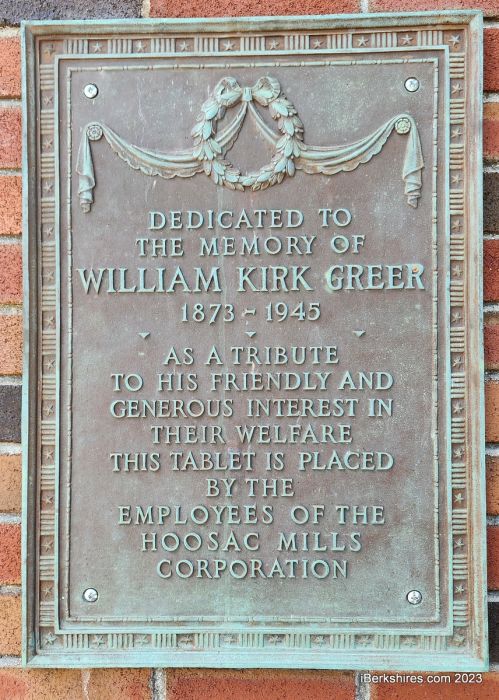
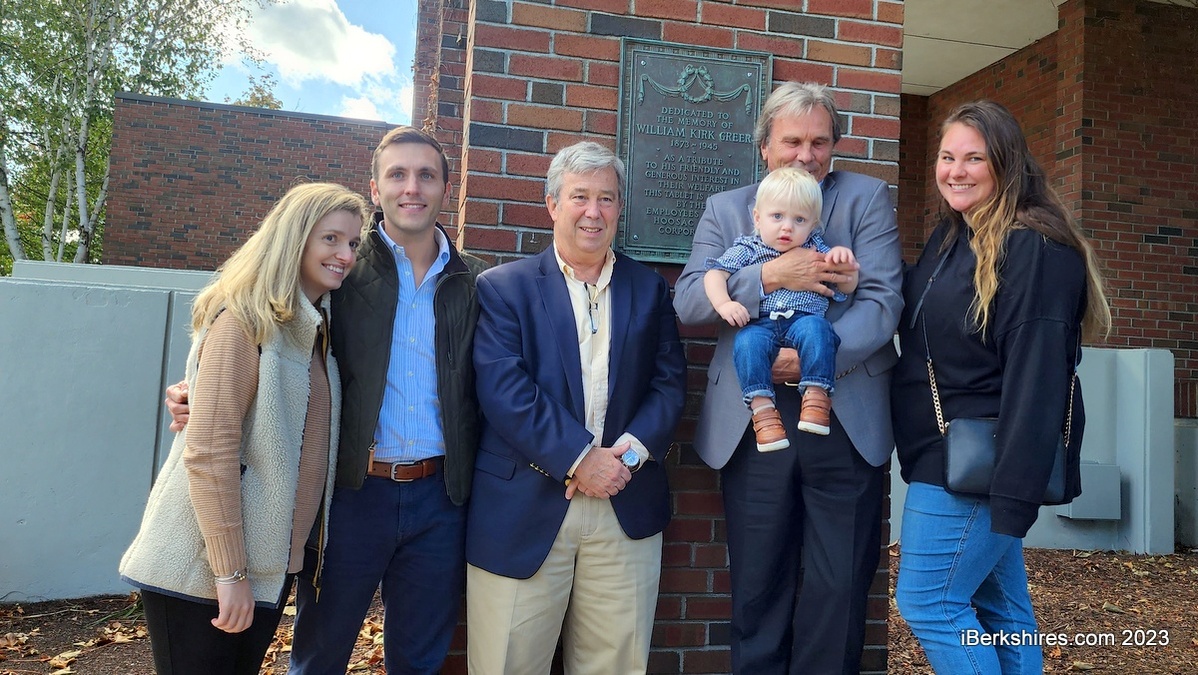
The bronze plaque originally hung in the warp shed of the Hoosac Cotton Mill and had been purchased by the employees.
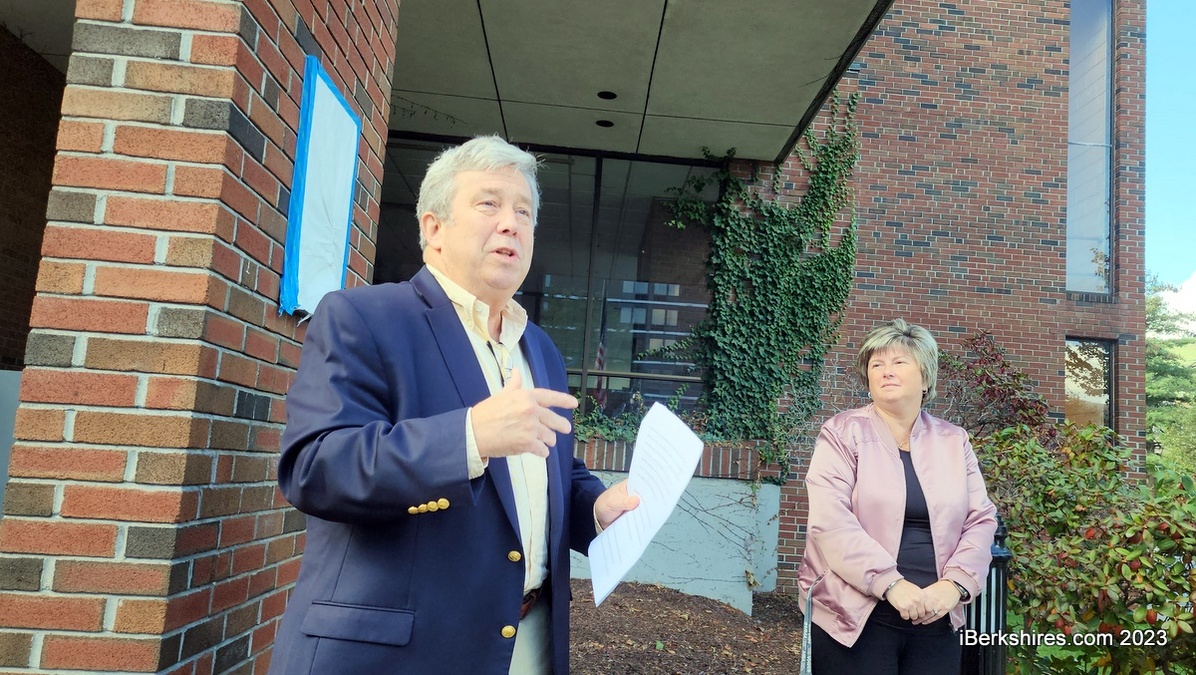
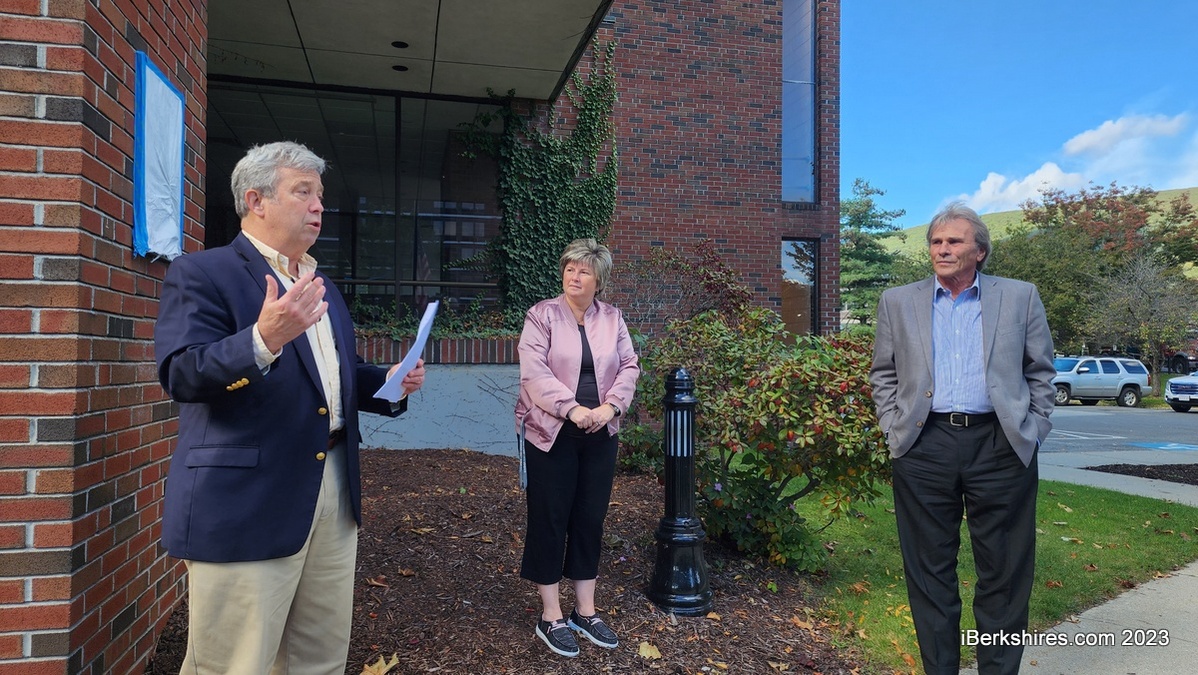
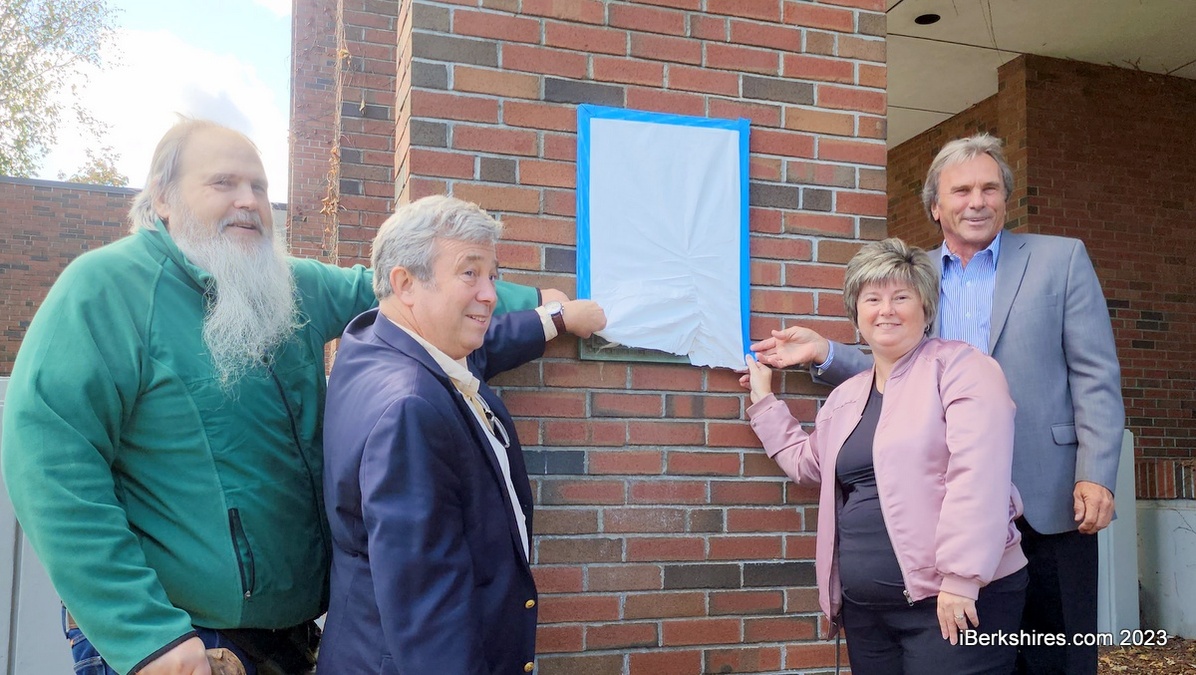
Two great-grandsons of Mayor William Kirk Greer traveled to the city on Monday for the unveiling of the plaque on a column outside City Hall.
"History is very important to us here in North Adams," said Mayor Jennifer Macksey. "So we're certainly delighted to have an opportunity to restore this."
Greer served as mayor from 1923 to 1924 and while his name might not ring any bells, a century ago he was a prominent and popular citizen.
"This is really a rededication because this was originally in one of the mill buildings here many years ago and it honored somebody who I've come to understand was actually quite a remarkable figure in history," said his great-grandson William Kirk Greer, who goes by Kirk.
Kirk Greer and his cousin, Robert Duker of Arizona, said this was the perfect time for the unveiling, marking 100 years since Mayor Greer took office. It was also two days before his 151st birthday.
The plaque doesn't honor his time in office or his other civic contributions but rather the appreciation of the workers he interacted with during his long career in the Hoosac Cotton Mills.
It was dedicated in front of 350 employees, company executives and union leaders in the now demolished warp room of the Union Street mill, according to an article in the North Adams Transcript. Greer, the mill's agent (similar to CEO), was described as being fair and generous, a leader at a critical time in the '30s, a friend to everyone, and "an upright citizen."
Greer only served one term as mayor and ran as the Republican candidate in 1922 on the "demands of party leaders and civic-minded residents," according to the Transcript.
He won by 720 votes over his opponent in what was the biggest election to date with a 76 percent turnout.
Called the city's first "business mayor," he introduced a pay-you-go policy and was considered to have the most business-like administration at that time. He declined, however, to run again for office despite entreaties and that "he was practically assured of election."
He would serve a few months on the city's charter revision committee, and for years as a director of the North Adams National Bank and of North Adams Savings Bank, of which he was president. He also served during the war as the city's industrial protection director for the Office of Civilian Defense.
"I never met my great-grandfather ... but I did know his children, Henry, Bert and Dorothy," said Kirk Greer, whose grandfather was Henry. He would listen to family members tell stories, and came away with the thought that "here's kind of a really important and dignified gentleman who was a big part of the history of North Adams."
Greer, who attended Williams College, did some research here about his ancestor during one of his trips to the city from his home in Fairfield, Conn.
"What I discovered was a really truly remarkable man," he said. "I now understand why this plaque was raised to him."
Mayor Greer died in 1945 in a New York City hospital. He was only 72. He'd spent his later years in rooms at the Richmond Hotel and at the family farm in Rising Sun, Md., which was sold off in the 1980s.
The plaque that was assumed long gone was found in a workshop on the farm and Kirk Greer decided to take it home.
Local historian and Historical Commission Chairman Paul W. Marino was key to the plaque's return to North Adams.
"One of my cousins sent me one of Paul's articles, a link to the article. ... this little story about this plaque that had gone missing," Greer said. "I said wait a minute, I know where that plaque is."
Greer contacted Marino and discussions about the plaque's future began.
"Everybody thought it would be best that I kept it, but I've never really known what to do with it," said Greer. After 38 years in his possession, and talks with family, it was decided that North Adams was the appropriate place for it.
Macksey said the outside column had been selected because it's a prominent spot that people pass every day. Marino spoke about how too many memorials become "invisible" to residents and stressed the importance of local history.
"This monument used to be seen only by laborers in the Hoosac Cotton Mills," said Marino. "Now it's going to be seen by practically everybody who visits City Hall."
Tags: local history,