Adams Tax Rate Drops 6% But Bills Will Rise
ADAMS, Mass. — Property owners will again see their tax rates drop by a $1 but their tax bills rise, driven by rising housing valuations and budgetary needs.
The Selectmen on Wednesday night voted a split tax rate with a 130 percent shift toward the commercial.
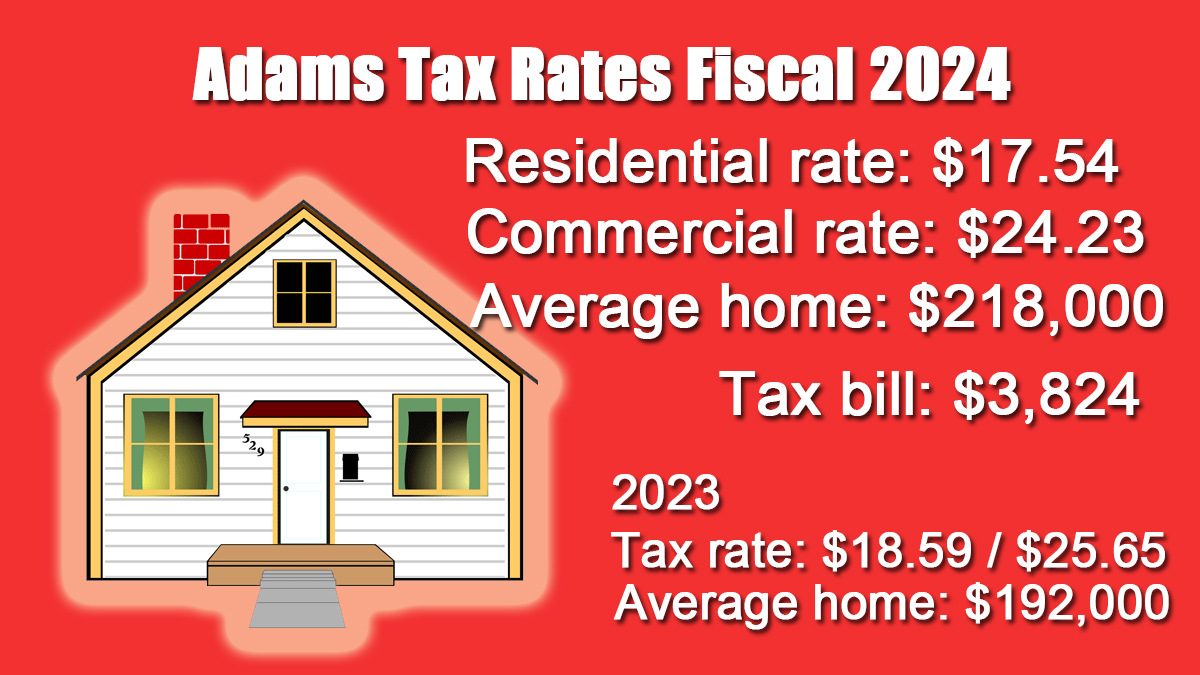
That translates to a residential tax rate of $17.54 per $1,000 assessed value, down around 6 percent from last year's $18.59, and a commercial rate of $24.23, down from $25.65 last year.
Town Administrator Jay Green pointed out this was the first time the tax rate had dipped below $18 since 2012.
The value of an average single-family home has risen $36,000, from $192,000 to $218,000.
The average tax bill is expected to increase by $262 to $3,823.72; the average commercial bill will see a hike of $1,058.54 to $19,577.84.
Assessor Paula Wheeler told the Selectmen that the overall value of the town was $747 million for fiscal 2024, up $94,358,633 over last year. The total new growth was $14,299,990, a $7,340,244 increase from last year. About half the new growth was in residential values, up more than $1 million over last year.
"That's due to an increase of the Millhouses Adams," explained Wheeler. "They are no longer under a PILOT (payment in lieu of taxes) program. They have chosen not to go the pilot program route and instead to be put back on the, as we call it, the tax roll."
The Millhouse properties had a value of about $5 million; single-family growth was about $1.3 million. The values are based on fair-cash market value and are influenced by home sales. This was also the five-year certification year.
"It's important to state that the state looks at all these numbers," Wheeler said. "The state has gone through this with a fine-tooth comb and they approve it. They also approve our values."
Taking the levy of $13,944,674 needed to fund the $17 million fiscal 2024 budget and dividing by the town valuation would give a single tax rate of $18.64. Wheeler broke down the split rate from 110 percent to 140 percent, highlighting the 130 percent shift that the board had agreed on for fiscal 2023.
Green pointed out that in comparing tax rates with other communities, residents should remember that the town does not have a separate sewer fee but does have about $1 million in the budget for costs related to the system.
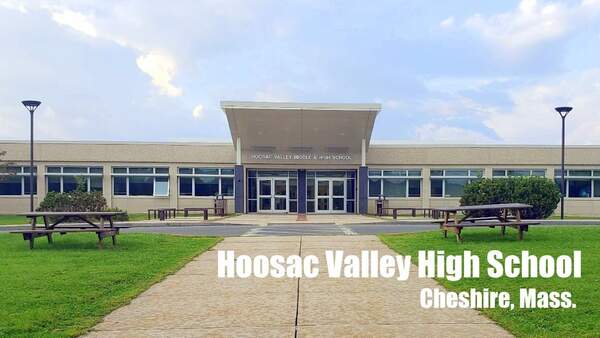
"Our tax rate is approximately $2 more than other communities simply to pay in that method for the operation of the wastewater collection system," he said. "And you add the $1.02 on there for the Hoosac Valley High School renovation debt service, so just keep in mind you're not always looking at apples to apples here. Sometimes looking at apples to oranges."
He also noted that the town's commercial rate is well below that of the next largest communities — North Adams ($37.90) and Pittsfield ($39.21), making the town more attractive to business ventures.
Selectman Joseph Nowak objected to the tax bill rising every year, saying Adams was in a distressed area and that the budget could be looked into more.
"Let people get some breathing space in this community," he said. "I just would love to give the people in this community, want to say your taxes are going to stay the same and then work from that point."
Selectman John Duval reminded him that the budget had been approved by the board (5-0), the Finance Committee and town meeting.
"It was based on what they felt was needed to run the community," he said. "After researching and making decisions, we all voted for it ... the budget was voted on, it's got to be paid for."
The budget is up 2.6 percent, largely driven by increased costs, including insurance and assessments to the Hoosac Valley and McCann school systems, and filling some positions. Two of those positions for the Greylock Glen development are expected to be paid for in the coming years by revenue generated by the glen.
The vote for the split tax rate was 4-1, with Nowak opposing "just on principle."
In other business:
Green notified the board that there will be no work this fall on Park Street because the two bids that came in were close to $200,000 over the estimated $774,600. One was for $932,762 and the other for $1,045,988.
"We will be going back to the drawing board and trying to find out where we can save some money," he said. "If we had accepted the bid, we would have depleted our reserves to a dangerous level."
That will likely mean a "mill and fill," rather than a full-depth reclamation, next year with a lifespan of about 12 years.
In the meantime, the town will try to get the full-depth reclamation on the Metropolitan Planning Organization's Transportation Improvement Plan. That could take at least a decade and the town will have to pay for engineering.
The concern is that Park Street will continue to deteriorate over the winter. "We can't seal the cracks, water will seep in there and expand and contract and blow the street apart," Green said.
Tags: fiscal 2024, property taxes,