Thanksgiving Angels Descend with Meal Kits for Residents
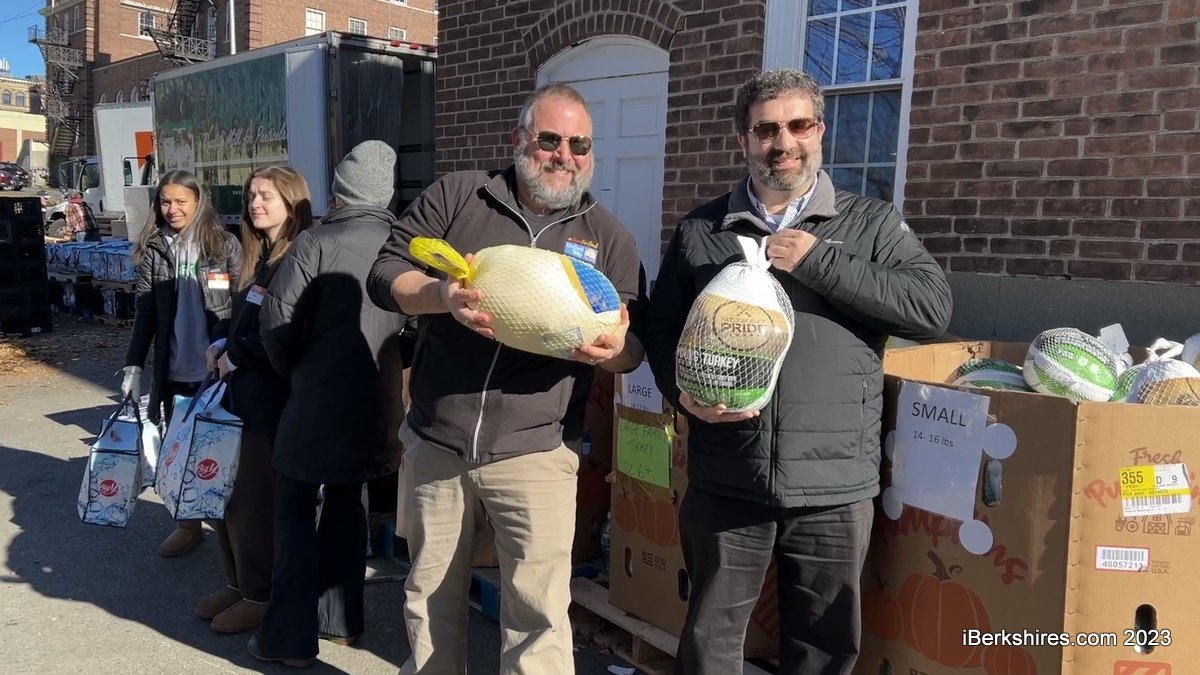
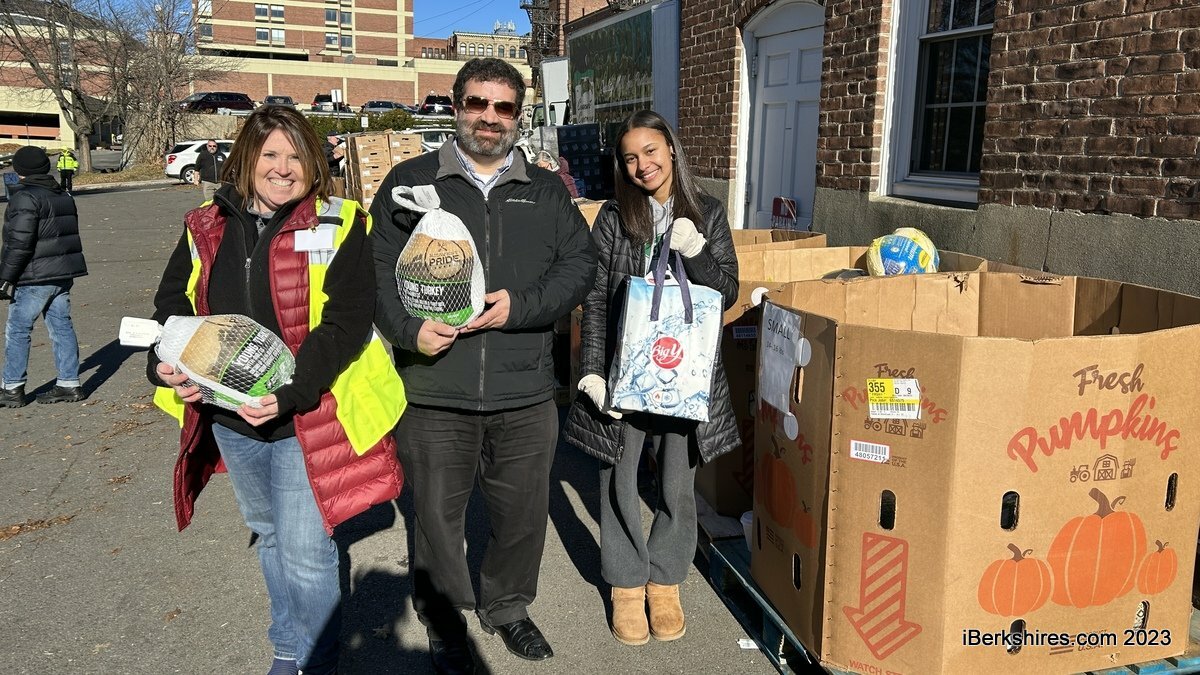
PITTSFIELD, Mass. — Upwards of 2,000 families will have their tables filled by the Thanksgiving Angels this year.
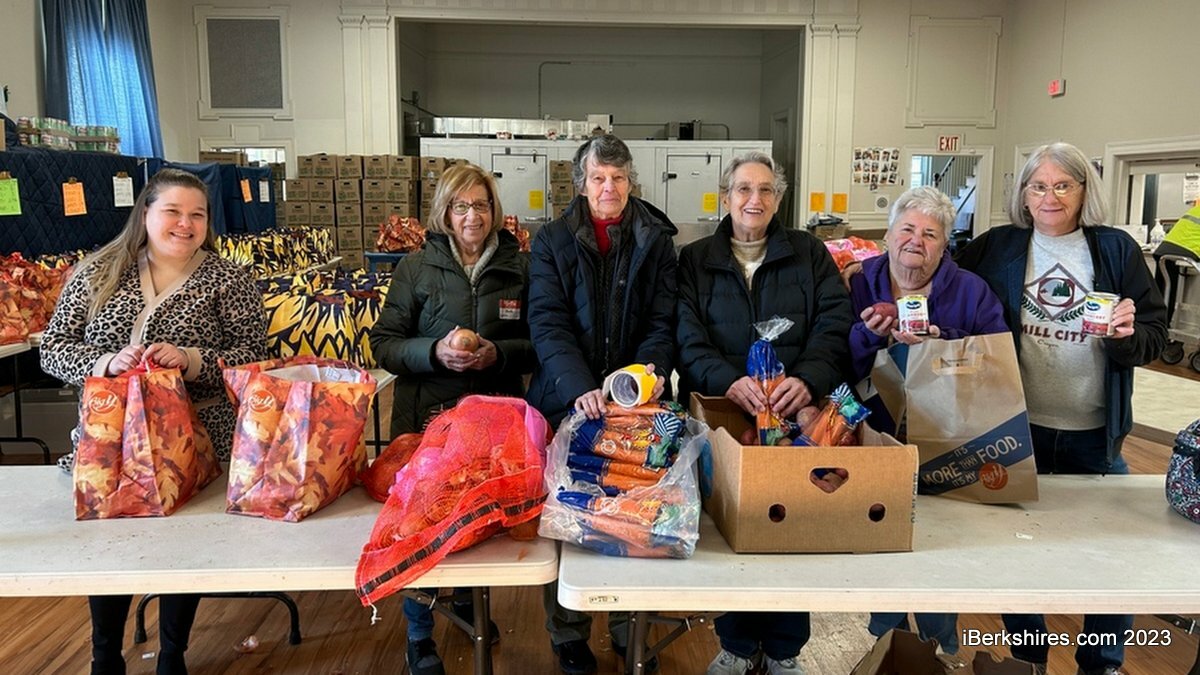
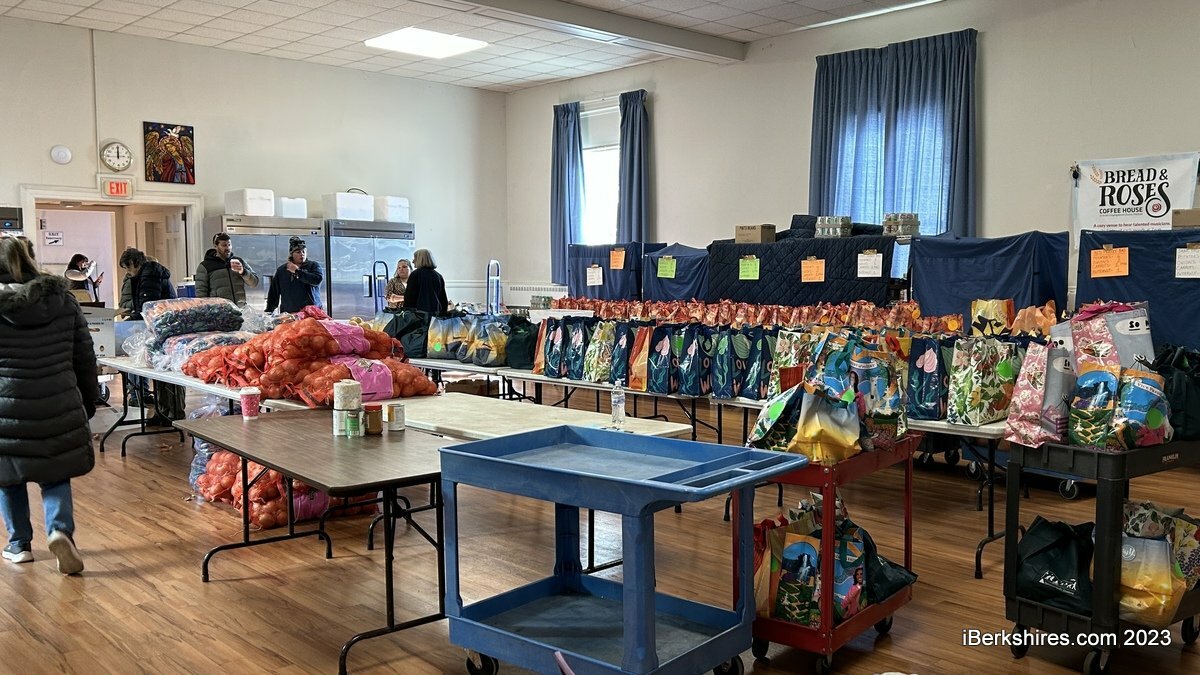
For more than a decade, dozens of religious and community organizations have worked together to create free meal kits for those who would otherwise go without. These include everything needed for a Thanksgiving spread — even the turkey.
Gretchen DeBartolo, co-chair of this year's donation, explained that 1,700 people had signed up but they are prepared for about 2,000 to account for last-minute recipients.
"We try never to ever turn anybody away," she said. "We never have. We don't want to start now."
Berkshire United Way has supported the Thanksgiving Angels over the past several months through volunteer management, printing name tags and to-do lists, and keeping it a well-oiled machine.
"This is that real proof of the power of service, actual people giving their time and making a difference and the person receiving a turkey, the person you're working side by side with, they don't care about politics, they don't care about your beliefs," President and CEO Thomas Bernard said.
"You just know that this is the best of our community and this is what we should be aspiring to and we know that people are hungry and food insecure and facing challenges every day and the responsibility is to keep this up and keep this happening."
An initiative page was created in BUW's Volunteer Center, supported by Greylock Federal Credit Union, that showcased all the ways to be involved in this year's program. There are more than 800 registered volunteers in the system and this recruited around 100 more.
Director of Volunteer Engagement Brenda Petell reported that over the 13 days of preparation and distribution, there have been nearly 2,000 volunteer hours from nearly 600 volunteers. There were nearly 200 volunteers on Monday.
"We recognize that there are people that are struggling, there are people that are working one job or two jobs and it's still hard to make ends meet, and we think about our goals around children's education but a child can't learn if they're hungry and there's so much need right now in our community," she said.
"We felt this was a way that we could contribute to the overall project really through the in-kind hours and the skill set of printing databases and managing databases and nametag processing all of that. So we thought it was a way that we could come to the table and contribute to this amazing group."
The Thanksgiving Angels steering committee meets monthly all year long and around 23 organizations are involved, each responsible for some part of the meal kit.
This year, DeBartolo and Hope Amandos were the chairs under the direction of Mary Wheat, who led the program for many years. It was founded over 15 years ago.
Wheat said they were doing a great job and everything was going smoothly. This year, she was very vital in processing and coordinating deliveries to hundreds of people over the weekend.
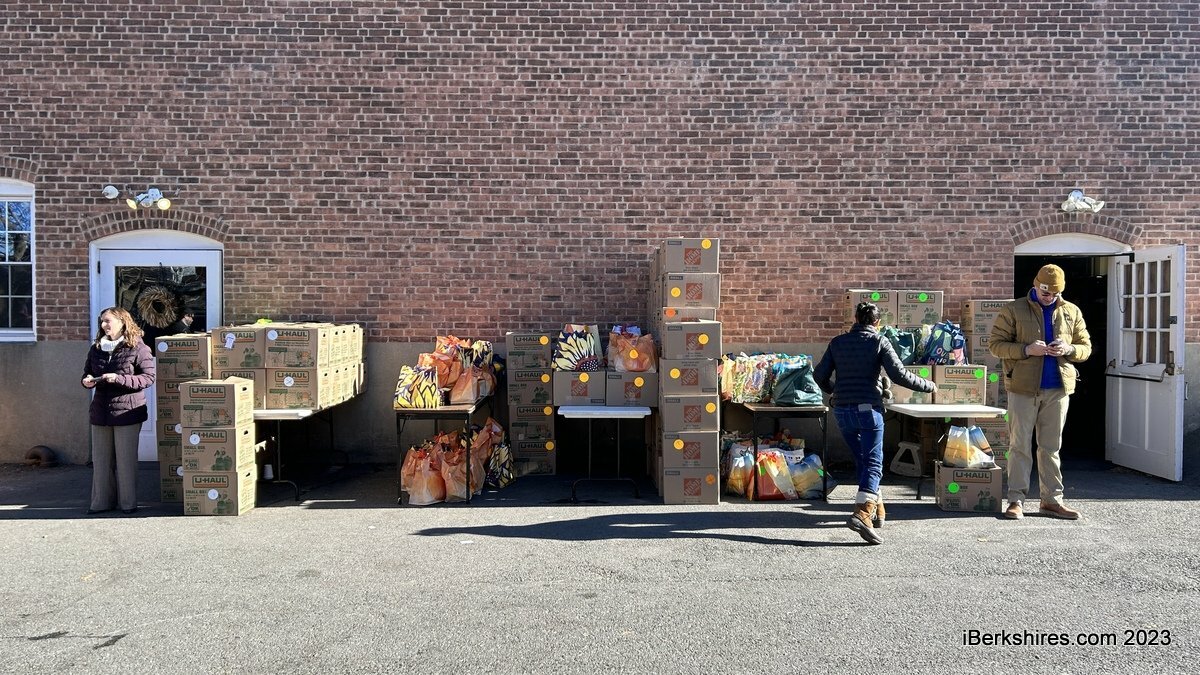
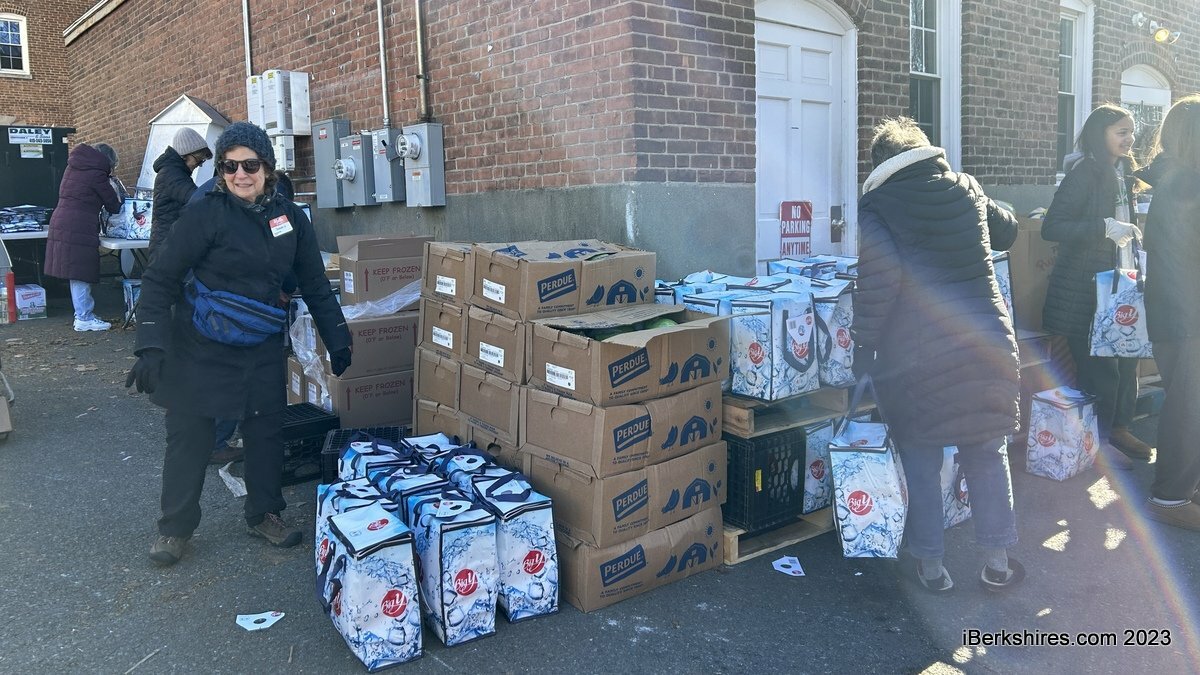
Meal kit recipients pulled up to the South Congregational Church on Monday to have their cars loaded with the items and there was a shorter distribution on Tuesday.
"We just want to make sure that each household, each individual person is fed," steering committee member Gracie Walton said. "We even had people that walked."
Among the volunteers was state Sen. Paul Mark. Now that he represents all of Pittsfield, he was invited to be in charge of getting the turkeys into the cars — an important job. He estimated moving a couple hundred turkeys throughout his time on site.
"It's fun," he said. "People seem really happy to be getting it."
Tags: food, good news, thanksgiving,