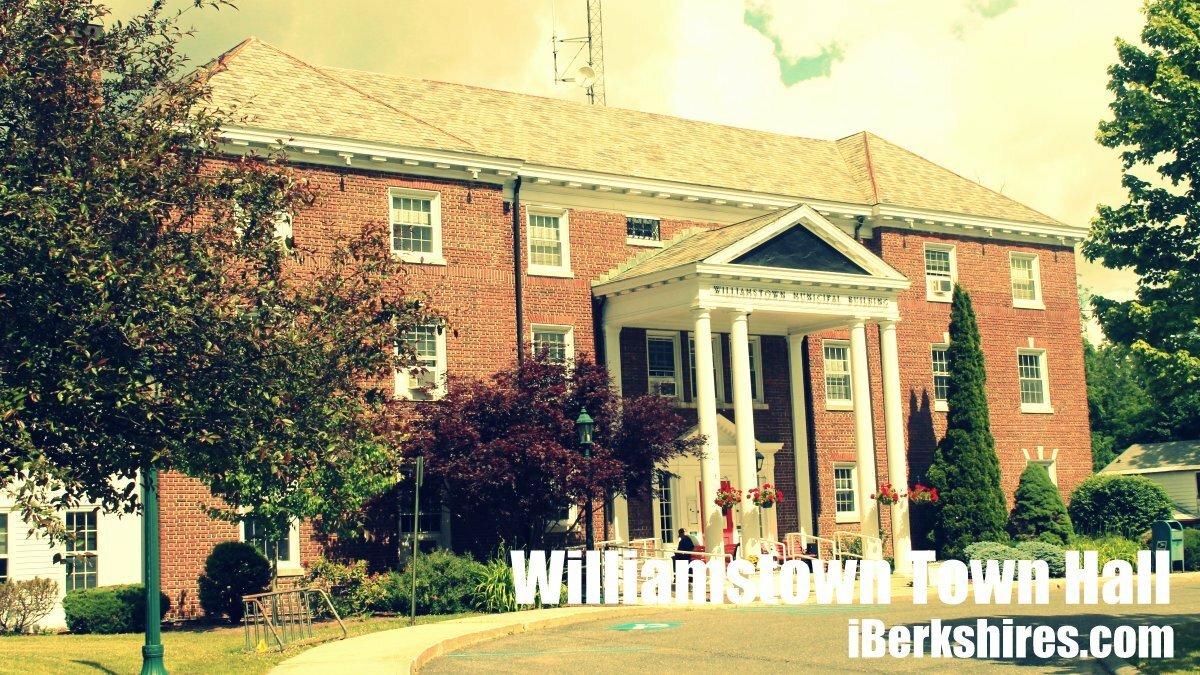
Williamstown Select Board to Seek Data on Short-Term Rental Issue
WILLIAMSTOWN, Mass. — The Select Board on Monday discussed developing a town-wide bylaw on short-term rentals.
But it did not reach a consensus — even about whether to take up the project that the Planning Board asked the Select Board members to address 15 months earlier.
Four members of the five-person Select Board appeared to agree that some action was needed to create local guardrails for Airbnbs, as other communities throughout the county have done. One member said the issue needs more study and implied the Planning Board was suggesting the town solve a problem that does not exist.
The discussion — the second since the Planning Board's September 2022 "handoff" to the other elected body — came during a joint meeting of the two panels.
Planning Board Chair Peter Beck laid out the reasons why local regulation of short-term rentals make sense and emphasized that the kind of regulations the Planning Board started to develop are intended to allow residents to continue to use Airbnb revenue to supplement their income.
"In Williamstown, in particular, but also in other places, preserving the flexibility short-term rentals offer to our lodging capacity is important for a town with such spiky demand in lodging," Beck said.
Short-term rental is a burgeoning industry that allows homeowners to rent out their residences — or rooms in their residences — on a daily, weekly or monthly basis. It frequently is cited as a way to allow more tourists to visit during summer and foliage season in towns like Williamstown, where there is not enough 12-year demand to sustain more hotels and motels.
Although Airbnb.com is just one service that connects would-be lodgers with such accommodations, it has become synonymous with the practice of short-term rentals.
Beck noted the benefits of the industry for both homeowners and the tourist economy, but he also pointed to two concerns that led the Planning Board to look at creating rules in the first place.
"Preserving the residential character of residential neighborhoods — from a zoning perspective, this is important," Beck said. "If we're going to have neighborhoods zoned as residential where we don't allow any businesses [without a special permit], this has been a way in which kinds of businesses have begun to operate in otherwise purely residential neighborhoods.
"Also important for this town, but not just Williamstown, there is a concern about the number of housing units in town. There has been concern about the impact of 'long-term' short-term rentals — short-term rentals where that dwelling unit is used for short-term rental not just when people are out of town, weekends, summer weeks, things like that. Especially, this could happen where there's an investor, an LLC, living far, far away buying up what could otherwise be long-term rental stock or owner-occupied stock."
Current and past members of the Planning Board mentioned repeatedly in Monday's discussion that when that board has considered bylaw amendments that could allow more diverse housing options in town (accessory dwelling units, smaller lot sizes, duplexes) one of the objections raised is that new homes such changes might allow would lead to de facto hotels springing up in residential neighborhoods.
"Any time we're proposing bylaws like last year or this year to increase the housing stock in Williamstown, one of the first comments we hear is, 'Well, it's going to be used for short-term rentals,' " Beck said.
After receiving some feedback from local operators of Airbnbs and taking the first steps to develop a bylaw proposal, the Planning Board in the summer of 2022 decided that it made more sense for the town to have a general bylaw, not a zone-specific regulation of land use, and that the issue was more appropriate to the purview of the Select Board.
"Some towns or cities will regulate by zone," Beck said. "We weren't seeing a compelling reason to do that in Williamstown. Also, zoning bylaws are held to a higher [two-thirds] majority standard at town meeting.
"The last reason was, often in zoning, we'll encounter pre-existing non-conforming uses when we change the zoning, and folks who were operating under pre-existing rules can keep operating that way or at least challenge the decision in a way that's not true when you pass a town-wide regulation."
A key feature of the bylaw that the Planning Board began drafting and "handed off" to the Select Board in 2022 was a limit on the number of days a residence can be rented through AIrbnb in a calendar year. That is the solution many other municipalities have used to try to prevent "outside" entities from buying up housing stock and denying opportunities for it to be used by full-year residents, Beck said.
The 2022 Planning Board draft capped that number at 150 days, essentially allowing a home to be rented for the equivalent of 52 weekends and one month each year. But Beck said that number could be amended.
"If it's 150 days or 180 or even 250, it becomes unprofitable to run [the home] as a stand alone business," he said. "If you cap the days at anything less than a year, someone is going to put that business in a different town. But you can still rent [your Williamstown home] 200 days a year, and it's a great side income."
Select Board member Andrew Hogeland said he thought the creation of a Williamstown bylaw was "long overdue." Select Board Chair Jeffrey Johnson said at the outset of Monday's discussion that, "Leaving this room without a plan is not OK with me." Select Board member Randal Fippinger said it would be "unwise" of the town not to learn the lessons of other towns that have enacted regulations for short-term rentals. Select Board member Stephanie Boyd, who served on the Planning Board when it first worked on the issue, backed up some of the points made by Beck in his presentation.
Jane Patton, the longest tenured member of the Select Board, was hesitant to move forward with drafting a bylaw to send to town meeting.
"I do find it fascinating that there are 'so many individuals,' not one individual 10 times, coming to the Planning Board about this [short-term rental issue], but it never wafts its way to the Select Board until this conversation," Patton said.
"I agree we should get in front of things where we can, but I don't like it when we hear, 'A lot of people are really upset about this.' I don't feel comfortable as a member of the Select Board saying, 'Yes, let's absolutely do this,' when we don't have real hard data. Do we have any data that people are trying to come into town and buy property and do this whole corporate thing that everyone is so afraid of?"
Patton said she is not worried about "over-regulation" or government "overreach," per se.
"But this feels like we're solving something where we don't actually know the true and total context of the situation," she said. "Until I feel comfortable with that, I can't support this."
Patton noted that she does have an apartment above her garage that has been listed on Airbnb. But she said her family rents it infrequently and that she is "not making any money off this."
It was not immediately clear during Monday's meeting what data might convince Patton of the need for a bylaw.
"I'm assembling a shopping list of the data we would want," Planning Board member Ken Kuttner said at one point. "Number on the shopping list is how many short-term rentals in the database are rooms over someone's garage and how many of them are single, stand alone, single-family homes that are vacant except when being used by an Airbnb? That's what we're looking for, right?"
"This is going to sound flip, and I apologize," Patton said. "I want all of the common sense data."
"If I'm going to make a shopping list, I need to enumerate … " Kuttner began.
"I want the milk, the eggs, the bread and the butter," Patton said. "It's common sense."
Other members of the two boards agreed it would be helpful to compile data about occupancy rates for the nearly 200 Williamstown short-term rental sites on the commonwealth's website. It also was suggested that the researchers look for data about how many complaints about noise and other nuisance issues in town are tied to residences occupied as short-term rentals.
Boyd and Hogeland agreed to help compile data about short-term rentals that the Select Board can use in future discussions.
Although at least one member, Fippinger, expressed a hope that the board could draft a bylaw in time to get it on the warrant for this May's annual town meeting, Hogeland said he thought that would be "a stretch."
Planning Board member Roger Lawrence pointed out that the one zoning bylaw amendment his board has spent the year working on, to allow "cottage court" developments in town could be directly impacted by whether the town has a short-term rental control bylaw on the books.
"We really want to pass it," Lawrence said. "We really need it."
Tags: short-term rentals,