'Emancipation' Opens at WCMA
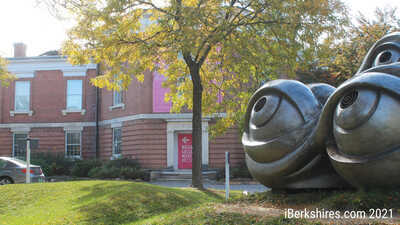 |
WILLIAMSTOWN, Mass.—In conjunction with the 160th anniversary of the Emancipation Proclamation, the Williams College Museum of Art (WCMA) will present newly commissioned and recent works by Sadie Barnette, Alfred Conteh, Maya Freelon, Hugh Hayden, Letitia Huckaby, Jeffrey Meris, and Sable Elyse Smith in a new exhibition visualizing Black freedom, agency, and the legacy of the Civil War today and beyond.
The seven installations featured in "Emancipation: The Unfinished Project of Liberation"—spanning sculpture, photography, and paper and textile fabrications—will react to the legacy of John Quincy Adams Ward's bronze sculpture "The Freedman" (1863) from the Amon Carter Museum of American Art's collection and will highlight the diversity of materials and forms in sculpture, installation, and mixed media today.
Co-organized by WCMA and the Carter, the exhibition demonstrates how historical art collections can serve as a resource and inspiration for contemporary artistic practices. "Emancipation" will be on view at WCMA from February 16 through July 14, 2024, before traveling to its last destination at the Telfair Museums in Georgia. The exhibition opened at the Carter in the spring of 2023 and traveled to the Newcomb Art Museum at Tulane University this past fall.
WCMA will host an opening celebration from 6 to 8 p.m. on Friday, Feb. 23. A complete press kit including images can be found here. A special tour for members of the media with the curators will be held at 4:30 p.m. Friday, Feb. 23; please RSVP here.
According to a press release:
Seeking a deeper understanding of what freedom looks like for Black Americans after 160 years, "Emancipation" interrogates the role of sculpture in American life by bringing the perspectives of contemporary Black artists into dialogue with the multi-faceted form and content of Ward's The Freedman. Initially envisioned and sculpted by Ward before the end of the Civil War, the figure is depicted on the cusp of liberation, with bonds ruptured but not removed. The work is one of the first American depictions of a Black figure cast in bronze, and the Carter's cast from 1863—dedicated to the 54th Massachusetts Regiment, an all-Black infantry unit—is the only copy of its kind with a key that releases a shackle from the figure's wrist. While considered aspirational in its time, over a century and a half later, The Freedman's reflection of uncertainty and endurance seem to manifest the long reach of American slavery.
In the WCMA venue of the exhibition, curators Destinee Filmore and Kevin Murphy aim to provide museum visitors with a deeper understanding of the nuanced histories of enslavement, abolition, and emancipation in Massachusetts through objects from the museum's collection and others borrowed from local partners.
"Collaboration has been at the heart of this exhibition since its inception, so our decision to engage our local partners in telling the story of emancipation in the Berkshire region was a natural call to make," said Filmore, a former WCMA Mellon Curatorial Fellow who is now Assistant Curator at the Metropolitan Museum of Art. "This exhibition encourages each venue or visitor to form their own understanding of enslavement and freedom by following the example of the contemporary artists as they respond to the show's theme and historical materials."
Tags: WCMA,