Williamstown Select Board Talks Utilization, Potential Transfer of Spruces Park
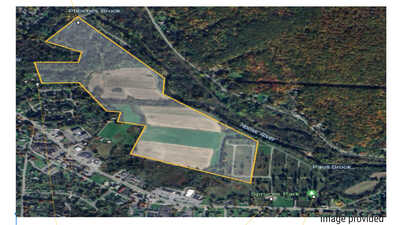 |
| A map designating a potential off-leash dog area (outlined in yellow) at the Spruces Park in Williamstown that was discussed by the Select Board on Monday. |
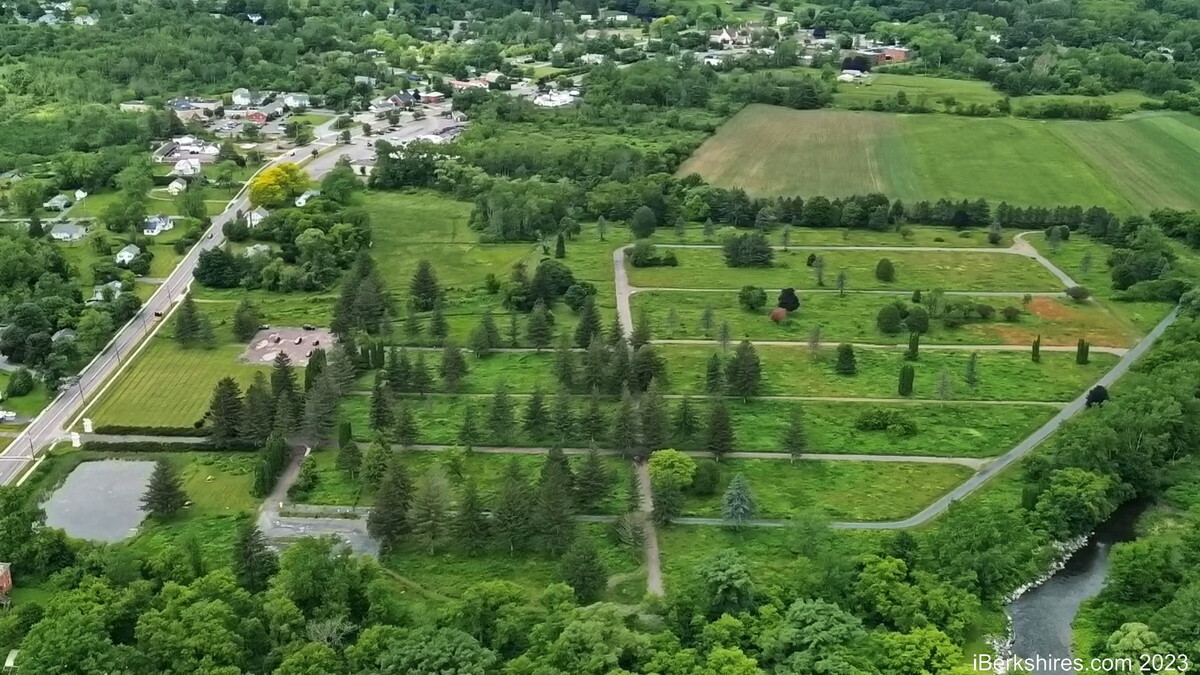
WILLIAMSTOWN, Mass. — The Spruces Park was a major topic of conversation for the Select Board at its Monday meeting, where board members heard from constituents who want to continue running their dogs off leash in the park and heard a proposal to transfer control of the property away from the board.
For the second straight meeting, dog owners came to the meeting room to advocate for continued unleashed use of the 114-acre park on Main Street (Route 2).
This time, the conversation was framed by a proposal to designate up to 80 acres of the property for access by unleashed dogs with the remaining 34 acres (about 30 percent) requiring dogs to be on a leash.
Select Board members Andrew Hogeland and Randal Fippinger and Town Manager Robert Menicocci developed the parameters of a proposed "dog park" section of the town park after walking the grounds following the board's Feb. 12 meeting.
Although a couple of the regular dog owner users of the park who spoke on Monday had a somewhat positive reaction to the proposal, several said that they need to be consulted more before any final plan is put into place.
"There are regular dog users," Avie Kalker told the three members of the board in attendance on Monday, Fippinger, Hogeland and Chair Jeffrey Johnson. "The last time, what we didn't hear was, 'We'd like to have you come walk with us.' What we're saying this time is, 'Let the regulars take you on a tour.' "
Trish Gorman told the board members that she "never sees" Hogeland at the Spruces Park, and she did not know Fippinger well enough to say whether he is a regular user. But she along with others emphasized that the regular users have special knowledge of the park that could have informed the officials' survey.
"I want to be respectful of the people who are not dog people," said Gorman, who indicated her use of the park predates the town's opposition of the former mobile home park property. "I am a dog person. … I think we were very respectful of the Spruces when people lived there.
"It would be nice to be invited … to be part of the walkaround."
One objection raised to the proposed 80-acre off-leash area presented on Monday was that it did not appear to allow access to the Hoosic River.
"The few times that we have to go on the [Mohican Trail, which runs through the park] are usually to cross the bike trail to get to the water source for dogs," Kalker said.
The Mohican Trail, which opened officially last summer, is posted requiring dogs to be on leash.
Hogeland and Johnson stressed that the off-leash area outlined on a map presented Monday is preliminary and that no decision would be made without more discussion and, at least, all five Select Board members in attendance.
Hogeland characterized the proposal on the table as a starting point for the conversation.
A more formal proposal is on track to go to May's annual town meeting from the Conservation Commission, which Monday gave the Select Board a warrant article to put on the meeting warrant. The Con Comm wants the town to transfer the Spruces Park to the commission's "care, custody and control," similar to other town-owned parcels that the commission manages.
Cory Campbell, the commissioner who took the lead on developing the warrant article, presented it to the Select Board, which, later this spring, will finalize the town meeting warrant.
"The commission would build out a management plan, which would involve talking to a lot of stakeholders – the DPW, Williamstown Rural Lands, which manages trails on town land, the Chenails [who lease part of the property to grow feed corn] and possibly the Agricultural Commission and any stakeholders from the community who want to make themselves known," Campbell said.
"There's no point in putting that plan together until the town has decided to have us do that for them."
One member of the Select Board raised concerns about the proposal, pointing to a controversy that arose a little more than a decade ago regarding another property under the Con Comm's control, the Lowry Property off Stratton Road.
A key issue at the time was whether the Lowry Property was protected by Article 97 of the state's constitution, a provision that requires a unanimous vote of the Con Comm and a two-thirds approval of the legislature in Boston to use the land for development.
Town counsel gave the town an opinion that the land was not covered by Article 97. The Conservation Commission itself determined that it was. Hogeland said the law has evolved since then to where "it more likely would be Article 97 land if it goes to Con Comm and stays there for a long time."
"My concern is that by giving it to the Con Comm, we're going down a one-way street where it can't be anything else," Hogeland said. "We don't have a lot of public land in town, and I'd be hesitant to lock it up.
"For me, risking the formal status of it becoming Article 97 land is too high a price to pay. Not a fan."
Hogeland characterized placing the land in the Con Comm's "care, custody and control" as a "lobster trap."
"It goes in," he said. "It can't come out."
Long-time Conservation Commission member Philip McKnight talked about the body's role in land management.
"We have managed [nine town-owned properties] consistent with but not subject to Article 97 … which requires us to manage the properties in the least intrusive manner possible so that they can be maintained in their present state," McKnight said. "For several of our properties, our management plan is to leave them alone. The only thing we have on several of those properties … are trails, which either we or the Department of Public Works maintain.
"We are not in the business of creating things on those properties. We're in the business of leaving them alone and managing them for conservation purposes."
Several of the dog owners who spoke to the Select Board about its off-leash designation proposal returned to the microphone to advocate against town meeting transferring the Spruces Park to the Con Comm.
"To make sure the Con Comm understands, if you take this over, you're responsible for the dog leash problem," Hogeland joked to the commissioners in the room. "So maybe we should give it to you."
In other business on Monday, the Select Board:
♦ OK'd Meniccoci's appointment of Alison Bost to the Community Preservation Committee to fill a seat that town meeting assigned to "the town manager or their designee" when it adopted the provisions of the Community Preservation Act.
♦ Reminded residents that the Brien Center Crisis team is available to anyone experiencing a behavioral health crisis by calling 413-499-0412 or 1-800-252-0277, 24 hours a day, seven days a week.
♦ Heard a suggestion from Hogeland that the board consider forming a parks commission in town. Currently, the Select Board fills that roll, similar to how it serves as the town's alcohol licensing board.
Tags: dog park, Spruces,