State Wants to Give Clarksburg $1.2M for a Safe Route to the School
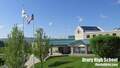
CLARKSBURG, Mass. — Clarksburg School asked the state for a $400,000 grant to develop a safe route from the school to the Community Center.
The state came back with a different offer — how about $1.2 million and a sidewalk along the entire road?
"I have never submitted a grant where they've came back and said we'd actually like to give you more money. We'd like to expand this and we'd like to triple it," Assistant Superintendent Tara Barnes told the School Committee last week. "Never. I've never seen this so I honestly take this as a signal from the state and from the leadership in the state that they would like to invest in rural communities. They were very excited about this project."
Barnes, assistant superintendent of student services and curriculum for the Northern Berkshire School Union, applied to the federally funded Safe Routes To School Program last fall. The goal was to find a way from the school to the neighboring town field and putting in a crosswalk from there to the Community Center, which also is the town's evacuation center.
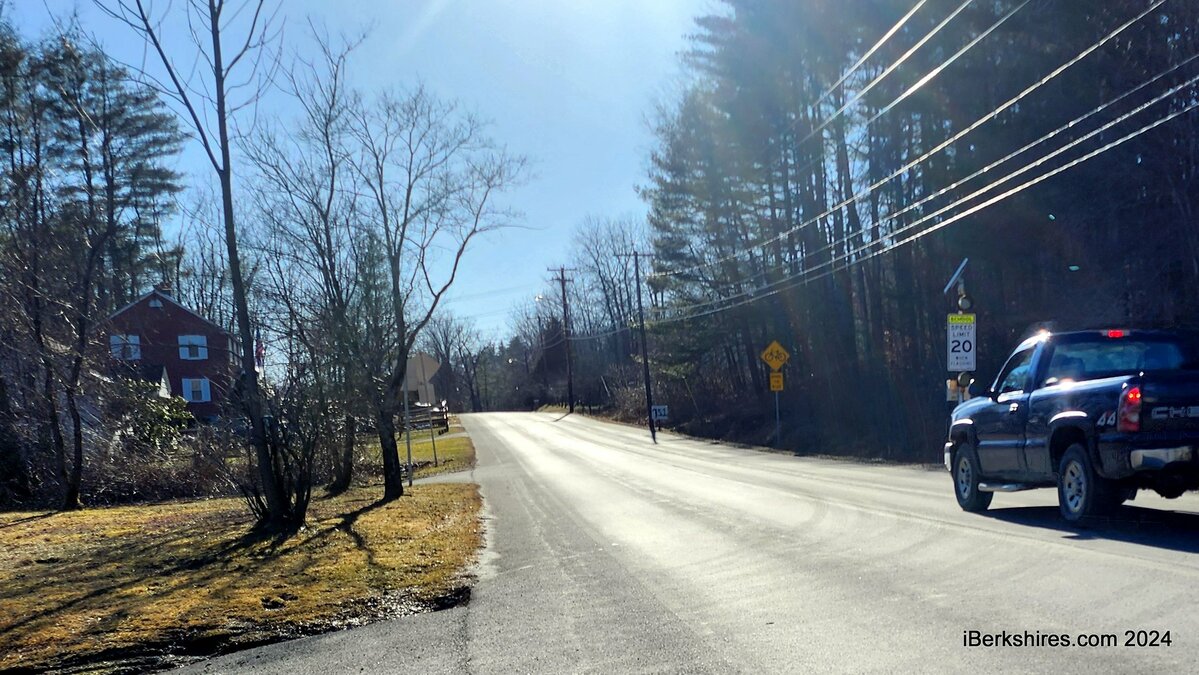
There are few sidewalks in the rural community and West Cross Road is no exception. The students can now reach the town field through a rough path in the woods and walk the field until crossing the road or walk along the sidewalk-free Cross Road, a heavily traveled way with no shoulders. That access through the woods is only available at certain times of the year, Barnes pointed out.
Representatives from the state Department of Transportation, which oversees the grants, are aware of the difficulties, she said, and have visited the school during the hectic drop-off and pickup times. That will be part of the challenge in developing a safe route design.
"We have done evacuation drills in the past. We've had to walk 200 children on the shoulder of the road to get down there [to the center]. It's not ideal. And it's not ideal that we can't access the town field when it's muddy and when you can't walk down through the the woods," she said. "So having a safe designated path that's a walking path between these two places in our hub, in our town is ideal."
The grant would go beyond that to run a sidewalk from Middle Road west to the top of Eagle Street. The project, including engineering, could take up to five years.
Principal Sandra Cote said the state's interest was in line with its goal to improve the number of children who walk and bike to school. "We only do it one week a year because we are concerned with the safety," she said.
The MassDOT website says the agency administers the program "to increase safe walking, biking, and rolling among public elementary, middle, and high school students." North Adams received a $740,000 grant for a MassDOT project to increase walkability and safety at Brayton Elementary School through Safe Routes to School.
Barnes said it would not just be a benefit to the school but the entire community.
"I've driven up and down the street so many times and seeing couples walking with their dog at night or during the morning first thing, and yes, there's a shoulder, but it's scary," she said. "I'm excited that they're interested. I hope the town can support this and see the benefit for everyone in the community beyond just the school."
In other business:
• Cote said the contractor installing left had been out to measure it again and that its installation was on track as soon as school lets out. Barnes presented the school's Student Opportunity Act plan, which was endorsed.
• Business Administrator Lisa Blackmer updated the committee on some financial issues, including a jump in tuition costs in this budget for Drury because more students are attending than accounted for. She thought some may have originally planned to go to McCann Technical School plus there are new families in town. Officials are going to determine whether the students live in Clarksburg.
The initial budget for next year is about a 5.21 percent increase. Blackmer said that translates to $147,000 and noted that the town is set to receive at least $255,000 more in state Chapter 70 education aid. She had budgeted to use $300,000 in school choice funds, down $50,000 from this year, but the School Committee asked that be reduced to $250,000. That would bring the increase to $197,000, still below what the town was getting extra in aid.
"We're not really asking for anything that they're not getting," said member Cindy Brule. "Let's not hit [school choice] as hard if we don't have to, right?"
School choice receipts are expected to decrease next year and following years as more Clarksburg students are enrolling, leaving fewer places for school choice. Cote said she had been receiving a pretty much a phone call a day about school choice openings the past couple weeks.
• Cote showed a certificate the school received for participating in the National Assessment of Educational Progress. "The kids, they took it seriously, you could tell that they were sitting there and trying hard and hopefully we'll be a part of the Nation's Report Card when that finally comes out," she said. She also reported that graduation will be June 6.
Tags: Clarksburg School, safe routes to school, state grant,