Central Berkshire School Officials OK $35M Budget
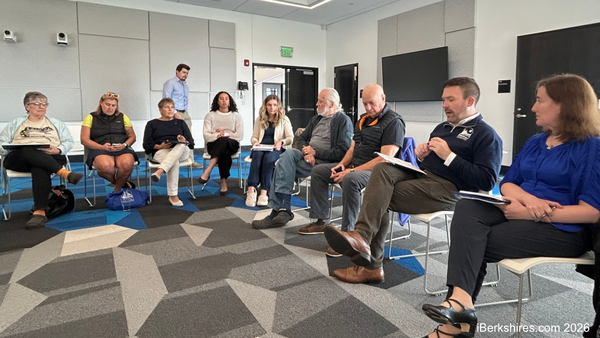
DALTON, Mass. — The Central Berkshire Regional School Committee approved a $35 million budget for fiscal 2025 during its meeting on Thursday.
Much of the proposed spending plan is similar to what was predicted in the initial and tentative budget presentations, however, the district did work with the Finance subcommittee to further offset the assessments to the towns, Superintendent Leslie Blake-Davis said.
"What you're going see in this budget is a lower average assessment to the towns than what you saw in the other in the tentative budget that was approved," she said.
The fiscal 2025 budget is $35,428,892, a 5.56 percent or $1,867,649, over this year's $33,561,243.
"This is using our operating funds, revolving revenue or grant revenue. So what made up the budget for the tentative budget is pretty much the same," Director of Finance and Operations Gregory Boino said.
"We're just moving around funds … so, we're using more of the FY25 rural aid funds instead of operating funds next year."
Increases the district has in the FY25 operating budget are from active employee health insurance, retiree health insurance, special education out-of-district tuition, temporary bond principal and interest payment, pupil transportation, Berkshire County Retirement contributions, and the federal payroll tax.
In addition to that, the district added an additional full-time equivalent teacher at Craneville Elementary School because of class sizes.
"There were a couple of decreases overall. We had some salary decreases amounting to just under $250,000. That's the reduction of one [full-time equivalent science, technology, engineering, and math] teacher, five Title 1 tutors, and then two full-time equivalent registered behavior technicians. We are also seeing a decrease in our charter school tuition," Boino said.
"Overall we had increases of $2.2 million and decreases of just under $400,000."
The goal of the budget is to create a fiscally responsible budget for the seven member towns while "supporting high-quality instruction" that aligns with "district resources" including "time, funding sources, human resources, and property," Blake-Davis said.
The district is still recovering from the effects of the pandemic, but due to the "hardworking teachers," they are seeing some movement in students' from Tier 2 and 3 to Tier 1, she said.
"We're definitely seeing some movement. What we're most concerned about at this point would be those students who are in Tier 2, hovering maybe in Tier 3, Blake-Davis said.
"What that means is they need more support than most students and at times they need substantially separate programming and a real level of expertise to help them really progress with their foundational skills in [English, language, arts] and math."
One of the concerns expressed by district teachers and staff is the discontinuing of some Title 1 tutor positions.
The district is going to have a "concentrated approach" and will be watching "very carefully this year" to observe how they do and determine if there is a need for additional reading and math interventionist, Blake-Davis said.
"Because we are definitely seeing a need where we value those, that expertise that some of those teachers have and that's our biggest area of concern right now moving forward."
There was a change in the budget's offsets from the initial draft because rural aid increased by about $250,000, Boino said.
"So overall, we are offsetting the budget by about $4.4 million and that's where we're sitting for the general fund operating budget at about $4.4 million or $30,993,750 combined," he said.
The budget's operations apportionment has not changed much since the prior drafts, except for the decrease in town assessments because the district moved money around from rural aid.
"Those are sitting at a 2.01 percent currently or a $352,567 variance year over year," Boino said.
As the largest of the seven communities in the district, Dalton's operations assessment is projected at $9,209,094 an increase of $144,423 or 1.59 percent. Including $1,327,950 in capital costs, the total comes to $10,537,044, a 1.96 percent increase.
The Dalton Select Board on Monday night approved of the assessment and did not express any concerns.
"Great work to the Central Berkshire Regional School District," Vice Chair Dan Esko said.
Other projected operations assessments are Becket at $2,654,842, increase of $61,039 or 2.35 percent; Cummington at $655,035, an increase of $6,377; Hinsdale at $2,778,398, an increase of $100,148 or 3.74 percent; the town of Washington at $745,077, a decrease of $1,016; Windsor at $871,804, an increase of $1,577; and Peru at $943, 938, an increase of $40, 019 or 4.43 percent.
"Two factors come into play for that. One is the required local contribution which is calculated by [Massachusetts Department of Elementary and Secondary Education,]" Boino said.
"The other piece is that five-year rolling average. What comes to play is the required contribution plus the budget balance and then the transportation assessment. So, that's what makes up each town's assessment."
The capital budget has a decrease of $3,674 year over year.
The district has three projects left on the books: Becket Washington School for one more year; the Wahconah Regional High School renovation from 2009, which will come off in fiscal year 2029; and the Wahconah Regional High School building project until fiscal year 2047.
"The big change in some of the town's cause some are seeing an increase; others are seeing a large decrease. We have three projects left on the books," Boino said.
"... For the smaller towns as their students move through the high school if they have less students going out as seniors and more coming in ninth grade it does change year to year."
Tags: CBRSD_budget, fiscal 2025, school budget,