Governor Files Mass Leads Act
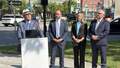
BOSTON — Today, Governor Maura T. Healey filed the Mass Leads Act, her administration's economic development bond bill that will strengthen Massachusetts' global leadership in life sciences and launching investments in climatetech and applied artificial intelligence (AI).
Governor Healey announced that the bill includes a 10-year reauthorization of the Life Science Initiative, as well as a new 10-year investment in climatetech to compete in the emerging clean energy sector.
In addition to positioning Massachusetts as a global hub for these innovative sectors, the bill also proposes support for small businesses, rural communities, workforce development, and arts and culture.
This omnibus bill is central to a 10-year economic development strategy to execute the vision outlined in the administration's 2023 economic development plan: Team Massachusetts: Leading Future Generations.
"The Mass Leads Act invests in every sector of our economy to help businesses and workers succeed in every region of our state – now and for a generation to come. These proposals will position Massachusetts to maintain our competitive edge on the global stage, while also strengthening our economy by supporting workforce development, small businesses, rural communities, and arts and culture," said Governor Maura Healey. "Every decision in this package was made through a lens of equity, affordability and competitiveness, and we look forward to working with our Legislative partners to deliver for Massachusetts."
Aligned with the administration's economic development plan, this proposal is focused on three main priority areas:
-
Fundamentals – Investing in the fundamentals to enable economic growth
-
Talent – Retaining and attracting the world's best talent across all backgrounds
-
Sectors – Supporting businesses that power the state's economy
The bill proposes several new capital programs, in key areas highlighted in the administration's economic development plan. In addition to the climatetech initiative, new capital programs include:
-
$100M for the Applied AI Hub for grants to facilitate the application of artificial intelligence (AI) across the state's ecosystem, which will be informed by the strategic priorities of the AI Strategic Task Force.
-
$75M for the Massachusetts TechHub to establish a new program in Massachusetts for investment in consortia organized around key technology areas, modeled on the U.S. Economic Development Administration's Regional Technology and Innovation (Tech Hubs) Program.
-
$25M for the Robotics Investment Program for capital grants to advance the state's leadership in the robotics sector through research, commercialization, and training.
-
$25M for the Business Builds Capital Program for a new grant program to support business improvements, such as energy efficiency, via the Business Front Door.
The bill also includes capital authorizations for existing programs that remain core to the state's economic development toolbox, including programs offered through the Community One Stop for Growth as well as capital resources for advanced manufacturing and the tourism and cultural sector:
-
$400M for the MassWorks Infrastructure Program for public infrastructure improvements to spur private development and create jobs.
-
$100M for the Rural Development Fund to provide financial support for infrastructure improvements and community planning efforts in rural communities.
-
$100M for the Seaport Economic Council to support marine economies in coastal communities.
-
$99M for Advanced Manufacturing for flexible grants to support advanced manufacturing initiatives through Mass Tech Collaborative.
-
$50M for the Cultural Facilities Fund to provide resources for capital improvements at cultural facilities, such as museums, theaters, and performance venues.
-
$40M for Destination Development Grants to support critical capital improvements at tourism assets across Massachusetts.
In total, this legislation recommends approximately $2.8 billion in bond authorizations for capital-related grantmaking, of which $1.75 billion is dedicated to the reauthorization of existing programs and $1 billion is proposed for new capital initiatives. This bill also proposes $750 million in economic development tax program changes, which includes the creation of the new climatetech incentive program and an expansion of the life sciences incentive program.
Alongside the bill, Governor Healey signed two Executive Orders. One establishes a Cultural Policy Development Advisory Council that will be charged with developing recommendations to the administration for how to support and grow the state's arts and culture sector. The administration is also committing to identifying and selecting artists-in-residence to collaborate with state agencies and establish, for the first time, an official poet laureate position for the state.
The second Executive Order establishes a council tasked with reviewing the existing procurement laws and related processes for public building construction projects, such as state laws relative to surety bonds, to identify barriers to small, emerging, and diverse businesses, and to make recommendations that address them.
The full legislation and key issue briefs will be available on the EOED website.