image description
The city of Pittsfield is seeking to rebuild Crosby and Conte elementary schools on the Crosby site on West Street.

Crosby/Conte Statement of Interest Gets OK From Council
By Brittany PolitoiBerkshires Staff
Print Story | Email Story

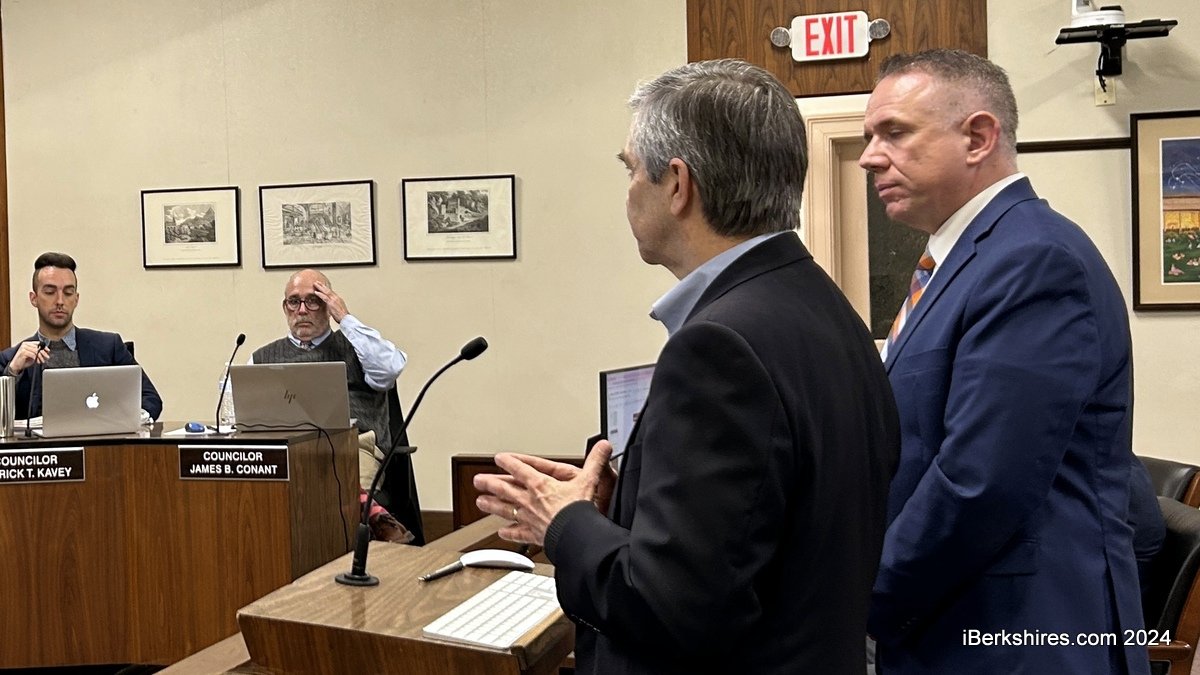
Architect Carl Franceschi and Superintendent Joseph Curtis address the City Council on Tuesday.

PITTSFIELD, Mass. — With the approval of all necessary bodies, the school district will submit a statement of interest for a combined build on the site of Crosby Elementary School.

The City Council on Tuesday unanimously gave Superintendent Joseph Curtis the green light for the SOI to the Massachusetts School Building Authority by April 12.

"The statement I would make is we should have learned by our mistakes in the past," Mayor Peter Marchetti said.

"Twenty years ago, we could have built a wastewater treatment plant a lot cheaper than we could a couple of years ago and we can wait 10 years and get in line to build a new school or we can start now and, hopefully, when we get into that process and be able to do it cheaper then we can do a decade from now."

The proposal rebuilds Conte Community School and Crosby on the West Street site with shared facilities, as both have outdated campuses, insufficient layouts, and need significant repair. A rough timeline shows a feasibility study in 2026 with design and construction ranging from 2027 to 2028.

Following the SOI, the next step would be a feasibility study to determine the specific needs and parameters of the project, costing about $1.5 million and partially covered by the state. There is a potential for 80 percent reimbursement through the MSBA, who will decide on the project by the end of the year.

Earlier this month, city officials took a tour of both schools — some were shocked at the conditions students are learning in.

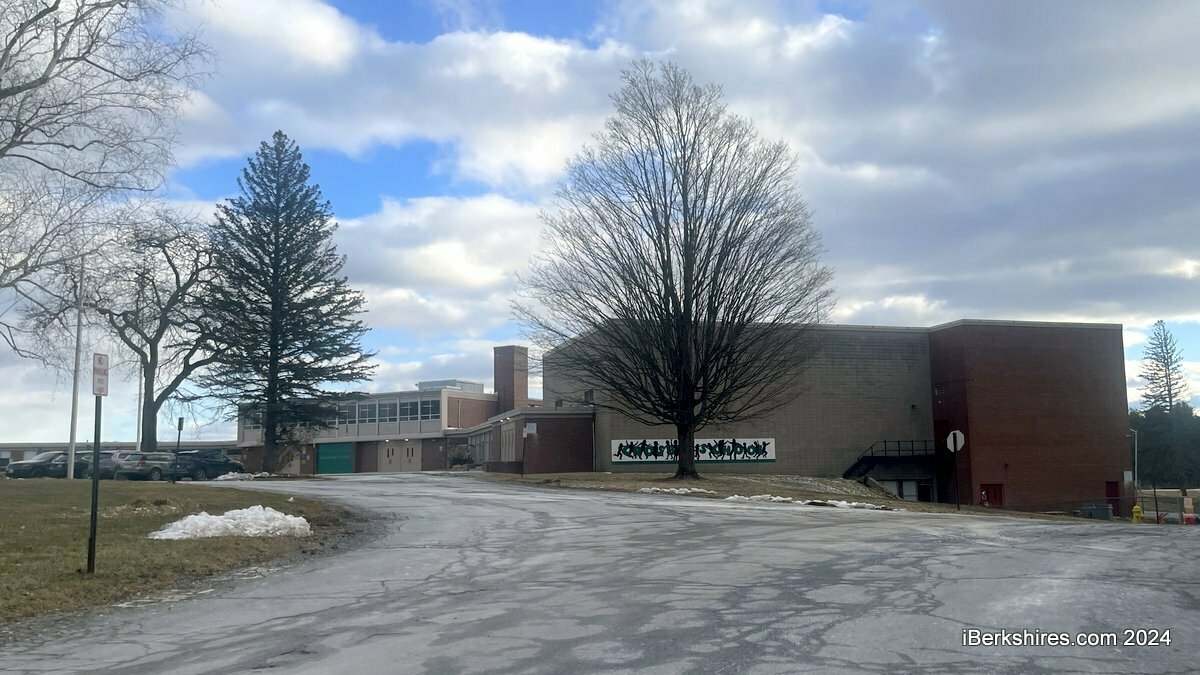
Silvio O. Conte Community School, built in 1974, is a 69,500 square foot open-concept facility that was popular in the 1960s and 1970s but the quad classroom layout poses educational and security risks.  John C. Crosby Elementary School, built in 1962, is about 69,800 square feet and was built as a junior high school so several aspects had to be adapted for elementary use.

Ward 6 Councilor Dina Lampiasi said the walkthrough was "striking" at points, particularly at Conte, and had her thinking there was no way she would want her child educated there. She recognized that not everyone has the ability to choose where their child goes to school and "we need to do better."

"The two facilities that we are looking at I think are a great place to start," she said.

"As the Ward 6 councilor, this is where my residents and my students are going to school so selfishly yes, I want to see this project happen but looking at how we are educating Pittsfield students, this is going to give us a big bang for our buck and it's going to help improve the educational experience of a vast group of students in our city."

During the tour, Ward 5 Councilor Patrick Kavey, saw where it could be difficult to pay attention in an open classroom with so much going on and imagined the struggle for students.

Councilor at Large Alisa Costa said, "we cannot afford not to do this" because the city needs schools that people want their children to attend.

"I know that every financial decision we make is tough but we have to figure this out. If the roof on your house were crumbling in, you'd have to figure it out and that's where we're at and we can't afford to wait any longer," she said.

"We can't afford for the sake of the children going to our schools, for the sake of our city that we want to see grow so we have to build a city where people want to go."

Councilor at Large Kathy Amuso, who served on the School Building Needs Commission for about 18 years, pointed out that the panel identified a need to address Conte in 2008.

Curtis addressed questions about the fate of Conte if the build were to happen, explaining that it could be kept as an active space for community use, house the Eagle Academy or the Adult Learning Center, or house the central offices.

School attendance zones are a point of discussion for the entire school district and for this project.

"At one time I think we had 36 school buildings and now we have essentially 12 and then it would go down again but in a thoughtful way," Curtis said.

Currently, eight attendance zones designate where a student will go to elementary school. Part of the vision is to collapse those zones into three with hopes of building a plan that incorporates partner schools in each attendance zone.

"I think that going from eight schools to three would be easier to maintain and I think it would make more sense but in order to get there we will have to build these buildings and we will have to spend money," Kavey said, hoping that the city would receive the 80 percent reimbursement it is vying for.

This plan for West Street, which is subject to change, has the potential to house grades pre-kindergarten to first grade in one school and Grades 2 to 4 in another with both having their own identities and administrations. 

The districtwide vision for middle school students is to divide all students into a grade five and six school and a grade seven and eight school to ensure equity.

"The vagueness of what that looks like is worrisome to some folks that I have talked to," Lampiasi said.

Curtis emphasized that these changes would have to be voted on by the School Committee and include public input.

"We've talked about it conceptually just to illustrate a possible grade span allocation," he said. "No decisions have been made at all by the School Committee, even the grade-span proposals."

School Committee Chair William Cameron said it is civic duty of the committee and council to move forward with the SOI.
 
He explained that when seven of the city's schools were renovated in the late 1990s, the community schools were only 25 years old and Crosby was 35 years old.  The commonwealth did not deem them to be sorely in need of renovation or replacement.
 
"Now 25 years later, Crosby is physically decrepit and an eyesore. It houses students ages three to 11 in a facility meant for use by teenagers,"
 
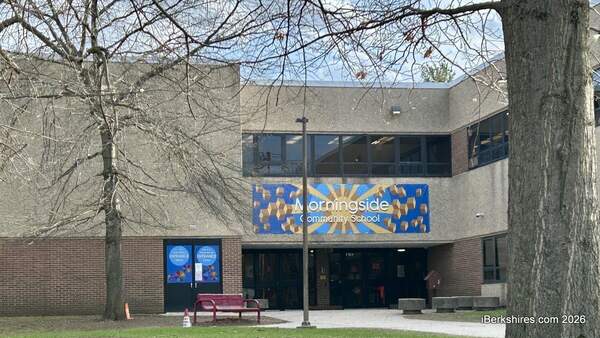
"Conte and Morningside opened in the mid-1970s. They were built as then state-of-the-art schools featuring large elongated rectangles of open instructional space. Over almost half a century, these physical arrangements have proven to be inadequate for teaching core academic skills effectively to students, many of whom need extra services and a distraction-free environment if they are to realize their full academic potential."
 
He said  the proposal addresses a serious problem in the "economically poorest, most ethnically, culturally, and linguistically diverse area" of the city.
 
Cameron added that these facilities have been deemed unsatisfactory and need to be replaced as part of the project to reimagine how the city can best meet the educational needs of its students.  He said it is the local government's job to move this project forward to ensure that children learn in an environment that is conducive to their thriving academically.
 
"The process of meeting this responsibility needs to begin here tonight," he said.
 
Resident Judith Gitelson asked that the facilities be made "net zero energy schools," to reduce the emissions that students are exposed to and to address climate change.

Councilors also had questions about the financial aspect, confirming with the superintendent that there is no financial obligation by submitting the SOI. If the MSBA does accept the project into the feasibility stage, the city has to be prepared to pay for its portion of the study. The MSBA board is expected to vote on accepting the district in by the end of the year. 


Tags: MSBA,   
If you would like to contribute information on this article, contact us at info@iberkshires.com.

Dalton Planners Hold Public Hearing on Tiny Homes Bylaw

By Breanna SteeleiBerkshires Staff

DALTON, Mass. — The Planning Board held a public hearing last week on a bylaw for mobile accessory dwelling units (ADU) that will be brought before a special town meeting.

For nearly two years, Amy Turnbull has been trying to amend the current ADU bylaws to allow mobile tiny homes.  

A movable tiny home is defined as a unit under 400 square feet that meets all of someone's daily needs, including sanitation, cooking, and other facilities, and which is also mobile. Most homes considered "tiny" are built on a trailer so they can be towed.

Her proposal defines a movable tiny house as a "residential property with an existing primary house, intended for year-round living," and outlines eight conditions for approval.

Among these conditions: the unit must adhere to accessory dwelling unit regulations, undergo site plan review, be licensed and registered with the state Registry of Motor Vehicles, have approved energy, water, and wastewater systems, and comply with American National Standards Institute 119.5 and National Fire Protection Association 1192 safety requirements.

Additionally, the unit must be certified for ANSI or NFPA compliance by a manufacturer or third-party inspector, including adherence to Appendix Q and the International Residential Code's structural guidelines and energy efficiency standards. The tiny house cannot move under its own power, and its undercarriage, wheels, axles, tongue, and hitch must be concealed from view. Wheels and leveling or support jacks are required to rest on a level gravel or paved surface.

Turnbull has gotten enough signatures for her petition to amend the current bylaws to add her definition of the mobile ADUs. Last Wednesday, the board held a public hearing on the petitions, which will be voted on at a special meeting.

Turnbull says she has two reasons for wanting to add this to the town's bylaws: aging in place and affordable housing.

"We need a variety of housing types in Dalton, and that we also need to address the idea that you know nearly 30 percent of our population by 2035 is going to be over 65 years old, and it's problematic because  ... there's not enough choice for these people to to age in place,"she said. "What movable tiny houses does, is it provides a less restrictive ADU. It's much cheaper to place, and it's easier to place, less time consuming. And what it offers to people is it offers people who are owners a place for their children to come and live, or a caregiver to come and live, or for the people who own their own house to come and live while they rent out their maybe their three bedroom home to a new family who wants to attend to Craneville simultaneously."

She said people need to move away from calling and treating the tiny homes as though they are trailers, as one former Planning Board member has voiced opinions on.

"That is an opinion, and I think we need to get over that, because I want to say that these are foundation homes, and that the chassis is a foundation, and it's a stick-built home on a chassis, and in very many ways it's like a modular house. I think we will not be surprised in the next 10 years if we see the market turn around and start to make smaller, tiny modular homes, but that is not the case right now, and we have a dire need for affordable housing," she said.

At a former Fire District meeting the Water Department drafted regulations for water hook-ups for these types of homes. The superintendent sent a letter to the Planning Board to be read at the meeting stating it will not be a hindrance for sewer system connection.

"The Department of Public Works does not feel that mobile ADUs will be an issue with the town sewer system. The homeowners will be responsible for any issues outside of the sewer main and connect and responsible for connecting in, so that would address any permits, fees, or anything like that would be added to that," the letter states. 

"The Water Department, as we've stated previous, and as you stated, the water department has come up with their own set of SOPs, standard operating procedures, for hooking up a an adu and a mobile adu, which will then have to meet winterization and all those, but they've laid out a plan for that, that they have, so I'd like to point that out," board Chair Robert Collins said.

One concern was raised that if someone can have a mobile ADU could they also have another tiny home on their property, including the main house. That situation is not likely, said Turnbull, as it would cost a considerable amount of money. Town Manager Eric Anderson also stated that in his former community when they adopted similar laws their first one wasn’t put in until a couple years later and then maybe one a year.

View Full Story

More Pittsfield Stories