Williamstown Board Votes to Remove Town Flag From Meeting Room
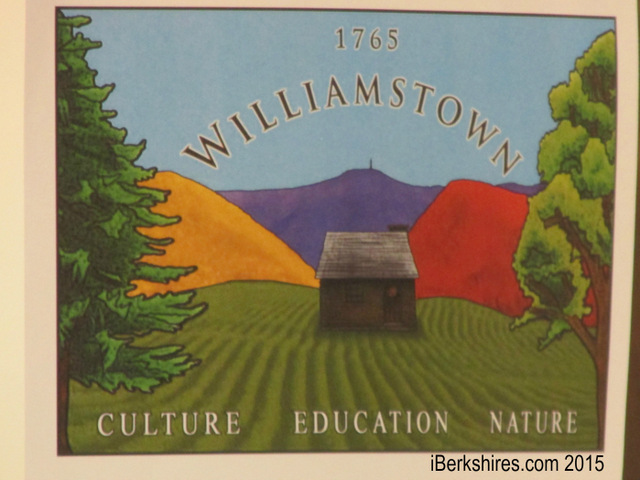
There are two versions of the town flag; one in Town Hall and the other in the Hall of Flags at the State House. The 1753 House in Field Park is a recreation built for the town's bicentennial in 1965.
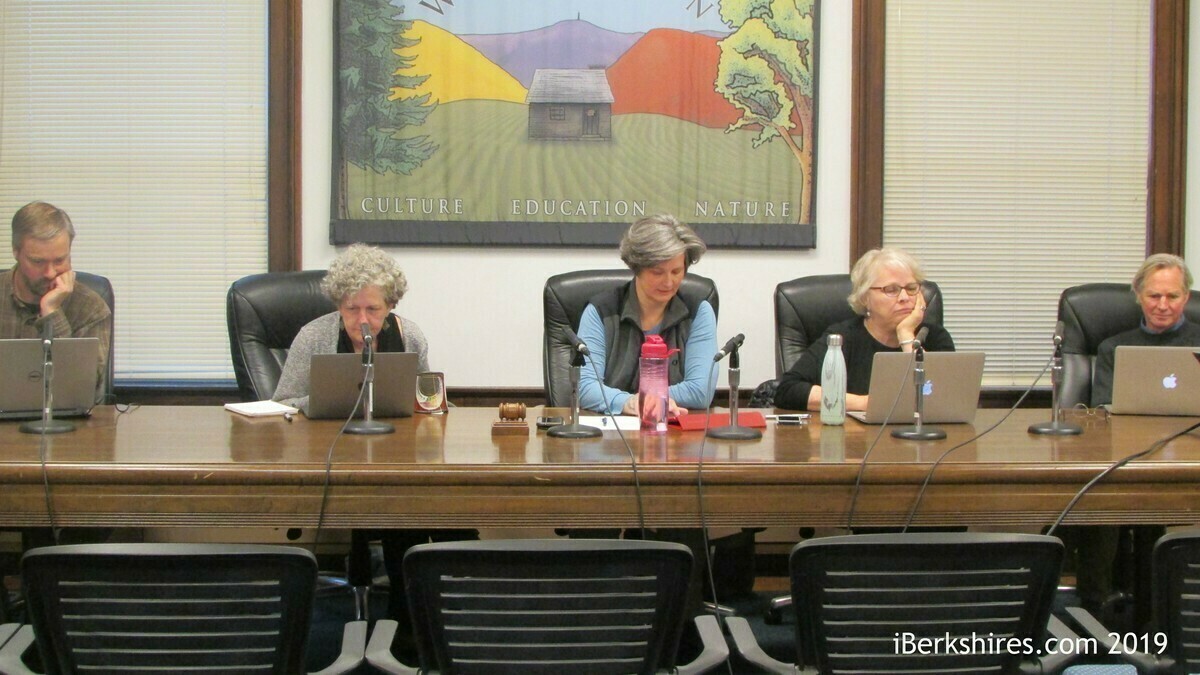
The town flag has been prominently displayed behind the table in the Select Board meeting room for some time. Its three mountains, the Mount Greylock tower and fall foliage haven't caused any issues — it's the image of the 1753 House sitting in the middle.
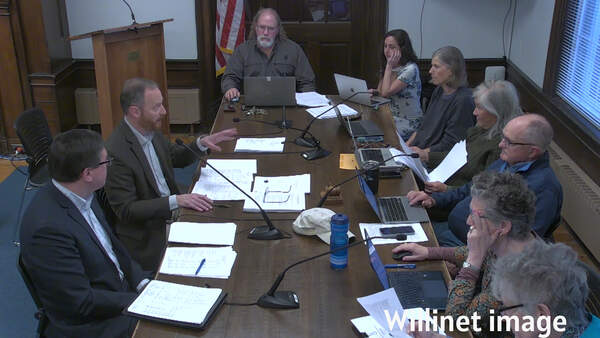
The board voted unanimously to remove it as no longer representing the town's values and culture and to replace it with the town's logo or images of Williamstown for now. It also is not on the list of flags approved for display, noted Chair Jeffrey Johnson, but there could be some "grayness" on what the Select Board could host if it wished to pursue it.
"The bylaw speaks for itself," he said. "That's something I don't believe we followed up on when we wrote the bylaw originally."
The article passed last May stated that only the U.S. flag, the state flag and the POW/MIA flag could be displayed at specific town properties including Town Hall. The article was unanimously recommended by the Select Board and was in response to a U.S. Supreme Court ruling that governmental entities had the right to select the views it wants to express. https://tinyl.io/Ab1k
Board member Stephanie Boyd said she'd spoken with Thomas Sheldon, the former board member who had served on the flag committee back in 2015. Sheldon had told the DIRE Committee last month that he was not opposed to changing the flag as "Williamstown's world has changed dramatically" since it was adopted. His granddaughter had come up with the basic design for the flag.
"I don't think this flag any longer really reflects the broad spectrum of people and ideas when we think about Williamstown and even if we keep the flag, I think like having it here as the backdrop of every single town board meeting, I would say is a lot," said Boyd. "So I would recommend that we put it someplace possibly less prominent than it is now and we could think about why we want a different flag."
Board member Jane Patton said she gets "jumpy about removing historical facts so that we can represent ourselves in a different light ... but it doesn't mean you ignore or erase history. ...
"This one rubs at me a little bit in that regard."
The argument against the town flag was that it displays the town's colonial heritage, a symbol not celebrated by every citizen, she said, but noted that the town was considering adding in the progress pride flag that also doesn't apply to everyone in town.
The Diversity, Inclusion and Racial Equity Committee had brought up the issue that the town flag runs afoul of the bylaw at its meeting last month. It also voted unanimously at the same meeting to recommend a citizen's petition to town meeting that would add the progress pride flag be added the list of approved flags, which the Select Board unanimously endorsed on Monday with no discussion.
Johnson said he wanted to "absolutely make it clear to the citizen, the young citizen who put this flag together, this has nothing to do with you."
"At the time you did exactly what we were looking for, the town went through due process to make this determination," he said. "But obviously, it means somebody who looks at culture in our town and looks at what this represents to many, which has come out many times over the last couple of years, I just think it's something that we need to figure out."
Board member Randal Fippinger, also a member of the DIRE Committee, said he agreed with both Boyd and Patton that context matters.
"I would love for that to be kept, but to go either to the Historical Society or another place that some smart people feel that it should be," he said. "Because when, just reiterating what Stephanie just said, when we look at it in every meeting, it sends a message of values."
Johnson said he would like it to come down and be placed where it can be enjoyed, noting how much he dislikes the state flag that show Myles Standish's sword above a Native American. (An effort to redesign the state flag petered out last year.)
"It is history but it's not inclusive history," he said.
Tags: town flag,