Williams Grads Present Art History at the Leading Edge
Print Story | Email Story

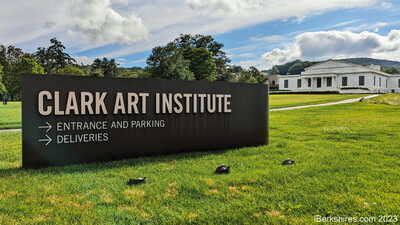
WILLIAMSTOWN, Mass. On Friday, May 31, 2024, from 9 a.m. to 6 p.m., the Williams College Graduate Program in the History of Art will host public presentations at the Clark Art Institute's Manton Research Center by the Program's graduating Masters students. 

The presentations, timed in conjunction with Williams' 2024 Commencement weekend, will address a variety of topics in the history of art, including the gendering of seventeenth-century sculpture, late eighteenth-century abolitionism in painting, nineteenth-century electrotypes and imperial power, early cinema and death, cultural anthropology and cybernetics at the Museum of Modern Art in the 1940s, Andy Warhol’s computer art during the early years of the AIDS crisis, and contemporary photography and race. All presentations are free and open to the public. 

Presentations will be approximately twenty minutes each, in groups of three or four, with discussion following each group of presentations. Presenters include:

Duomi Chen [Shenzhen, China]

Jessica Chen [Sunnyvale, CA]

Ella Comberg [Philadelphia, PA]

Eva Dailey [Pownal, VT]

Jordan David [Twinsburg, OH]

Eliza Dermott [Middletown, DE]

Joanna García Cherán (Purépecha) [San Diego, CA]

Evan Garza [Houston, TX]

Nicholas Liou [Sunnyvale, CA]

Ricardo Mercado [Dallas, TX]

María Minuesa Sicilia [Madrid, Spain]

Alexandra Nicome [Minneapolis, MN]

Destini Ross [Indianapolis, IN]

Nathan Swift Sorscher [Birmingham, AL]


At 4:30 p.m. on Saturday, June 1, the public is also invited to attend the Program's annual hooding ceremony, honoring the students' accomplishments. 

The symposium and hooding ceremony will both take place in the auditorium at the Clark Art Institute's Manton Research Center, 225 South St., Williamstown, MA.

The Graduate Program in the History of Art, operated jointly by Williams and the Clark, is one of the most respected programs in its field. Alumni have gone on to become influential scholars and leaders of renowned museums and arts institutions, among other organizations. Visit http://gradart.williams.edu/ for more information.
If you would like to contribute information on this article, contact us at info@iberkshires.com.

9/11 Now Part of Broader Conversation in Classrooms

By Stephen DravisiBerkshires Staff
WILLIAMSTOWN, Mass. — When talking about teaching the greatest American tragedy of the 21st century in today's classrooms, teachers draw a parallel to how they were taught about one of the defining moments of the 21st century.
 
"Oddly now, it is kind of like when my World War II relatives and teachers talked about the Depression or Pearl Harbor," Mount Greylock Regional School history teacher Jeffrey Welch said recently. "The kids [today] are generally interested in personal and social history, and so, for that reason alone, they are curious.
 
"But 9/11 is also a 21st century icon. Local families lost loved ones, some of whom are still connected to the school community. Also, so many have connections to NYC and have been to Ground Zero and the museum. It is poignant, I think, but far less visceral for the students to study with the passage of time."
 
As the nation prepares to commemorate the 25th anniversary of the September 11 terrorist attacks on Friday, the nation's classrooms are the place where the events of 9/11 and its repercussions are being taught to a generation that lacks the emotional grounding in the events at Ground Zero that high school students may have had as recently as a dozen years ago.
 
At Wahconah Regional High School, Bryan Patton, who was reached separately for this story, made the same historical reference when asked about teaching 9/11 25 years after the fact.
 
"It's interesting because the way we have covered 9/11 has evolved over the years," Patton said. "It definitely used to get students' attention as a current or recent event years ago. For many students now, it's the way Pearl Harbor or Vietnam was when I was a student in the '90s.
 
"It was actually a difficult thing for my colleagues and I to grasp as they didn't live through it. It was before they were born so to them it's just an historical event. They ask questions. They care. But it's not the visceral response it used to be."
 
View Full Story

More Williamstown Stories