Composting with Bears in Mind
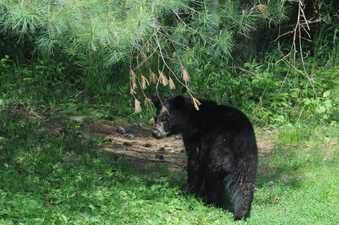 |
The Vermont Fish and Wildlife Department says many people are having problems with bears looking for food near their homes, and with the food scrap ban in effect the department is providing tips for people who are composting at home so they can avoid attracting hungry bears.
"We have been receiving lots of reports of bears on decks, tearing down bird feeders, wrecking beehives, killing chickens, and getting into trash, compost and garbage containers," said bear biologist Jaclyn Comeau. "We are offering some guidance on how to compost at home without attracting bears."
"First though, to deter bears, bird feeders need to be taken down until we have a foot or more of snow in December. Then, make sure anything else that might smell like food is picked up. And keep your trash container secured inside a sturdy building and don't put it outside until the morning of pickup. Beehives, chicken coops and compost bins can be protected with electric fencing."
If you know bears are active in your neighborhood, the best way to avoid attracting them is to take food scraps to one of the drop-off stations. You can locate these by contacting your local solid waste management district or town, or find a company that picks up food scraps for composting at www.VTrecycles.com.
Composting at home while minimizing the chances of attracting bears can best be done with these tips:
- Use three parts of brown material for one part of green material. Browns can be dried leaf and yard debris, wood chips, which often can be delivered to your house free by a local tree service company, or shredded paper. Greens include kitchen scraps, vegetables and small amounts of fruits. Adding lots of brown material minimizes smells and speeds up composting.
- No meat, bones or seafood leftovers. They do not break down quickly and are strong wildlife attractants.
The food scrap ban allows people who compost at home to dispose of meat, bones and seafood in the trash, so they can be kept in a freezer until trash day.
- Give your compost oxygen by frequently mixing it or turning it over if it is in a container. This reduces odors and speeds up composting.
- Does your compost smell? If so, turning it, adding more brown material and adding a layer of wood shavings or sawdust to the top should solve the issue.
- Enclose your composter with electric fencing or compost in a hard, durable container with a lid that will be challenging for a bear to open. Some types of tumblers are bear-proof.
- Electric fencing, with food scent added to the wires will discourage even persistent bears.
- If you are currently having a bear issue, delay starting your new compost pile until the bear issue resolves. Until then, keep food scraps in the freezer or bring them to a collection site.
To learn more about properly composting food waste, go to the Department of Environmental Conservation's website at www.VTrecycles.com.
If you are having problems with bears, you should submit a bear incident report to Vermont Fish and Wildlife at https://anrweb.vt.gov/FWD/FW/
If a bear is causing damage, you are also urged to contact your local game warden. You can find out who your local warden is at https://anrweb.vt.gov/FWD/FW/
Composting without attracting wildlife takes careful planning. For information about living with bears and to report bear damage, visit Fish and Wildlife's website www.vtfishandwildlife.com.