Du Bois Center Kicks Off Reflections on Democracy Series
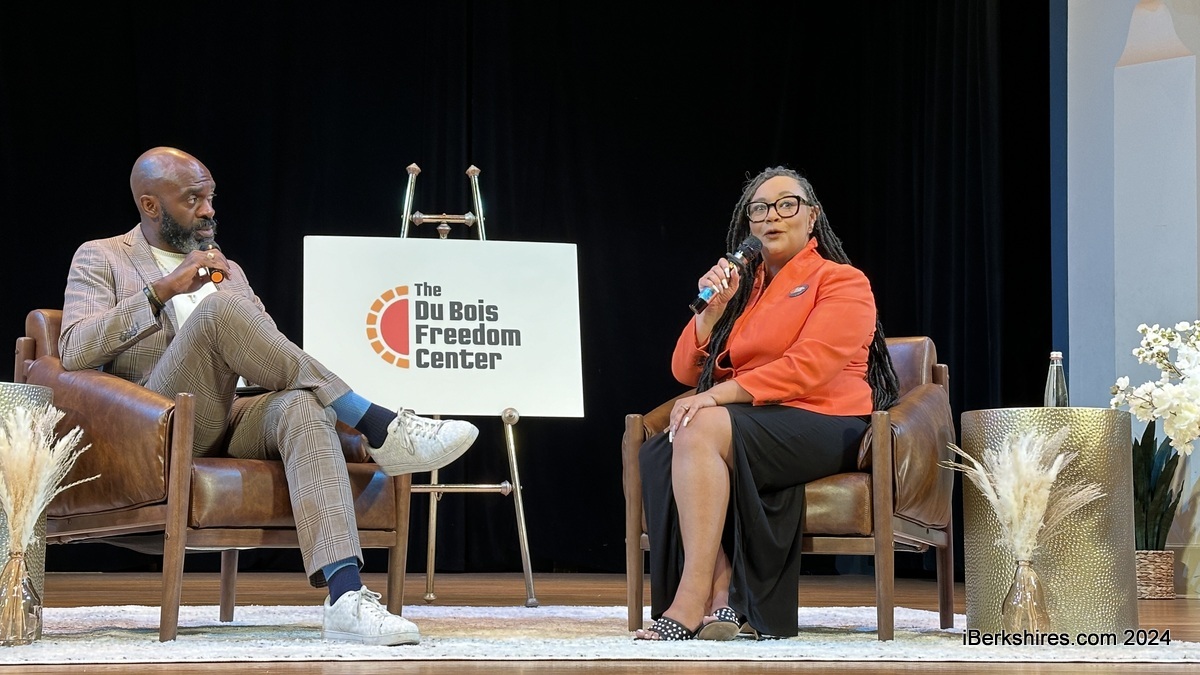
Congresswoman Nikema Williams speaks about the attack on the Capitol and the need for a national voting standardized.
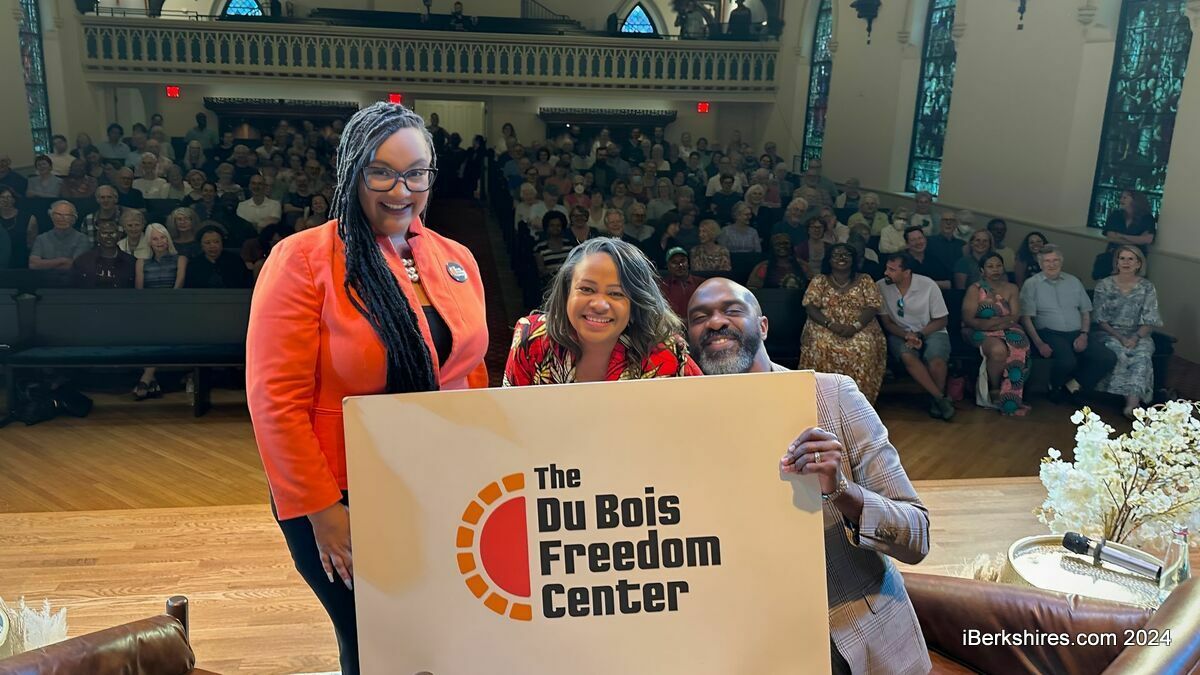
Approximately 200 people gathered at Saint James Place to discuss democracy with Williams, moderated by Michael Blake, the center's first-ever visiting scholar in democracy.
The event was the first of a four-part series. This first part focused on democracy and leadership. The next session July 11 will focus on democracy and philanthropy with Marvin Carr, director of Walmart's Center for Racial Equity.
Blake said Williams was the perfect person to have as the first speaker for the series because you cannot talk about democracy without talking about Georgia.
Georgia is one of five states where charges have been filed in the so-called fake electors scheme and the only one to implicate the former president, Donald Trump. The cases include fraud, conspiracy and forgery and allegations that individuals who were not selected as state electors attempted to replace certified electors and swing the election in the Electoral College.
Williams was one of Georgia's 16 electors to certify the election of Joseph Biden to Congress on Jan. 6, 2021.
The Democrat was driven to run for Congress to represent the battleground state after the death of her mentor and friend, John Robert Lewis in 2020, instead of returning to the state's Senate. She was sworn in for her first term three days before the Jan. 6 attack on the Capitol.
Days before the Capitol attack, Williams heard from House Speaker Nancy Pelosi that Georgia was one of the states where its electoral college votes were being challenged, "which has never happened in this fashion in the history of our country," Williams said.
She was in her office prepping for her first statement on the floor of the House in the seat that means so much to her, because it was held by Lewis.
She got word that it was her turn to speak after Arizona, but an hour later, she received a swarm of text messages about something that was happening on television and social media.
"I realized that something is going on, but I was not really clear what was happening because, again, I was only sworn in three days earlier," Williams said.
"So, I didn't even have access to the House email on my phone to get the alerts to go to the safe room or even to know where the safe room was if I got that alert."
Williams had to hide in her office with her chief of staff, Melanee Farrah, locking and blocking the doors with furniture, turning off their phones' location services, and muting the television. They could hear everything going on around them as they hid in her office for hours until the all-clear was given.
She had intended to speak on democracy, voting rights, access, protecting voters' rights, and standing up for the voters of Georgia in her first House speech.
"We understand that you can't put the genie back in the bottle that came out in 2020. Georgia voters are showing up in mass numbers," Williams said.
"Georgia voters understand that we have the power in this election. We shouldn't have to organize our way out of these suppression but when it comes down to it, we're willing to do whatever it takes."
Blake said it's not inspiring to watch the news with recent events, and it can cause people to wonder why individuals choose to serve in politics.
However, when you think of Williams and the work she had done in Georgia before being elected, and all she embodies, he said, it is not a coincidence she is in this role at this time.
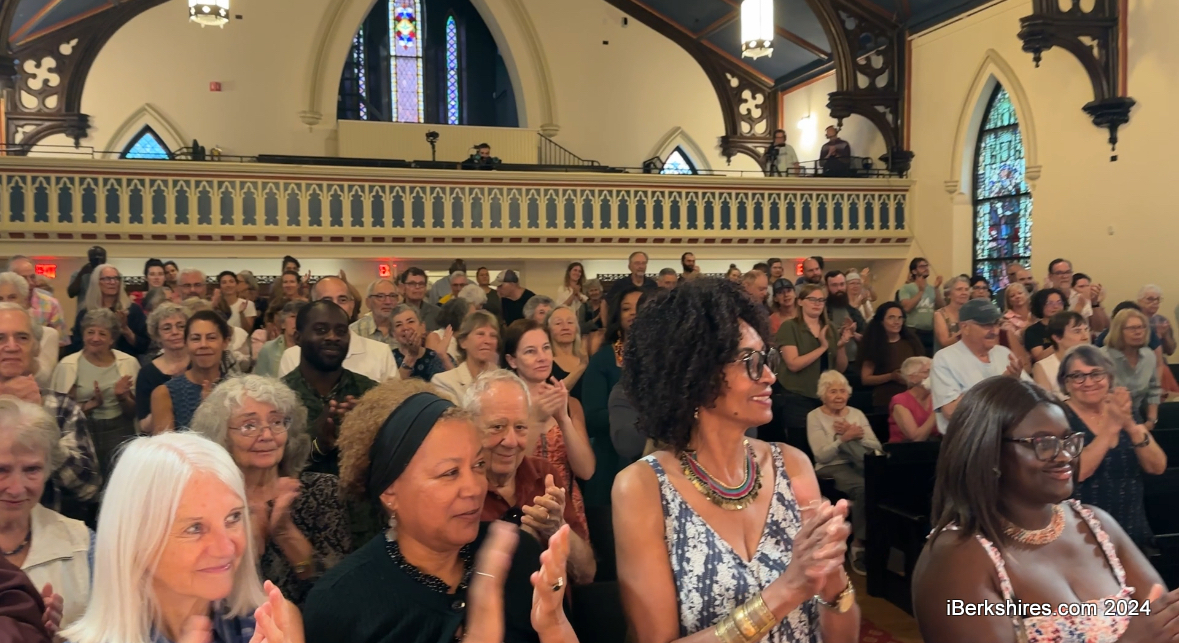
Throughout the event, the audience laughed, cheered, and punctuated the speaker's points with affirmations.
Williams emphasized that it will take everyone to work to preserve democracy. There are tactics being developed to make it harder for people to vote, such as making it illegal to hand out food or water to people standing in long voting lines and restricting early voting sites. The Election Integrity Act of 2021 allows any registered voter to make unlimited challenges to the eligibility of any voter to register to vote.
"Last month, I spoke with a group of over 300 volunteer attorneys who are volunteering their time to the state of Georgia to help us with some of these voter challenges, because voters shouldn't have to hire an attorney to show up with them to prove their right to vote," Williams said.
"So, if you know of any attorneys that want to volunteer their time, I got a place for them."
There is not a uniform standard of voting in this country as it varies from state to state. Accessing the ballot is dependent on your ZIP code.
Georgia has 159 counties and 159 ways to access the ballot, Williams said.
There are two critical legislations in the work that, if binded together, can give same-day registration and would standardize the ID needed to vote — the John Lewis Voting Rights Advancement Act and the Freedom to Vote Act.
"Congressman Lewis told us that a fight for democracy is not for a day, a year, a month. It is for a lifetime, a struggle of a lifetime. So we have to continue to do this work," Williams said.
People in Massachusetts can get involved in preserving democracy for the next generation by volunteering with the Georgia Democratic Party, giving their senators a push in supporting legislation, or by voting for people who will vote with the voice of the people, she said.
During the event, the center also swore in the town's Du Bois Legacy Committee.
The packed room shows that people are excited about democracy, Blake said following the event.
"This demonstrates that people want to be a part of this and be a part of something bigger," he said.
"And you can't talk about democracy and not talk about [Du Bois.] It's not possible and so the [Du Bois Freedom Center] is the place that will be a a cornerstone for democracy not just for this year but beyond."
More information on the center here.
Tags: democracy, W.E.B Du Bois Center,