image description
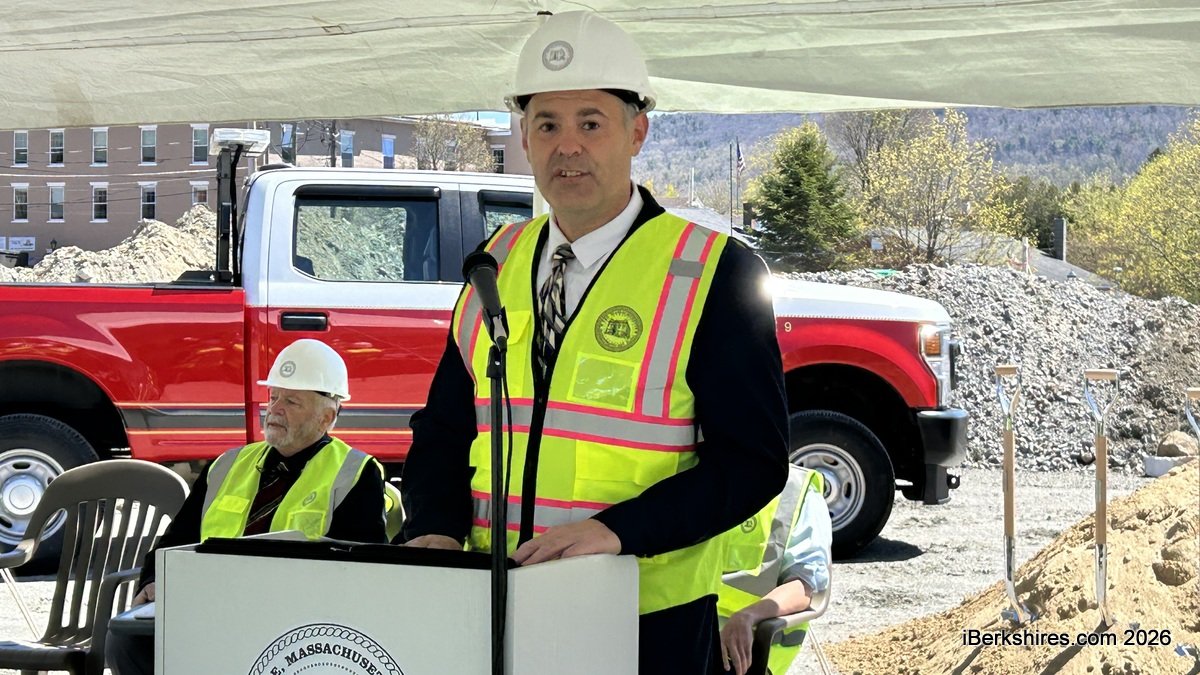
Officials toss dirt to mark the start of a new public safety facility on Railroad Street in Lee. Demolition on the site began last year.
image description
Congressman Richard Neal was able to obtain $1 million earmark toward the project.
image description
image description
image description

Lee Breaks Ground on Public Safety Building
By Brittany PolitoiBerkshires Staff
Print Story | Email Story

Lee Town Administrator Chris Brittain says the community voted to invest in its future by approving the new $37 million complex. 

LEE, Mass. — Ground was ceremonially broken on the town's new public safety building, something officials see as a gift to the community and future generations. 

When finished, Lee will have a 37,000 square-foot combined public safety facility on Railroad Street where the Airoldi and Department of Public Works buildings once stood. Construction will cost around $24 million, and is planned to be completed in August 2027.

"This is the town of Lee being proactive. This is the town of Lee being thoughtful and considerate and practical and assertive, and this project is not just for us. This project is a gift," Select Board member Bob Jones said. 

"This is a gift to our children, our grandchildren."

State and local officials, including U.S. Rep. Richard Neal, gathered at the site on Friday, clad in hard hats and yellow vests, and shoveled some dirt to kick off the build. 

Town Administrator Chris Brittain explained that officials have planned and reviewed the need for a modern facility for the public safety departments for years, and that the project marks a new chapter, replacing 19th-century infrastructure with a "state-of-the-art" complex.

"The project is not just about concrete and steel, it's a commitment to the safety of our families, the efficiency of our first responders, and the future of our community," he said. 

He said he was grateful to the town's Police, Fire, and Building departments for their dedication while operating out of outdated facilities, and to the Department of Public Works, for coordinating site preparation and relocating its services. 

"Our community voted to invest in this project because we believe in supporting our first responders as we start digging," Brittain said. 

"We are not just destroying the old; we are building something better and stronger for the residents of Lee. Thank you all for being part of this historic moment." 

In 2023, voters endorsed nearly $37 million in borrowing, which included the purchase of the property and relocating the DPW, during a special town meeting. Neal secured $1 million for construction through the U.S. Department of Agriculture in the fiscal 2024 spending bill.

Select Board Chair Sean Regnier has been on the board for six years, and in understanding the town's needs, he saw the public safety facilities were "really lacking." He hopes Lee can continue to lead with education and training for first responders. 


"We really took a holistic approach to the town to address not just public safety, but other facilities, and this being the largest part of that, it's really encouraging," he said. 

"We will have some other things in development in the future as well." 

Neal said he was encouraged by the fact that the town's elected officials were willing to take up a referendum question, an "essential part of the courage they've exhibited on this occasion." 

"There is no more fundamental responsibility at the local level of governance than the security of our people. That's an essential part, whether it's the police service or the fire service," he said, adding that ambulance service is another important ingredient, and the federal government finances much of it through Medicaid. 

"… I think we need to understand this as we're having this timely debate in Washington, once again, as we should. Democracy is supposed to be noisy about expenditure, but this is an example of the useful expenditure based on a long-term investment." 

State Rep. Leigh Davis said this project is about the future, especially the future of public safety.  This legislative session, she has filed five bills that are focused on emergency medical services and the challenges facing first responders. 

"These town leaders behind me were facing facilities that no longer met the needs of modern public safety: An EMS building held together by temporary supports, a police station far too small for today's demands," she said. 

"At the same time, it felt like an overwhelming challenge, but instead of stepping back, this community stepped forward with the leadership of your local officials and the support of residents. You built a plan, and now just a short time later, you have land secured, a team in place, and a construction moving forward." 

State Sen. Paul Mark and U.S Sen. Edward Markey's offices were also represented at the event. 

State Director of Rural Affairs Anne Gobi said Lee realized it needed to ensure that when first responders come back from dangerous work, they aren't returning to dangerous facilities. 

Select Board member Gordon D. Bailey explained that public safety teams have been working in "less than adequate" conditions for years in buildings that were constructed in the 1800s, he said, and this fact alone brought significant obstacles with modern requirements and quickly evolving technological changes. 

He sees this project as the culmination of years of discussions, planning, design meetings, the brainstorming of forward-thinking individuals, and, most importantly, the support of our community.


Tags: groundbreaking,   public safety buildings,   
If you would like to contribute information on this article, contact us at info@iberkshires.com.

Becket Looks to Wind Power for Energy Savings

By Breanna SteeleiBerkshires Staff

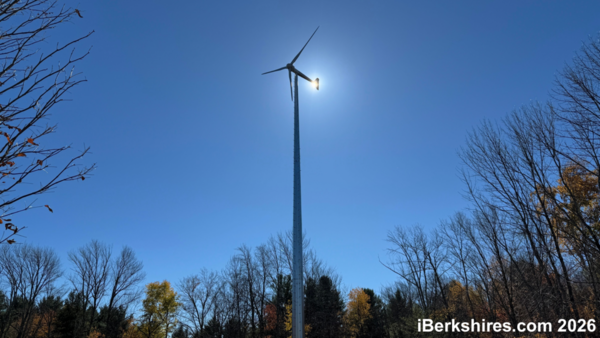
The single turbine is a low maintenance and has a 50-year life. The town went with wind power after finding a solar installation would be too difficult. 

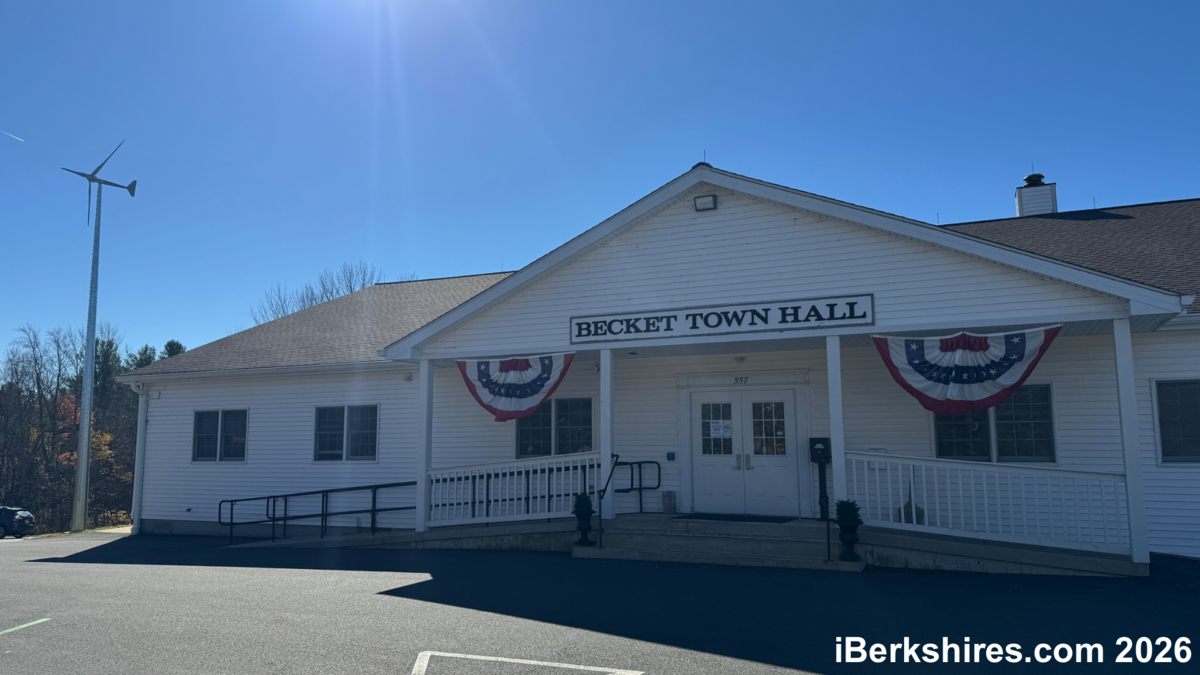
BECKET, Mass. — The town unveiled a wind turbine Monday that will reduce electricity costs and show the benefits of renewable energy produced by wind.

Residents, town and state officials gathered outside the Town Hall for the ribbon cutting on a project first conceived nearly a dozen years ago.

The wind turbine stands 100-feet tall next to Town Hall and is from Oklahoma manufacturer Bergey Wind Power. It has a 50-year life and is a direct-drive permanent-magnet design, meaning it has no gearbox, making it low maintenance.

According to Garth Klimchuk, chair of the Becket Energy Committee, the town started discussions about a wind turbine in 2014. The turbine is expected to generate about 36,000 kilowatt-hours. Klimchuk said Town Hall uses about 24,000 kilowatt-hours, with excess power expected to go to the Highway Department. This is expected to save $9,000 annually from the electricity cost.

"This turbine is just going to be such a good thing for the town. It is really incredible. Zero-cost electricity. Zero cost to the town. Carbon free. Just a huge, huge milestone for us," he said.

The town received a grant from the state Department of Energy Resources totaling $139,500. The remaining funding for the project will come from a direct-pay investment tax credit under the federal Inflation Reduction Act. If the town does not receive the funding, voters at the annual town allocated $100,000 just in case, but Klimchuk said the town will only need about $60,000 to $70,000 if necessary.

"It's going to help the community. Hopefully, it'll lower our tax bills. And as we look at everything going around around the world right now, energy volatility has been with us for a long time. It's going to stay with us for a long time," said state Sen. Paul Mark. "So any move we can make as a community, whether as Becket specifically, as Berkshire County as a whole, but anything we can do to bring some of the reliability into our own hands, to produce a bit on our own, and just guarantee that in a renewable, safe way moving into the future, I think is going to pay off dividends."

The town has spent more than a decade reducing municipal energy consumption in a variety of ways including HVAC upgrades and LED street light conversions, bringing it to a Level 2 Green Community status.

While solar had been considered, interconnection constraints and limited grant opportunities made it harder to achieve. But the high elevation of Town Hall and a Small Wind Site evaluation done in 2023 and 2024 found the site was perfect for a turbine with favorably high winds.

State Rep. Leigh Davis praised the project as an example of a small town addressing a larger energy challenge through persistence and collaboration. She stressed that the single turbine represents a practical step toward reducing reliance on fossil fuels and said Becket's effort could serve as a model for communities across the commonwealth. 

"You hear about all these kind of big wind farms and solar farms and all these ways that we're gonna you know create green energy, but at the same time what we're not being sensitive to the landscape, and what I appreciate about this is that this is it's a single turbine, but it represents so much more," she said. "You're right. It's really adding to the ability for this town to contribute to green energy and to bringing our reliance on gasoline fuels back down to solving big problems."

Mark Rabinsky, deputy director of DOER's Green Communities Division, said the state supports municipalities with technical assistance and grants, and that reducing municipal energy costs can leave more resources for other local priorities. He presented the turbine as an example of state support working alongside local knowledge and decision-making. 

"I think that this is a really a great example of what green communities can do," he said. "I'm obviously a really big fan of the green communities program, but I think that connection between the state, what we're doing at the state, and that local level, and relying on the local knowledge here with Becket is a true testament to what we're doing."

Select Board Chair William Elovirta thanked everyone for being here and shared his memories of first coming tp Becket in 1946 before utility electricity arrived. His family and neighbors used small 32-volt generating plants and batteries. He recalled utility workers installing poles and wires by hand around 1947.  

View Full Story

More South Berkshire Stories