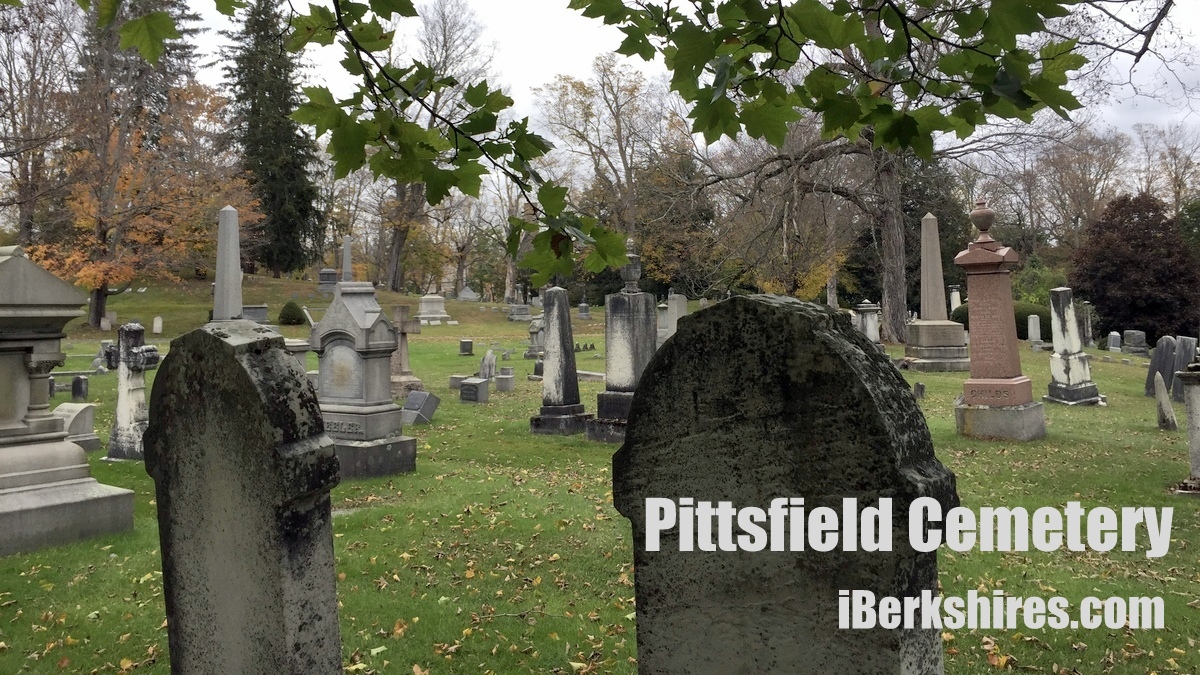
Pittsfield Health Board Considers Green Burials
PITTSFIELD, Mass. — The use of green burials is rising and the Board of Health wants to be prepared in case they are requested in the city.
On Wednesday, the board discussed creating local guidance for green burials, which return a body to the ground after death with fewer environmental impacts. This generally means no embalming or use of caskets made with metal or hardwood.
Director of Public Health Andy Cambi was recently approached by a resident about this form of being laid to rest.
"Our interest is that the bacteria, diseases can go into the water systems so I gave this resident what the state has for green burials," he said, explaining that there is a lot to comply with.
"I think we as a local board of health need to have our own process for regulations. So that was the first time that I've heard of an individual looking into it. It seems to be kind of an increase throughout the Commonwealth."
He reported that City Solicitor Stephen Pagnotta agreed it is good to have local regulations and a formal process for the city to cite. Cambi is going to look into zoning, speak to the Conservation Commission, and have something drafted for the next meeting.
"I think if we're gonna do it, we have to do it the right way," Chair Roberta Elliott said.
Mass.gov provides explanations for both home and green burials, which can coincide.
"A home burial means burying a person on privately owned residential property that is not an approved cemetery. Home burials are not prohibited by state law, but the decedent's family must first obtain written approval from the local BOH and the local governing body," the guidance reads.
"A home burial is only possible if the property is under the control of the decedent's family. Finally, those who do a home burial will need to note the burial on the deed for that property where the body is buried before the property can be transferred, as a home burial is likely to be viewed as an encumbrance on the land."
A home burial can also be a green burial, meaning that the body is not embalmed, no metal or hardwood is used to make the casket, no gravel liner or vault is used, and a low-profile grave marker is used or no marker at all.
The potential for bacteria, viruses, and other microorganisms from human remains to reach groundwater is identified as the biggest concern for public health.
"Research indicates though microorganisms can remain viable and transportable for many years following a burial, they are eventually attenuated by soils and lose viability," the state reports. "However, the fact that these organisms can remain viable for some time highlights the importance of siting burials in hydrogeologically appropriate areas."
Several sections of Massachusetts General law address this type of burial. Local boards of health are urged to consider local bylaws and regulations, site plan submissions, geological evaluations, serious pathogenic diseases, and setback requirements.
One green burial grave is recommended to be at least 300 feet from a private well whereas hybrid green burial areas that are part of a conventional cemetery should be 750 feet away.
Board member David Pill, also a member of the Knesset Israel Cemetery Committee, asked how burials on private property will be recorded, saying, "I'd be concerned that you buy a house you decide to put a swimming pool in …
"There's been times where people have been where they're not supposed to be in the cemetery. I mean, it's worse when it's in your back yard."
Cambi explained that the state requires the home burial to be recorded in the Registry of Deeds.
In April, Dalton approved language for green burials.
Great Barrington is one of several dozen communities in the state that offer green burials, though it took three years to accomplish this. Stockbridge, Mount Washington, and the private Pine Grove Cemetery in Sheffield also allow natural burials.
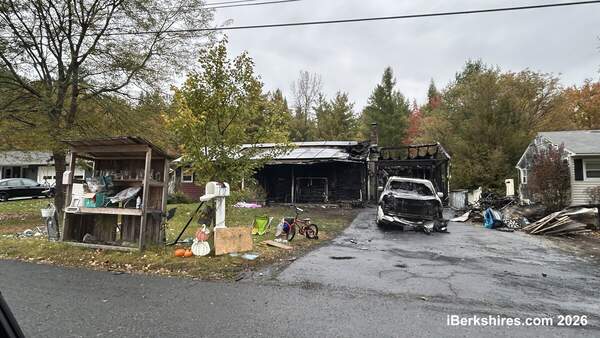
In other news, there is hope for a charred multifamily house under a demolition order.
91-93 Orchard St. has been purchased and the new owner is eager to get to work. He explained that he and his son want to restore it as a summer project, but due to a miscommunication, he did not have a building permit secured for this meeting so that the demolition order could be rescinded.
The building suffered a two-alarm structure fire on July 4, 2022, that charred the front porch and front portion of the home. It was condemned a few days later.
The board agreed to allow Cambi to consult with each member before the next meeting if he secures the building permit for approval so that work can commence.
Tags: board of health, burials, cemetery,