image description
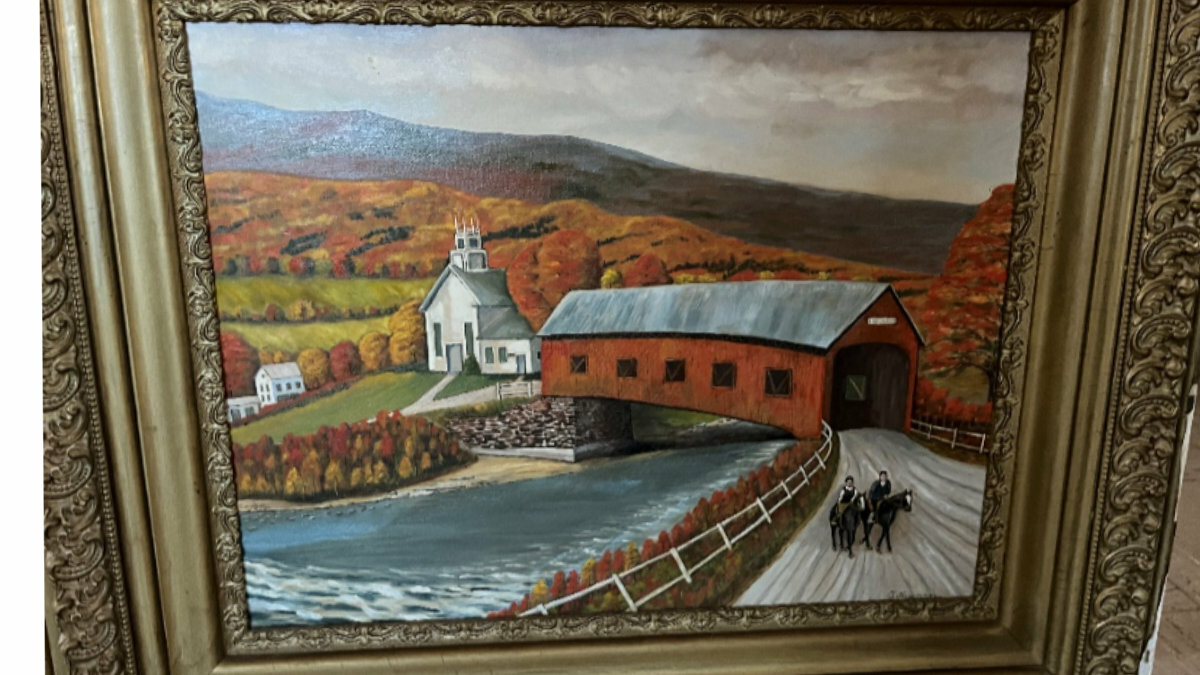
(Provided Photo) The painting is signed F. Neuman. He was not a Cheshire resident. He died in 1969 and his obituary stated that he worked as a butcher but was also a champion wrestler and his hobby was painting.
image description
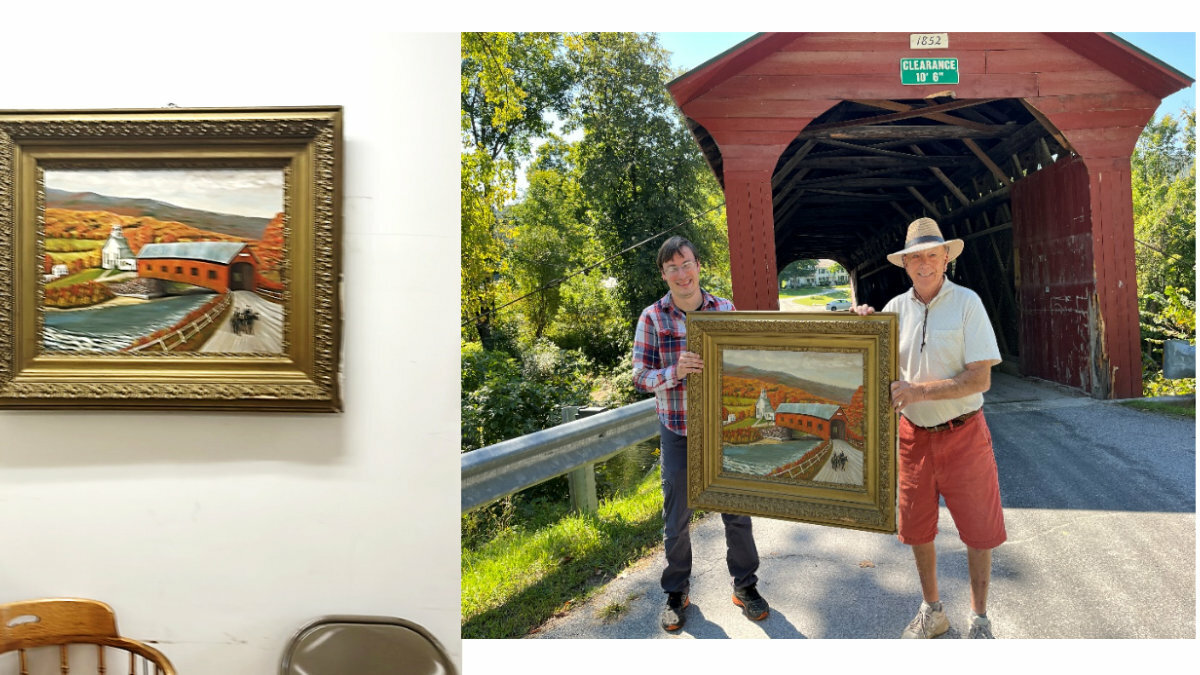
(Provided Photo) The painting now hangs in Arlington Town Hall.

Guest Column: Finding Its Rightful Place
By Barry EmeryGuest Column
Print Story | Email Story
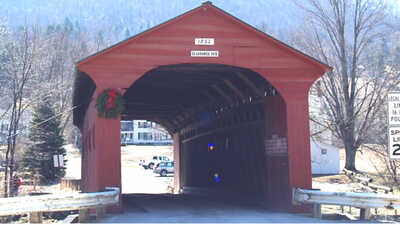
(provided photo) The bridge spans the Batten Kill River site. It was constructed of wood and was built in 1852.
CHESHIRE, Mass. — In early July of last year a woman from Conway, Joy Kipperling Holhut, contacted the Cheshire Historical Commission regarding a painting of a covered bridge she thought had been made by a Cheshire resident. 
 
The large painting was in a relative's house (last name Zipperling) who had just died. Mrs. Holhut wanted to give
the painting to someplace with a connection to it or the scene although she did not know where the bridge was located. The Historical Commission accepted the painting and I volunteered to try and determine where the bridge was located.
 
The painting is signed F. Neuman so my first task was to identify "Neuman" and determine where he lived. It turns out that Frank Neuman was not a Cheshire resident. He died in 1969 and his obituary stated that he worked as a butcher but that he also was a champion wrestler and his hobby was painting.
 
The next step was to search for the location of the bridge. There are hundreds of covered bridges in New England, but the key element that helped with my search was the nearby white church adjacent to the bridge. I soon found these photographs which gave the location as Arlington, Vt. (it is actually West Arlington).
 
The Historical Commission decided that the painting rightly belonged in Arlington. Mrs. Holhut was happy to learn of the location and agreed with giving it to Arlington. I contacted the town manager of Arlington and was told West Arlington, where the bridge is located, is not a separate community. The town manager, Nick Zaiac, also mentioned they did not have a painting of the bridge and would be delighted to have one to hang in their town hall.
 
The bridge spans the Batten Kill River, famous as a great fly- fishing site. It was constructed of wood and was built in 1852.
 
Covered bridges kept rain and snow off the timbers to extend the life of the structure. It is still open to car traffic, though only one car at a time can pass over the narrow bridge.
 
By the way, the white church predates the bridge by almost 50 years. It was built in 1804. As a side note, the white house seen beyond the bridge was once the home of Norman Rockwell. He lived there from 1931 to 1953 and during that time he painted several of his most famous paintings, including "Home Coming Marine," "The Gossip," "The Four Freedoms," and "Tattoo Artist."
 
Cheshire town historian Barry Emery has written eight books on the town's history and has created a digital archive of more than 23,000 historical photographs and documents.

Tags: painting,   
If you would like to contribute information on this article, contact us at info@iberkshires.com.

Letter: Progress Means Moving on Paper Mill Cleanup

Letter to the Editor

To the Editor:

Our town is facing a clear choice: move a long-abandoned industrial site toward cleanup and productive use or allow it to remain a deteriorating symbol of inaction.

The Community Development team has applied for a $4 million EPA grant to remediate the former Curtis Mill property, a site that has sat idle for more than two decades. The purpose of this funding is straightforward: address environmental concerns and prepare the property for safe commercial redevelopment that can contribute to our tax base and economic vitality.

Yet opposition has emerged based on arguments that miss the point of what this project is designed to do. We are hearing that basement vats should be preserved, that demolition might create dust, and that the plan is somehow "unimaginative" because it prioritizes cleanup and feasibility over wishful reuse of a contaminated, aging structure.

These objections ignore both the environmental realities of the site and the strict federal requirements tied to this grant funding. Given the condition of most of the site's existing buildings, our engineering firm determined it was not cost-effective to renovate. Without cleanup, no private interest will risk investment in this site now or in the future.

This is not a blank check renovation project. It is an environmental remediation effort governed by safety standards, engineering assessments, and financial constraints. Adding speculative preservation ideas or delaying action risks derailing the very funding that makes cleanup possible in the first place. Without this grant, the likely outcome is not a charming restoration, it is continued vacancy, ongoing deterioration, and zero economic benefit.

For more than 20 years, the property has remained unused. Now, when real funding is within reach to finally address the problem, we should be rallying behind a practical path forward not creating obstacles based on narrow or unrealistic preferences.

I encourage residents to review the proposal materials and understand what is truly at stake. The Adams Board of Selectmen and Community Development staff have done the hard work to put our town in position for this opportunity. That effort deserves support.

Progress sometimes requires letting go of what a building used to be so that the community can gain what it needs to become.

View Full Story

More Adams Stories