Bidwell House Museum to Host Online Lecture on the History of Money

Print Story | Email Story
SHEFFIELD, Mass. — The Bidwell House Museum will present an online lecture titled "From Bubbles to Revolutions: Changing Conceptions of Money in England, France, and America, 1690-1781". 
 
The lecture will be given by Simon Middleton on March 26 at 7:00 p.m. via Zoom. 
 
Middleton teaches at the College of William & Mary and writes on topics including work and politics, law and debt, and the history of money. He has also written lectures for The Great Courses, an online content producer. 
 
The lecture will discuss changing attitudes toward money and the social and political consequences of those attitudes from the time of the South Sea and Mississippi Bubbles to the American Revolution.
 
Registration for the lecture is required through the Museum event page. Access details will be sent via email a few days in advance. The lecture is free for museum members and $15 for non-members. 
 
The Bidwell House Museum grounds, which include 194 acres of woods, fields, historic stonewalls, self-guided trails, and picnic sites, are open daily from dawn until dusk, free of charge. The museum's event schedule can be found on its website.  

If you would like to contribute information on this article, contact us at info@iberkshires.com.

South County Celebrates 250th Anniversary of the Knox Trail

By Tammy Daniels iBerkshires Staff

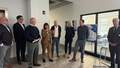
State Sen. Paul Mark carries the ceremonial linstock, a device used to light artillery. With him are New York state Sen. Michelle Hinchey and state Sen. Nick Collins of Suffolk County.
GREAT BARRINGTON, Mass. —The 250th celebration of American independence began in the tiny town of Alford on Saturday morning. 
 
Later that afternoon, a small contingent of re-enactors, community members and officials marched from the Great Barrington Historical Society to the Mahaiwe Performing Arts Center to recognize the Berkshire towns that were part of that significant event in the nation's history.
 
State Sen. Paul Mark, as the highest ranking Massachusetts governmental official at the Alford crossing, was presented a ceremonial linstock flying the ribbons representing every New York State county that Henry Knox and his team passed through on their 300-mile journey from Fort Ticonderoga to Boston in the winter of 1775-76. 
 
"The New York contingent came to the border. We had a speaking program, and they officially handed over the linstock, transferring control of the train to Massachusetts," said Mark, co-chair of Massachusetts' special commission for the semiquincentennial. "It was a great melding of both states, a kind of coming together."
 
State Rep. Leigh Davis called Knox "an unlikely hero, he was someone that rose up to the occasion. ... this is really honoring someone that stepped into a role because he was called to serve, and that is something that resonates."
 
Gen. George Washington charged 25-year-old bookseller Knox with bringing artillery from the recently captured fort on Lake Champlain to the beleaugured and occupied by Boston. It took 80 teams of horses and oxen to carry the nearly 60 tons of cannon through snow and over mountains. 
 
Knox wrote to Washington that "the difficulties were inconceivable yet surmountable" and left the fort in December. He crossed the Hudson River in early January near Albany, crossing into Massachusetts on what is now Route 71 on Jan. 10, 1776. By late January, he was in Framingham and in the weeks to follow the artillery was positioned on Dorchester Heights. 
 
View Full Story

More South Berkshire Stories