Social Service Organizations Highlight Challenges, Successes at Poverty Talk
PITTSFIELD, Mass. — Recent actions at the federal level are making it harder for people to climb out of poverty.
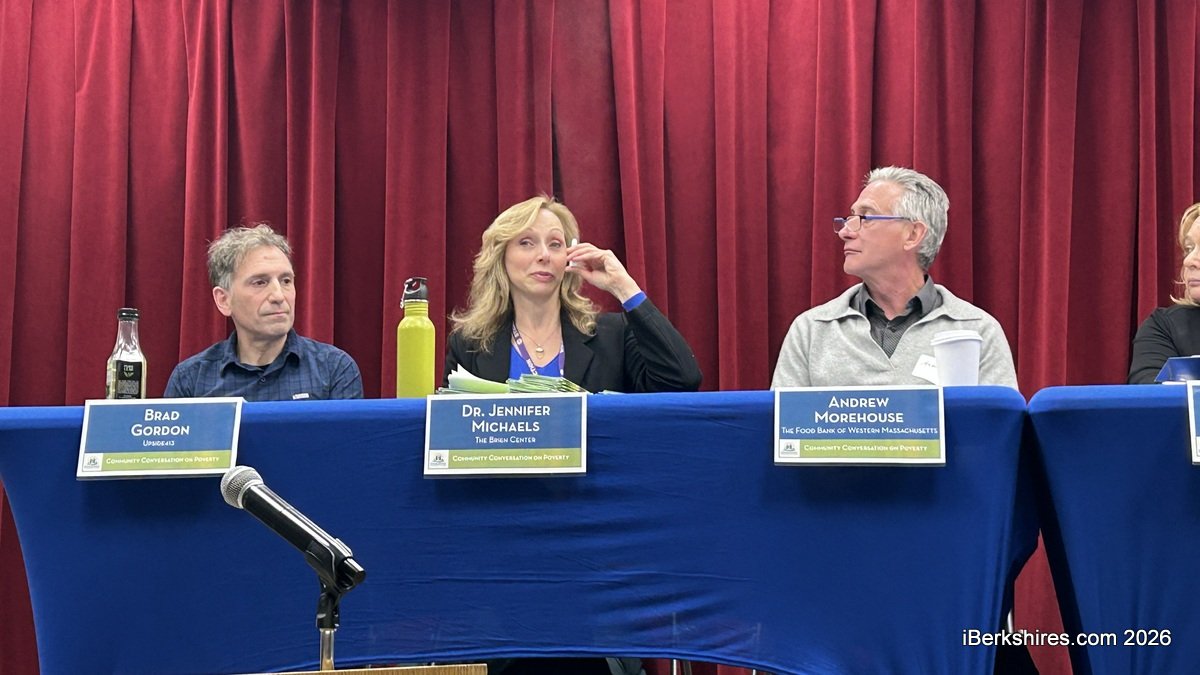
Brad Gordon, executive director of Upside413, said he felt like he was doing a disservice by not recognizing national challenges and how they draw a direct line from choices being made by the Trump administration and the challenges the United States is facing.
"They more generally impact people's ability to work their way out of poverty, and that's really, that's really the overarching dynamic," he said.
"Poverty is incredibly corrosive, and it impacts all the topics that we'll talk about today."
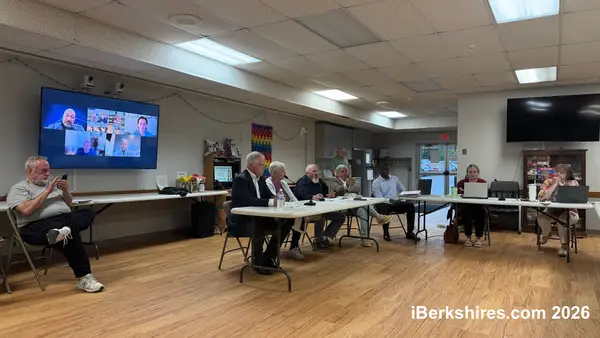
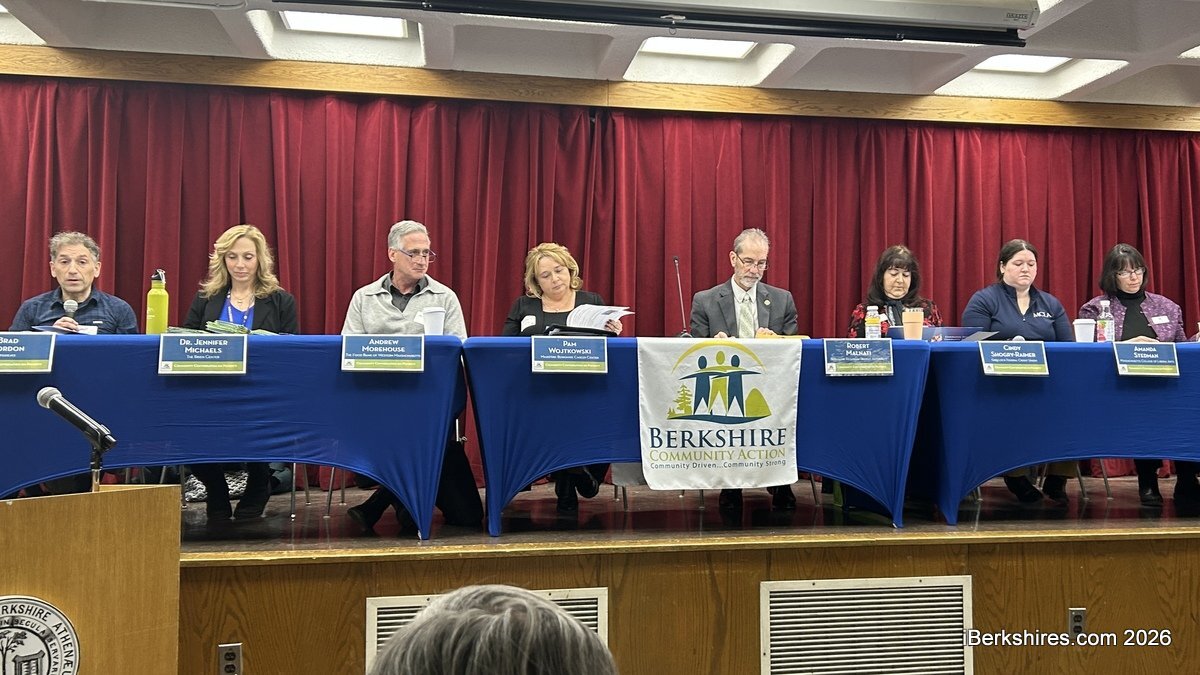
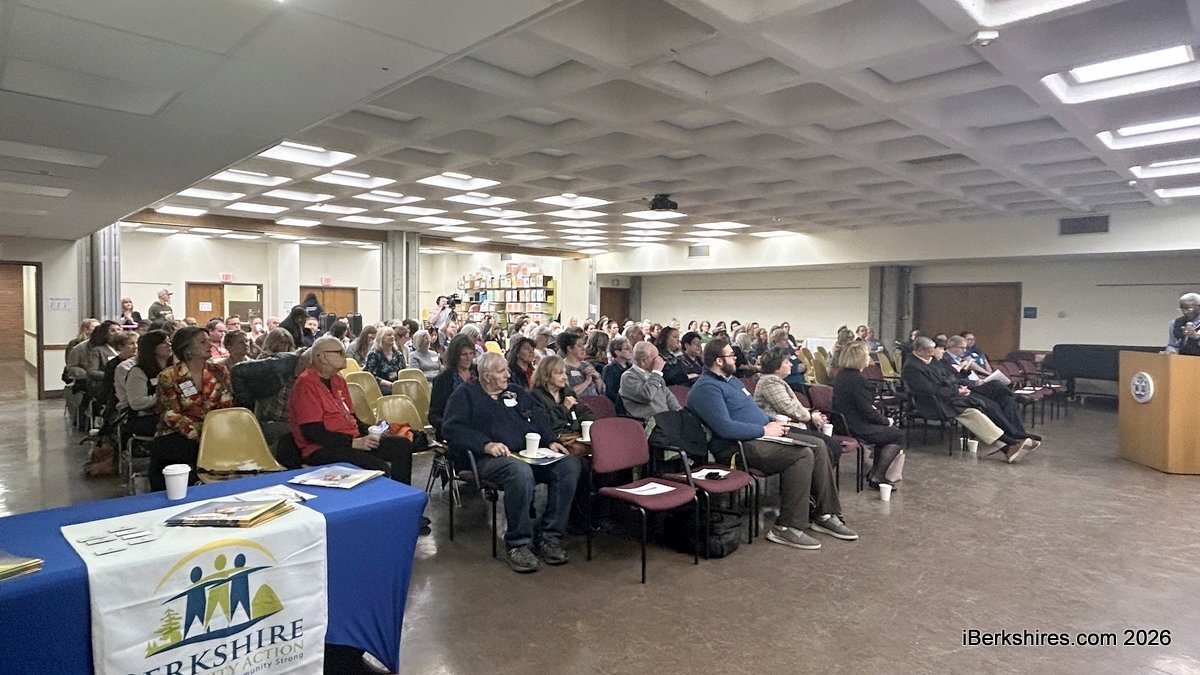
His comments came during a conversation on poverty hosted by Berkshire Community Action Council. Eight local service agency leaders detailed how they are supporting people during the current housing and affordability crisis, and the Berkshire state delegation spoke to their own efforts.
The event held on March 27 at the Berkshire Athenaeum included a working lunch and encouraged public feedback.
"All of this information that we're going to gather today from both you and the panelists is going to drive our next three-year strategic plan," explained Deborah Leonczyk, BCAC's executive director.
The conversation ranged from health care and housing production to financial literacy and child care. Participating agencies included Upside 413, The Brien Center, The Food Bank of Western Massachusetts, MassHire Berkshire Career Center, Berkshire Regional Transit Authority, Greylock Federal Credit Union, Massachusetts College of Liberal Arts, and Child Care of the Berkshires.
The federal choices Gordon spoke about included allocating $140 billion for the U.S. Immigration and Customs Enforcement, investing $38 billion to convert warehouses into detention centers, cutting $1 trillion from Medicaid over 10 years, a proposed 50 percent increase in the defense budget, and cutting federal funding for supportive housing programs.
Gordon pointed to past comments about how the region can't build its way out of the housing crisis because of money. He withdrew that statement, explaining, "You know what? That's bullshit, actually."
"I'm going to be honest with you, that is absolute bullshit. I have just observed over the last year or so how we're spending our money and the amount of money that we're spending on the federal side, and I'm no longer saying in good conscience that we can't build our way out of this," he said.
Upside 413 provided a "Housing Demand in Western Massachusetts" report that was done in collaboration with the University of Massachusetts at Amherst's Donahue Institute of Economic and Public Policy Research. It states that around 23,400 units are needed to meet current housing demand in Western Mass; 1,900 in Berkshire County in 2025.
In addition to more units, the study found a need for greater congruence between the housing stock and the region's population to address the changing size of households, the aging population, and local incomes.
"This is a market economics issue. It's a supply and demand issue. When you have less supply than there is demand … the price goes up. It's really as simple as that," Gordon said.
"So if we want to mitigate or slow down the dramatically increasing costs of rental housing and home ownership, we need a greater supply."
Dr. Jennifer Michaels, medical director for The Brien Center for Mental Health and Substance Use Services, pointed out that mental illness is "really common," affecting about 25 percent of Americans. About 17 percent of Americans have a substance use disorder.
"So if we look around this room, many of us have had struggles or had treatment or have benefited from treatment, but we're very familiar with it," she said.
"I think the stigma of these illnesses has kept it in the dark, and that's really unfortunate."
While it is a common condition, only about half of people with mental illness are getting treatment, and only about a quarter of people with opioid use disorder are getting the treatment they need.
This is important, Michaels said, because people who get treatment for opioid use disorder have a 60 percent reduced risk of death from overdose. Even fewer people are getting treatment for alcohol use disorder, the most common substance use disorder.
The medical director spoke about some innovations in the treatment world, markedly the widespread deployment of Narcan, or naloxone. This emergency medicine is not new, but it is growing in use, and state studies show that when a community is blanketed with it, there is a 46 percent reduction in overdose deaths from opioids.
"That's dramatic. Some people have mixed feelings about Narcan, because they feel that we're just helping someone on using. I look at it very differently," Michaels said.
"You save someone's life, and that day may bring them closer to making a decision about taking care of themselves."
Studies show people saved from Narcan often make life-sustaining changes, she added, and nothing bad will happen if the person doesn't need it. She bought one of the dispensers to the side of her face, and shot the solution in the air at the panel to prove its safety.
Andrew Morehouse, executive director of The Food Bank of Western Massachusetts, reported that around one in three individuals in the state is food insecure, which is an incredibly high number, and it is higher in Western Mass.
In partnership with about 40 pantries, meal sites, shelters, and direct food distribution from the food bank, he said the food bank is able to provide the equivalent of 210,000 meals to thousands of Berkshire County individuals every month.
Tags: BCAC, housing, mental health, social services,