Clark Art Screens Free Pastoral on Paper Film Series
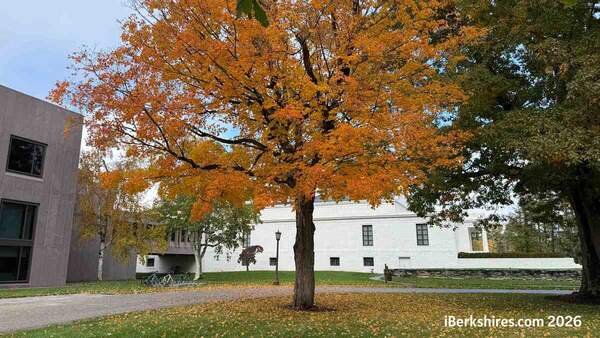
WILLIAMSTOWN, Mass. — This April and May, the Clark Art Institute hosts a series of films celebrating the Pastoral on Paper exhibition, with films that introduce some kind of conflict into peaceful landscapes in the rural United States, France, and Ireland.
All films are free and screened in the Manton Research Center auditorium on select Thursdays at 6 pm.
April 24
Days of Heaven (1978)
After accidentally killing his foreman at a steelworks in Chicago, laborer Bill, (Richard Gere) goes westward to the Texas plains with his girlfriend, Abby (Brooke Adams), and younger sister (Linda Manz). Posing as siblings, the trio find work in the wheat fields. To escape their life of toil, Bill convinces Abby to marry a wealthy but dying farmer (Sam Shepard). The ensuing love triangle binds the three together as they circle around the idyllic landscape. The lonely beauty of Terrence Malick’s film pays homage to the paintings of Edward Hopper and Andrew Wyeth. (Run time: 1 hour, 34 minutes)
May 15
The Quiet Man (1952)
Both an exemplary and a unique example of director John Ford's use of landscape, The Quiet Man longs for an unregainable past, for tradition and ceremony, and for the peace and escape of an idyllic country. Set in the 1920s, the film stars Ford’s muse, John Wayne, as Sean Thornton, a recently retired boxer who has travelled from America to his birthplace of Innisfree to lay claim to his family farm. (Run time: 2 hours, 9 minutes)
May 22
Jean de Florette (1988)
This engrossing epic of greed and deception is set amid the bucolic splendor of the Provence countryside. Gérard Depardieu gives one of his great performances as the hunchbacked city slicker Jean, who is determined to make a success of the farm he has inherited—unaware that his new neighbor César (Yves Montand) and his nephew Ugolin (Daniel Auteuil) have launched a ruthless scheme to take control of the land for themselves. (Run time: 2 hours)
Free. Accessible seats available; for information, call 413 458 0524. For more information, visit clarkart.edu/events.
Tags: Clark Art,